
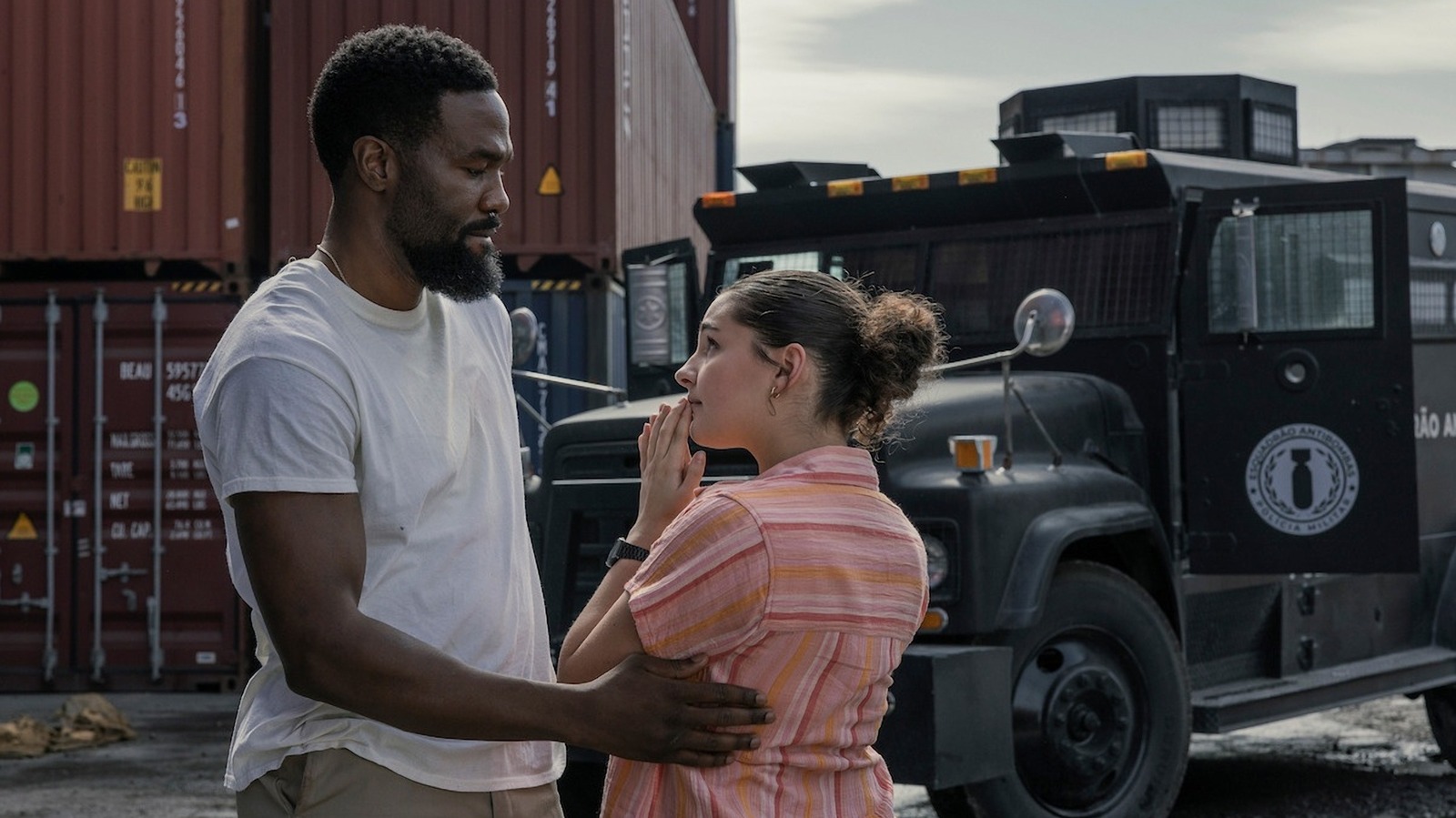

One of the century’s most cherished action icons is making a comeback. This time in a star-filled Netflix series that is certain to please devoted fans and newcomers alike. Premiering on April 30, 2026, “Man on Fire” tracks U.S. special forces operative John Creasy as he seeks revenge against a group of terrorists targeting a friend’s defiant teenage daughter. Featuring Yahya Abdul-Mateen II, the seven-episode miniseries is a gritty adventure that propels viewers through the complex streets of Rio de Janeiro’s criminal landscape.
This series represents the latest adaptation of novelist A.J. Quinnell’s acclaimed book and serves as a remake of Tony Scott’s 2004 cult classic that starred Denzel Washington. Similar to its cinematic predecessor, Netflix’s version takes creative liberties with the original material, enhancing the Creasy character and situating his story within an engaging setting. In a discussion with the Los Angeles Times, creator Kyle Killen reassured fans that Netflix’s series is far from mere fanservice, emphasizing, “we’re not attempting to replicate anything. What the film accomplishes is establish a standard. There was something distinctive about the visual style and how everything came together. That provided us the freedom to seek our own approach.”
Stepping into Denzel Washington’s role is no small feat, but Abdul-Mateen is well-acquainted with the demands of high-octane action franchises and their passionate fanbases. Having previously appeared in adaptations of “Watchmen,” “Aquaman,” “The Matrix Resurrections,” and Marvel’s “Wonder Man,” Abdul-Mateen has cultivated a career by exceeding immense expectations. Naturally, Washington presents a particular challenge. As the actor shared with Rolling Stone, “Denzel’s Creasy — oh, man, I aspire to be him. He just makes it look so cool. . . I remarked, ‘Hey, if I’m going to take this on, why attempt to compete with that ghost.” Hence, Netflix’s upcoming series may be his boldest undertaking yet.
A distinctive remake
Teenage boys, nostalgic millennials, and Denzel enthusiasts are protective of Tony Scott’s “Man on Fire.” Although initially criticized, the film has garnered a cult following over time due to its artistic visuals, poignant redemption narrative, and quintessential Denzel Washington performance. Unsurprisingly, reimagining the 2004 success might raise doubts. Even Abdul-Mateen acknowledges “there was a reasonable level of anxiety” in revisiting the beloved film. Nonetheless, fans are likely to rejoice rather than despair in the expanded storyline.
Netflix’s “Man on Fire” depicts Abdul-Mateen’s John Creasy at rock bottom. Following an unsuccessful suicide attempt, the alcoholic special agent is enlisted by his longtime friend Paul Rayburn to join an anti-terrorism task force in Rio de Janeiro. Played by Bobby Cannavale, whose most recent Oscar-nominated film Blue Moon is also available on Netflix, the clever Rayburn serves as a kind of foil to Creasy, seemingly aiming to guide him away from his troubles and toward redemption. However, when terrorists target Rayburn’s daughter Poe, played by Billie Boullet, Creasy must confront both his history and a conspiracy beyond his control. Completing the cast is Alice Braga as Valeria Melo, a driver with gang connections, and Scoot McNairy as the cunning CIA operative Henry Tappan.
While this narrative may feel familiar, conversations with the show’s creators indicate that the series diverges significantly from its cinematic predecessors. The series is more firmly rooted in the source material than its film counterparts, with its extended runtime enabling it to incorporate both “Man on Fire” and its sequel, “The Perfect Kill.” In a conversation with Screen Rant, Director Steven Caple Jr. hinted at the potential for additional seasons. Considering that Quinnell authored five Creasy novels, they will likely have ample material.
Evolving into John Creasy
Quinnell’s series exemplifies how atmosphere and character can often be more compelling than any shocking twist. In each of its three screen adaptations, directors have made alterations to the book’s storyline, modifying its setting, villains, and even Creasy’s name. One consistent element across its versions, however, is Creasy’s troubled persona. This was certainly evident in Tony Scott’s 2004 film, where Washington’s stereotypical bravado and intense glare deliver a more impactful narrative than its disjointed script should permit. In every prior iteration, “Man on Fire” is more persuasive as a character exploration than an action thriller, and Netflix’s adaptation seems to follow this pattern.
In a discussion with the L.A. Times, Abdul-Mateen likens his character to tormented Shakespearean figures such as Othello and Hamlet,