
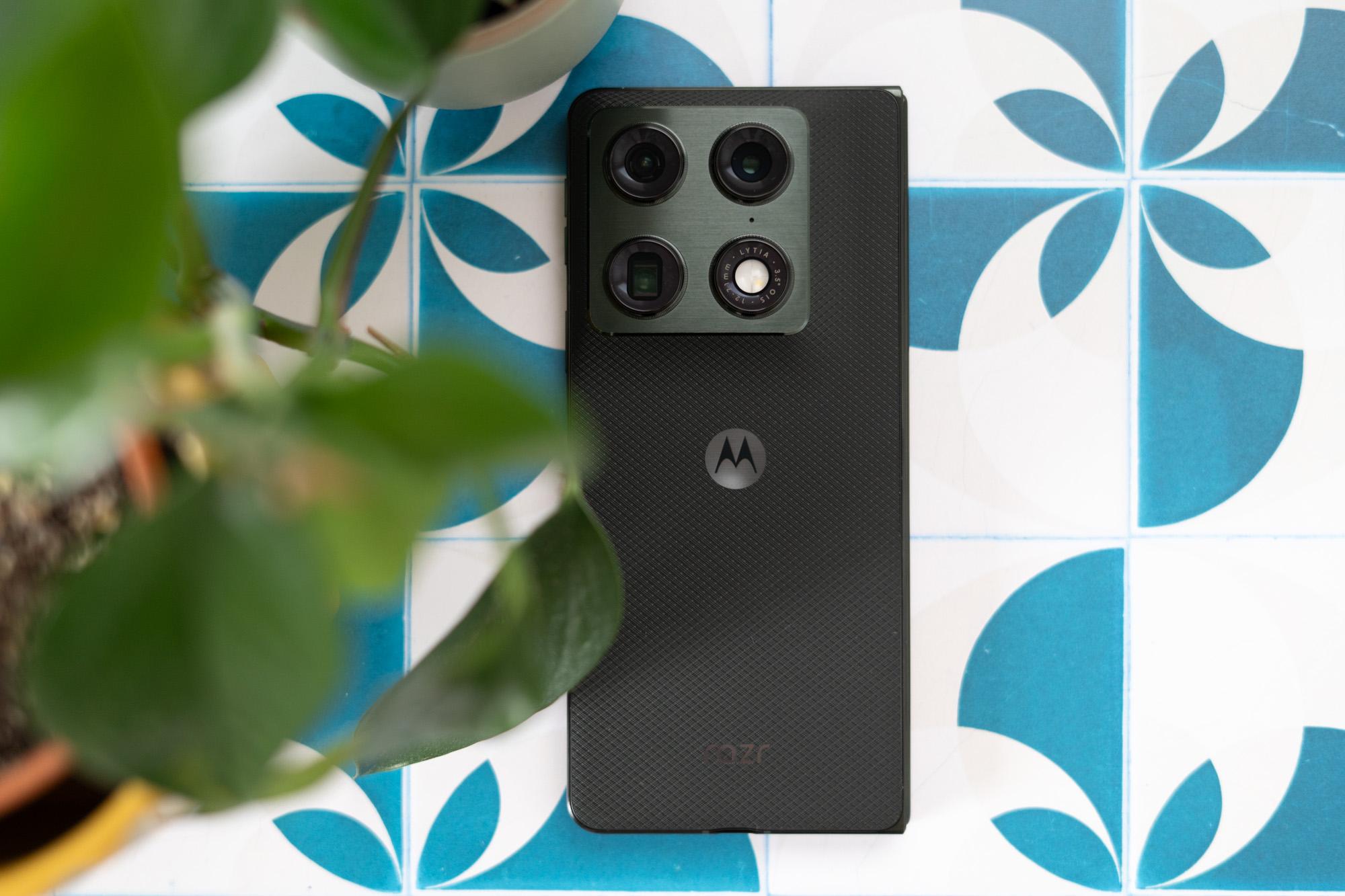

Motorola’s inaugural book-style foldable boasts impressive battery life but remains average in other aspects.
The Motorola Razr Fold, the company’s first book-style foldable, launches into the US market with a standout feature not present in its competitors: exceptional battery life rivaling even the top slab-style phones. You won’t need to worry about long gaming sessions or working on the inner screen, as the Razr Fold will last throughout the day and beyond. In contrast, Samsung’s and Google’s foldables are more likely to cause battery anxiety under heavy usage.
The Razr Fold also scores in aesthetics with rounded corners, a soft touch back panel, and well-thought-out color options, all characteristic of Motorola. It’s the best-looking phone out there right now, and caring about a phone’s appearance is okay.
However, the Razr Fold sets high expectations with a $1,900 price tag, falling short in some areas. While it shines with its design, large battery, and innovative multitasking system, there are several rough edges unexpected in a high-end device.
The Razr Fold’s 6,000mAh battery is its most significant asset, supported by silicon carbon technology to store more energy than conventional lithium-ion batteries. While Chinese phone makers quickly adopt this, others like Apple, Samsung, and Google are hesitant due to potential concerns about faster degradation. However, Motorola and Lenovo don’t seem to share these concerns, incorporating this technology across their latest Razr lineup.
The concerns about longevity might be valid, but silicon carbon’s impact is undeniable. In testing, the Razr Fold rarely neared low power mode, even with extensive camera use and an hour on the inner screen, maintaining over 50% power by bedtime.
Motorola’s multitasking solution on the inner screen is notable. It strikes a balance between Samsung’s flexible approach and Google’s three-app limit, allowing split-screen use and quick access to a secondary app in the background. Users can also manage multiple apps in resizable windows, with up to four apps running alongside two in split screen.
Battery and multitasking are critical for foldables, yet the Razr Fold falls short elsewhere. There are too many pre-installed apps for a premium device—some removable, but sifting through bloatware is tedious for an expensive purchase.
The Razr Fold lacks small yet essential hardware improvements. There are no Qi2 magnets on the back, which are beneficial for attaching to a MagSafe-style charger, unlike the Pixel 10 Pro Fold. Also, while a stylus is available, it lacks storage or attachment solutions, often forgotten on trips.
Hardware-wise, apart from battery innovation, the Razr Fold brings no major breakthroughs. It’s less cumbersome than other foldables like the Pixel 10 Pro Fold but lacks their full dust resistance. Despite being sleeker than the Pixel, it still feels noticeable in a bag or pocket. Comparatively, the Z Fold 7, slightly more expensive, is smaller and lighter.
Motorola phones typically lag in camera performance—a compromise at $400 but not at $1,900. Improvements are evident in the Razr Fold, with less color washout and better contrast and blues in daylight photos. The 50-megapixel ultrawide camera offers superior detail.
However, inconsistencies remain in the camera system, with occasional color shifts between wide and telephoto modes and over-enhanced shadows, especially with the 2x zoom or cloudy outdoor scenes.
The generative AI-augmented digital zoom, active above 20x, introduces artifacts, attempting to refine text unnaturally. It smooths details oddly, but thankfully can be disabled in settings.
Had the Razr Fold been released four years ago, perspectives might differ. When this level of style and battery capacity were rare, it might have justified the $1,900 price. But in 2026, amid the memory crisis, this price is tough to swallow. As competitors prepare to launch new foldables potentially increasing in price, the Razr Fold arrives feeling like too little, too late.
Photography by Allison Johnson / The Verge
To use the Motorola Razr Fold, multiple agreements are required:
1. Motorola’s Privacy and Software Updates
Optional agreements include:
– Improving Motorola products
– Enhanced device support
– Smart updates
– Add a phone number to your Google account
Google Services agreements:
– Install updates and apps with potential in-app purchases
– Use basic device backup
– Use location
– Allow scanning
– Send usage and diagnostic data
Google Assistant options:
– Setup Google Assistant
– Activate Voice Match
– Access Assistant without unlocking
Moto AI:
– Agree to Motorola AI Terms
Motorola Community options:
– Receive notifications about services
– Provide an email
In total, five agreements are mandatory, with 14 optional, when setting up the Motorola Razr Fold.