
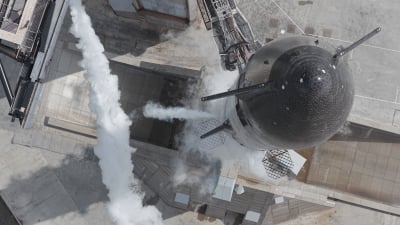

Here’s why SpaceX waited seven months to fly Starship again.
SpaceX plans to launch the next Starship test on Thursday evening after a seven-month break spent rebuilding major rocket parts and the launch site.
The company last flew Starship in October 2025. Since then, engineers redesigned engines, reworked the spacecraft’s heat shield, and built a new launchpad at Starbase, SpaceX’s complex in South Texas.
The upcoming mission, Flight 12, will debut the next generation of Starship and its Super Heavy booster. Together, they form the largest and most powerful rocket system ever built.
The test is crucial for SpaceX and NASA. NASA plans to use Starship to land astronauts on the moon as part of its Artemis program later this decade. Meanwhile, Elon Musk aims to send people and cargo to Mars. However, SpaceX must first prove the rocket can reliably launch, survive Earth’s atmosphere, and fly again without long repairs.
“The Starship production pipeline is full and will complete roughly 10 more ships and about half that number of boosters this year,” Musk said in an X post on Monday. “If something goes wrong, it will not be a major setback, unless the launch stand is destroyed.”
How to watch SpaceX’s Starship launch: Watch live on SpaceX’s website or X account, with the webcast starting as early as 4:45 p.m. CT on Thursday. The launch window opens at 5:30 p.m. CT but may be delayed.
Since earlier flights exposed hardware weaknesses, the long gap reflects SpaceX’s changes. The launch site now includes a new mount, upgraded systems, and redesigned arms to catch boosters.
Starship’s heat shield, with thousands of tiles protecting it during reentry, is a major focus. Some earlier flights lost tiles or had damage. This time, SpaceX plans to remove one tile for stress studies and has painted some tiles white for tracking changes.
Flight 12 will test upgrades to the rocket’s Raptor engines, which now generate more power with fewer parts, aiming for better reliability and less maintenance.
The mission includes deep-space flight experiments. Starship will deploy 20 mock Starlink satellites, attempt an engine restart in space, and likely splash down in the Indian Ocean if successful.
The Super Heavy booster will attempt a controlled splashdown in the Gulf of Mexico rather than a midair catch. SpaceX opted for caution due to recent design changes.
Despite nearly a dozen tests, Starship is a work in progress. SpaceX relies on frequent tests, failures, and rapid redesigns.
Meanwhile, NASA is adjusting its moon plans around SpaceX and Blue Origin’s hardware, aiming for quicker astronaut lunar landings. “SpaceX has been considering alternatives of their current Starship design,” said Lori Glaze, NASA’s acting exploration chief, “while implementing a streamlined approach to speed things up.”
Topics: SpaceX