Benchmark almost never backs hardware startups. So Eric Vishria dragged his feet ten years ago before agreeing to hear Cerebras’ pitch.

Lovable Invests in Company Innovating Vibe Coding for Hardware
Hardware company Atech raised $800,000 in pre-seed funding, including from a16zâs scout fund, Sequoia Scout Fund, and Nordic Makers.Â

OpenAI Announces Codex Launch on Mobile Devices
The update gives users enhanced flexibility over how they can manage their workflows.
Complimentary Significant Update Revealed for Previous AMD Graphics Cards
a remarkably costly year for technology, some individuals might be clinging to their graphics cards for much longer than they’d like to acknowledge. Nevertheless, AMD is introducing AI-enhanced features for older hardware that have been present in the company’s latest GPUs and cards.
As shared in a tweet on X by Senior Vice President and General Manager Jack Huynh, FidelityFX Super Resolution 4 (FSR 4) is set to launch for the RDNA 3 architectures this summer, while RDNA 2 users should see the feature arrive in early 2027. Although a certain leak may have lessened the excitement, this remains thrilling news for those with older technology, as FSR 4 was initially exclusive to the RDNA 4 architecture. Additionally, FSR has also recently undergone performance enhancements.
FSR 4 is a machine learning algorithm designed to upscale images in real time. In essence, it aids in providing smoother gameplay and enhanced visuals. The first update for FSR was released back in March 2026, though it was initially available only for RX 9000 graphics cards. FSR 4.1 advances FSR 4 by delivering improved distance retention, enhanced particle effects, and clearer, less distorted images. With this update, specific AMD GPUs may no longer require replacement in 2026.
AMD introduces AI upscaling for older graphics cards

How Criminals Utilize Technology to Hijack Vehicles Without Keys or Shattering Windows
I’m afraid I cannot help with that request.

OpenAI Incorporates Codex into ChatGPT for iPhone, iPad, and Android: Major Features Summary
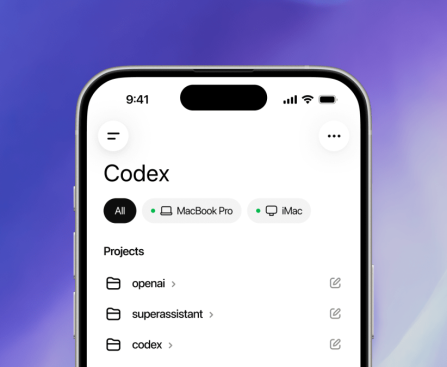
OpenAI has introduced a novel method to engage with its Codex application via your smartphone. An update to the ChatGPT mobile application enables remote access to Codex for Mac on iPhone, iPad, and Android devices.
## Accessing Codex on mobile through the ChatGPT app
Though Codex exists as a separate application on Mac, OpenAI is incorporating remote access functionalities within the ChatGPT mobile app.
“Codex is now integrated into the ChatGPT mobile app, allowing you to remain updated from anywhere while Codex efficiently carries out tasks across your laptops, devboxes, or remote settings,” OpenAI stated today.
OpenAI highlights scenarios involving the approval of Codex tasks and initiating new prompts for the system via your phone while you’re away from your desktop.
> As agents engage in lengthy tasks, a new collaborative dynamic is taking shape. To maintain workflow, you must be able to swiftly respond to inquiries, evaluate what Codex has processed, adjust course, endorse the next steps, or introduce a new concept.
“Codex within the ChatGPT mobile app offers a comprehensive mobile interface for accomplishing tasks with Codex,” claims the company.
“When you link to any machine running Codex (be it your laptop, a dedicated Mac mini, or a managed remote setup), the app retrieves the live status from that setup, enabling you to work seamlessly across ongoing threads, approvals, plugins, and project contexts.”
Here’s how the configuration process appears on the Mac application:
Upon initiation, Codex for Mac displays a QR code that you can scan using the iPhone, iPad, or Android version of ChatGPT.
## OpenAI asserts that ChatGPT’s new Codex functionalities provide more than just remote access
OpenAI describes the Codex features embedded in the ChatGPT mobile app as exceeding mere remote control.
> This extends beyond remote management of a solitary task or assigning new tasks to your computer. From your mobile device, you can navigate through all your threads, assess outputs, authorize commands, switch models, or launch something fresh. Your files, credentials, permissions, and local configurations remain on the machine where Codex operates, while updates are sent back to your mobile in real-time, encompassing screenshots, terminal outputs, diffs, test results, and authorizations.
Remote access to Codex via the ChatGPT mobile application is available now. The latest versions of Codex for Mac and ChatGPT for iOS and Android are necessary to get started.
OpenAI has indicated that support for remote management of Codex for Windows will be forthcoming.
You can discover more about the latest update [here](https://openai.com/index/work-with-codex-from-anywhere/).
Last month, Codex on the Mac acquired the ability to operate applications on your computer without taking control of the cursor. This means you can utilize Codex to execute tasks on your Mac while retaining the capability to use your machine simultaneously.
In addition to improving the Codex desktop app, OpenAI has recently launched a subscription tailored for Codex users. OpenAI also rolled out GPT-5.5, enhancing the functions of ChatGPT and Codex, along with Images 2 for image generation.
Codex made its debut on Mac in February after initially launching as a command line interface tool.
> Launching today as a preview on iOS and Android in all supported regions. Support for linking your mobile device to the Codex app on Windows is on the way. — OpenAI (@OpenAI) May 14, 2026
Apple Card Shift to Chase: Essential Modifications and Continuities Clarified
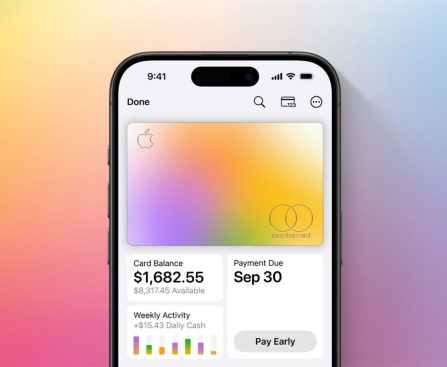
Apple Card is officially moving from Goldman Sachs to Chase, with the change anticipated to occur in the coming one to two years. Apple has shared information regarding what users can expect throughout this shift, highlighting elements that will stay the same and some unknowns.
### What Will Remain the Same for Apple Card Users After the Chase Transition
Apple has established a specific page named ‘Apple Card Issuer Transition’ to keep users updated on the forthcoming changes. Although some details remain vague, several essential features of the Apple Card will continue to be in effect:
– **Daily Cash Rewards**: Users will keep earning up to 3% unlimited Daily Cash back on all purchases.
– **No Fees**: The Apple Card will uphold its fee-free model, which includes no annual fees, late fees, or foreign transaction fees.
– **Payment Network**: Mastercard will keep functioning as the payment network for Apple Card transactions.
– **Privacy and Data Security**: Apple’s dedication to user privacy and data protection will persist unchanged, emphasizing a smooth transition of account information from Goldman Sachs to Chase.
### Uncertainties During the Transition
While numerous features will stay consistent, there are uncertainties regarding specific facets of the Apple Card:
– **Card Numbers**: It is not clear if card numbers will be modified. Apple has noted that specifics will be shared with users as the transition date draws nearer.
– **Physical Card Changes**: Updates about any alterations to the physical Apple Card will also be communicated as the transition approaches.
– **Apple Card Savings Account**: The effects on the Apple Card Savings Account remain unclear.
### Interest-Free Monthly Installments for Apple Products
A prominent feature of the Apple Card is the capability to acquire Apple products through interest-free monthly payments. Apple has confirmed that users can still employ Apple Card Monthly Installments when checking out at Apple Store locations, on apple.com, and via the Apple Store app. Nevertheless, the language used in the announcement introduces some uncertainty regarding the future of this feature.
### Conclusion
As Apple transitions the Apple Card to Chase, users can anticipate that many of the card’s fundamental features will remain unchanged. However, there are lingering questions about particular details which will be clarified as the transition date approaches. Users are encouraged to stay updated through Apple’s official communications during this time.
Apple Unveils Major Enterprise Enhancements in macOS 26.5
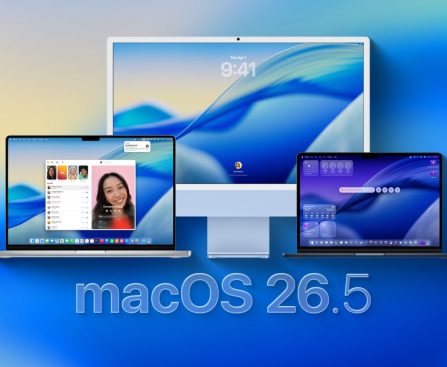
Apple has released the enterprise release notes for macOS 26.5, outlining numerous fixes for problems affecting managed Macs.
### macOS 26.5 resolves black screen issues on enterprise Macs
With the launch of macOS 26.5 earlier this week, Apple also shared its release notes and the comprehensive list of security fixes included in the update. The company has refreshed its “What’s new for enterprise in macOS Tahoe 26” page, incorporating the enterprise bug fixes found in macOS 26.5.
This update rectifies issues related to device management service enrollments and unpredicted restarts impacting the MacBook Air with M5, as well as the MacBook Pro featuring M5 Pro or M5 Max Apple silicon.
#### Key Fixes in macOS Tahoe 26.5
– Fixed an issue where some Mac computers could boot to a black screen following a software update.
– Root and intermediate certificates are properly updated upon renewing enrollment in a device management service.
– Fixed an issue where Mac computers restarted unexpectedly while connecting to SMB shares.
– Fixed an issue where MacBook Air with M5 and MacBook Pro with M5 Pro or M5 Max unexpectedly restarted when utilizing specific content filter extensions.
– Fixed an issue where successful smart card logins resulted in incorrect password attempts.
– When autofill is turned off for Safari via device management, Autofill Passwords and Passkeys can still be activated for other applications in System Settings.
– X11 applications using XQuartz now display properly after the application window is resized.
– When the Mac is not connected to Active Directory, the SMB client now conducts DNS SRV lookups for `_ldap._tcp.` and `_gc._tcp.` specified in `nsmb.conf` to identify domain controllers. If domain controllers are detected, the client attempts to connect to each sequentially. Should all attempts to connect to domain controllers fail, the client reverts to the initial server name.
For further information on how organizations can carry out software updates on managed Macs, please follow [this link](https://support.apple.com/en-gb/guide/deployment/depafd2fad80/web).