
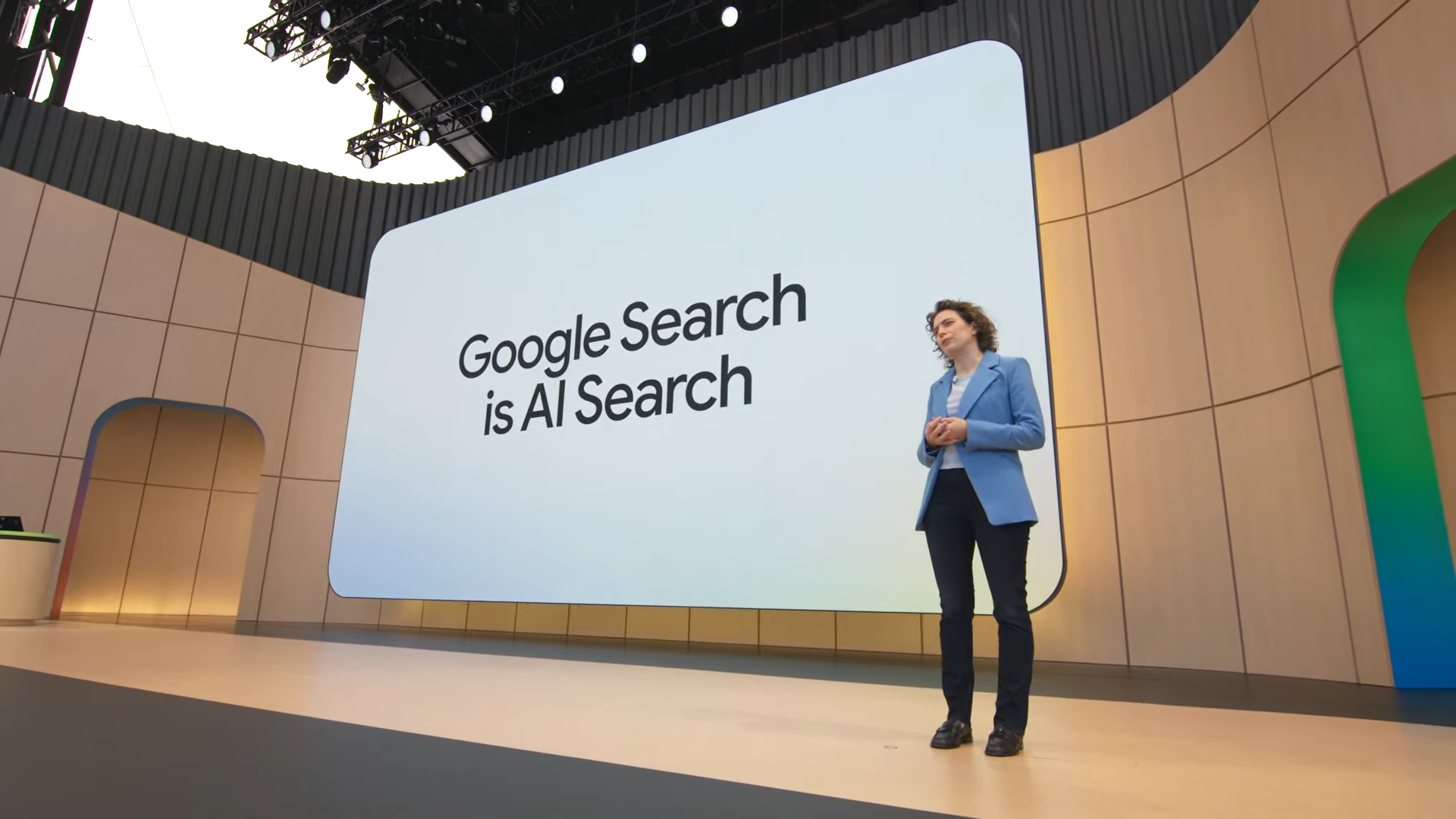

Google is increasingly determined to incorporate AI into all of its offerings.
Once again at I/O, Google highlighted AI and discussed how agentic AI will liberate us from boring tasks to the point where we’ll have so much leisure time that we’ll be at a loss for how to spend it. However, there’s a catch — current AI technology is far from being effective.
I enjoy using Google’s services; I established my Gmail account nearly 20 years ago, I’ve accumulated 11 years of images and videos in Photos, and I have crucial documents stored in Drive — a significant portion of my online presence is closely tied to my Google account.
I was comfortable with the compromises that came with it; I had no issues with sharing my information with Google when it simply used that data to show me targeted advertisements. That’s changed with AI. With Google utilizing personal data to train AI models — supposedly to offer personalized insights — I’m cautious about how much of my information is being harvested into Gemini. Fortunately, it’s relatively simple (for the time being) to restrict Gemini’s access to Drive, Photos, Gmail, and other services. I accomplished this by turning off Gemini’s logging; go to your Google account settings and switch Gemini Apps Activity to off.
While ignoring Gemini is manageable at the moment, Google is determined to place that frustrating sparkle icon nearly everywhere. I encounter an Ask Gemini button in Chrome, it’s ubiquitous in Gmail (I really don’t need to summarize a 100-word email!), and inexplicably, it’s integrated into Google Photos (which had perfectly functional metadata-based search), and Maps is now getting Gemini too.
Google also demonstrated how Docs Live serves as a “thought partner and co-writer” when you’re “rambling a stream of consciousness or brainstorming an idea.” Umm, no thanks. I understand that AI is currently the ultimate trend, and Google is ideally suited to take advantage of it — the search behemoth already possesses vast amounts of data from billions of users, making it logical to utilize that for training its models. But I have no interest in this, and although I acknowledge that these features may be beneficial for drafting documents or writing formal emails, I fail to see any value in the numerous new Gemini features being introduced to Docs, Gmail, or even Keep. I don’t want to converse with Keep to sort my thoughts — that’s where I go to create endless to-do lists.
All I hoped for was for Google to implement any substantial modifications to Search, but instead, we received a comprehensive AI overhaul that fails to tackle existing problems plaguing Google’s flagship product. The quality of search has deteriorated to such a degree that it has become riddled with SEO spam — especially in India. Google is aware of this, which is why it started prominently displaying Reddit and Quora results on the page, seemingly to combat spam.
As brands increasingly promote these AI tools and make them harder to overlook, I recall a post discussing education in the era of generative AI. It elaborates on how LLMs have simplified coursework to an extent where the “process of doing the work” is eliminated. This led me to reflect on how a bit of friction is necessary, even in trivial tasks. Whether it’s tidying up digital files (a Sunday morning chore I’ve performed for nearly a decade), organizing bills, maintaining subscriptions, or sorting photos and videos, there’s a sense of achievement I feel when completing these tasks, and I don’t want AI to remove that challenge.
Look, I’ll concede that Google did a respectable job outlining its AI agenda; Gemini Spark, Omni, Daily Brief, and Universal Cart all relate to what the company has been pursuing over the past year, making it a natural progression for the chatbot. I understand that these features have real utility, but I don’t feel any inclination to use any of them, and I don’t foresee that changing in the near future.