
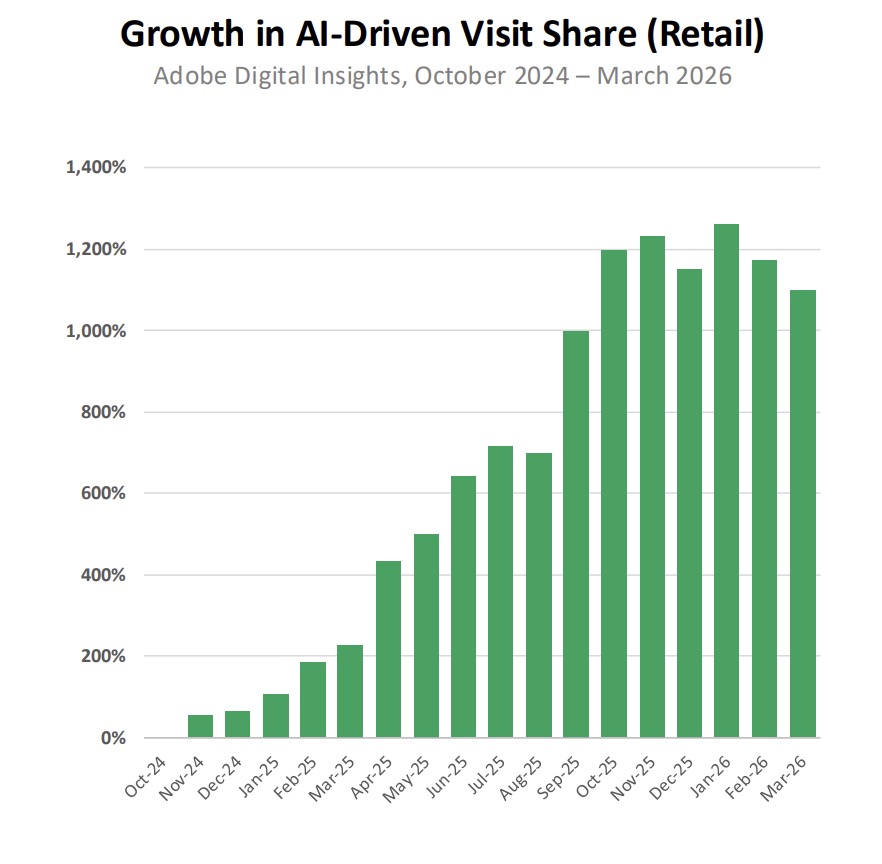

According to new data from Adobe, AI traffic to U.S. retailers’ websites increased by 269% as of March compared to the previous year, maintaining momentum from the holiday shopping season where there was a 693% rise. In the first quarter of 2026, AI traffic rose by 393% compared to the previous year, with more consumers using AI assistants for online shopping.
The shift in traffic sources is not the only effect. AI visitors are converting at higher rates, engaging more, spending more time on sites, and generating more revenue per visit, often reversing trends from the previous year when regular shoppers were more valuable to retailers.
Adobe’s insights, based on Adobe Analytics covering over 1 trillion visits to U.S. retail sites, along with a survey of over 5,000 U.S. respondents and its new AI Content Visibility Checker tool, reveal that AI traffic converted 42% better than human customers in March 2026, a reversal from March 2025, when AI traffic converted 38% worse.
In Adobe’s survey, 39% of people used AI for shopping, with 85% stating it improved their experience due to AI’s ability to narrow down product options and find discounts. Additionally, 66% now believe AI tools provide accurate shopping results.
AI-driven traffic leads to a 12% higher engagement rate, shoppers spending 48% more time on the site, and browsing 13% more pages per visit. AI-driven revenue per visit was 37% higher than non-AI traffic as of March, a stark contrast from a year ago when human traffic was 128% more valuable.
However, Adobe warns that not all sites are ready for AI, with approximately a quarter of homepage content and more than a third of category and product pages not optimized for LLMs. Retailers are encouraged to optimize their sites for LLMs to remain competitive.