author

Seapoint Raises €7.5M and Opens to All UK and Irish Founders

The Dublin and London-based fintech, founded by ex-Stripe and ex-Tide engineers, has processed over 100,000 transactions and 40,000 invoices across 80+ early customers. Its €7.5M seed round, led by 13books, brings total funding to €10M and opens the platform to any startup in the UK and Ireland. Seapoint, the AI-powered financial operations platform for startups, […]

This story continues at The Next Web

John Ternus Shaped Apple’s Hardware for 24 Years, Now Tackles AI

Summary: John Ternus, Apple’s incoming CEO effective 1 September, is a 50-year-old mechanical engineer who reversed a period of declining product quality, personally lobbied for the creation of iPadOS, oversaw the Apple Silicon transition, and now controls products generating roughly 80% of Apple’s revenue. His leadership style prioritises systemic problem-solving over blame, but critics note […]

This story continues at The Next Web

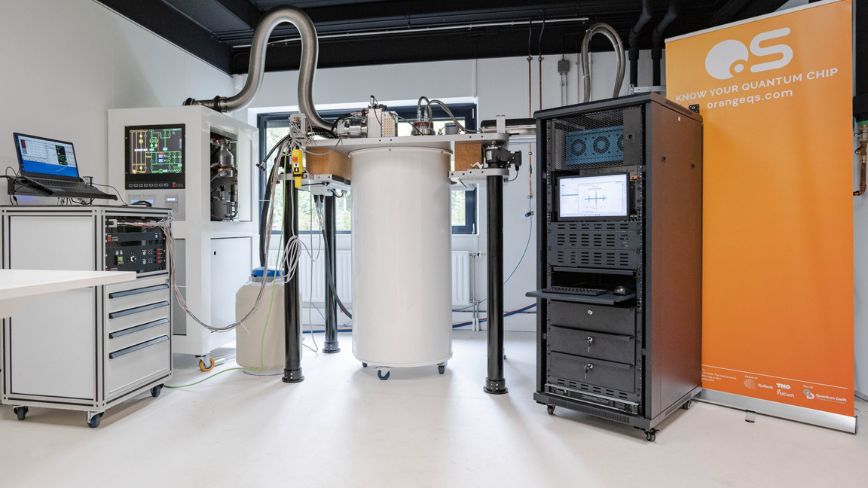
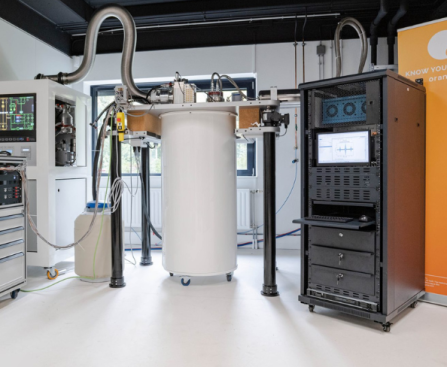
OrangeQS Raises €15M and Integrates Hardware Makers into Solution

The Dutch startup, the only company offering a dedicated commercial solution for quantum chip testing, raised a €3M extension to its June 2025 seed round from the European Innovation Council Fund. The accompanying MAX Partnership Programme gives quantum chip makers a structured way to shape the next generation of OrangeQS’s high-throughput test equipment. OrangeQS, the […]

This story continues at The Next Web

VisioLab Secures $11M to Expand AI iPad Checkout Globally to Stadiums, Canteens, and Campuses

The Osnabrück startup’s camera-based self-checkout, which identifies food and drinks without barcodes in under 10 seconds, is already running at 43 points of sale inside the Orlando Magic’s NBA arena and across about a third of German university campuses. The Series A was led by eCAPITAL and Simon Capital. VisioLab, a German startup that makes […]

This story continues at The Next Web

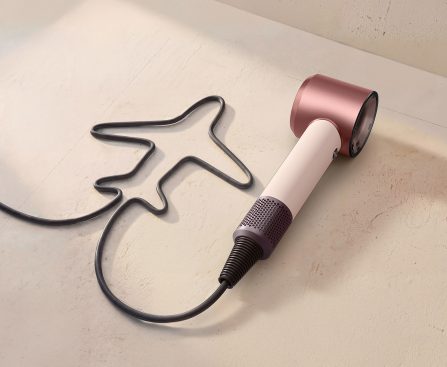
Dyson’s Back with a Travel-Size Supersonic Hairdryer

Ten years ago, Dyson kicked off the hair gadget arms race with its $400 Supersonic hairdryer. Today, it’s back with a slightly smaller and cheaper travel-size version. As the name suggests, the $299.99 Supersonic Travel is meant for people on the go – whether that’s a business trip or a jaunt to the gym before […]

Build Your Own Sendspin Audio Receiver for Multi-Room Sync and Home Assistant Integration

DIY Sendspin Media Player

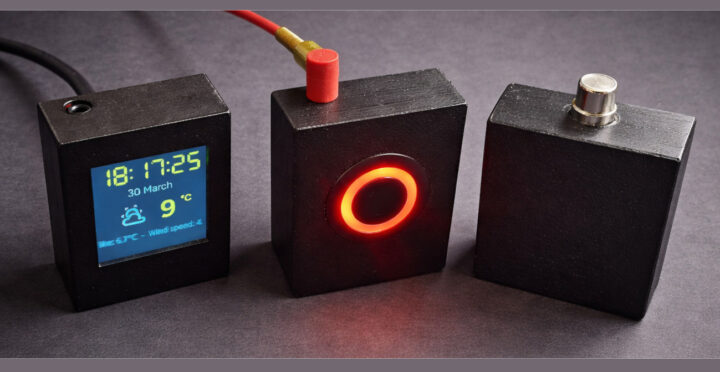
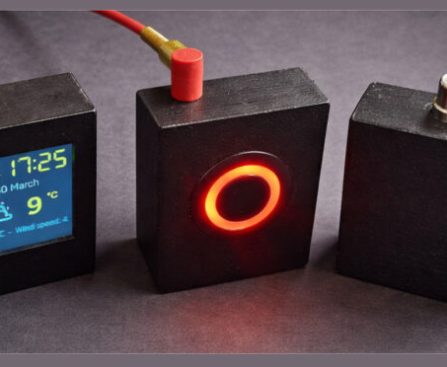
SendspinZero is an open-source, DIY Sendspin audio receiver for your amplifier that relies on off-the-shelf parts costing around $10 and a 3D printed enclosure. It integrates with Home Assistant for multi-room audio synchronization. It sounds good, but what is Sendspin exactly? It’s a royalty-free, open protocol developed by the Open Home Foundation for synchronized audio playback across multiple devices and rooms. Besides audio, it also supports screens for album art and control music, and sound-activated lights (coming soon feature). The protocol enables open-source products that compete against proprietary systems like Sonos, AirPlay, or Google Cast, and integrates nicely with the Music Assistant add-on for Home Assistant. Sendspin audio receiver key components: Waveshare ESP32-S3-Zero board with 2MB PSRAM (About $4-$6 on AliExpress, $12 on Amazon), ideally the version without pre-soldered headers Optional 1.54-inch LCD screen (About $5 on AliExpress) Optional 3-6V, 22mm bi-color button (About $2 to $3) Audio output options: […]

The post DIY Sendspin audio receiver supports multi-room audio synchronization, integrates with Home Assistant appeared first on CNX Software – Embedded Systems News.

Grasping the Distinctions Between IPS and VA Monitors

**What’s The Difference Between IPS And VA Monitors?**

When searching for a new display, you will come across different types, each with distinct features. While OLED screens are rising in popularity, LCD monitors utilizing VA (Vertical Alignment) or IPS (In-Plane Switching) technology still provide notable benefits based on your requirements.

**VA Monitors:**
VA panels are recognized for their excellent contrast levels and rich blacks, making them perfect for enjoying movies, shows, and games where visual intricacy is important. Nevertheless, they require a central viewing position to ensure sharpness and true-to-life colors.

**IPS Monitors:**
IPS screens deliver exceptional color precision, making them ideal for photography and video production. They maintain consistent picture quality from wide angles and manage fast-moving images more effectively, which is advantageous for competitive gaming.

**Considerations:**
The choice between VA and IPS relies on individual tastes and particular use cases. VA monitors shine in delivering a cinema-like experience with improved contrast, while IPS monitors present smoother visuals and color fidelity, particularly for artistic endeavors.

**Price and Availability:**
Cost is another aspect to take into account. VA technology is more commonly utilized, resulting in a wider selection of budget-friendly options, especially for larger displays. IPS monitors, traditionally linked to high-end quality, are now more readily available but generally remain pricier due to their superior color representation.

In the end, the decision between VA and IPS monitors is influenced by your user profile and specific requirements, whether you favor contrast and immersive experiences or color accuracy and wider viewing angles.

NASA’s Creative Fighter Jet Initiative May Lower Aviation Expenses

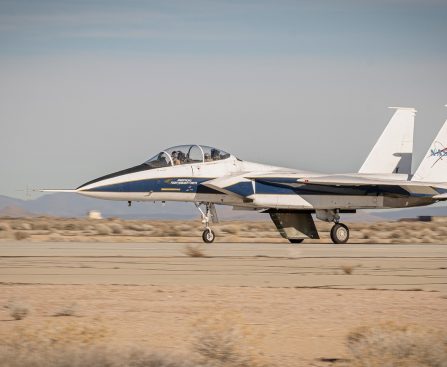
While NASA’s main emphasis has been on the unique Artemis II mission, it has been evaluating a novel wing technology that could save airlines a significant amount of money by cutting fuel consumption by up to 10%. This operates by preserving smooth airflow, referred to as laminar flow. Testing commenced on the ground and has now taken to the skies – but not on a commercial plane. The NASA team attached a three-foot scale model of a tailored wing beneath an F-15B to assess their Crossflow Attenuated Natural Laminar Flow (CATNLF) design.

In early January 2026, the test jet maneuvered around Armstrong Flight Research Center in Edwards, California, reaching speeds of 144 mph. Due to the vertical mounting of the test wing, there was no need to construct an expensive custom aircraft. By late January 2026, the jet ascended for a 75-minute flight that attained an altitude of 34,000 feet.

The objective is to sustain laminar airflow and minimize drag on commercial flights. Drag increases when airflow abruptly shifts, leading to friction that consumes fuel. Most commercial airplanes have large, swept wings that disrupt laminar flow. NASA states that researchers have been striving for decades to enhance airflow on swept wings, which is part of the agency’s initiatives to boost the performance of aircraft wings.

How this NASA initiative could save airlines millions

Fuel constitutes the airline industry’s largest operational expense, and NASA asserts that a 10% reduction in fuel consumption achieved with the CATNLF wing design would yield millions in savings for airlines. A typical Boeing 777 flight transporting 365 passengers from New York to London consumes 14,500 gallons of fuel, thus the design would conserve approximately 1,450 gallons per flight. Based on the summer 2025 price of $2.25 per gallon for jet fuel, that translates to roughly $3,200 in savings. Considering current rates, which exceeded $5.50 a gallon in Europe in April 2026, the savings would be significantly higher.

Over the span of an average year, an aircraft making daily flights from New York to London could save $1.2 million or up to $2.6 million at the current higher fuel prices. With more than 1,300 Boeing 777s in operation worldwide, potential savings could amount to hundreds of millions of dollars. Airlines could either pass these savings on to customers or reinvest in their fleets, as air travel demand may double over the next 25 years.

The design remains in its preliminary phases, so it won’t be featured on any airline flights immediately. NASA anticipates up to 15 test flights to determine how the CATNLF design performs under various speeds, altitudes, and conditions. NASA is hopeful that, if successful, the design could eventually be incorporated into the next generation of commercial aircraft or even supersonic planes, which are making a comeback in commercial aviation in 2026.