
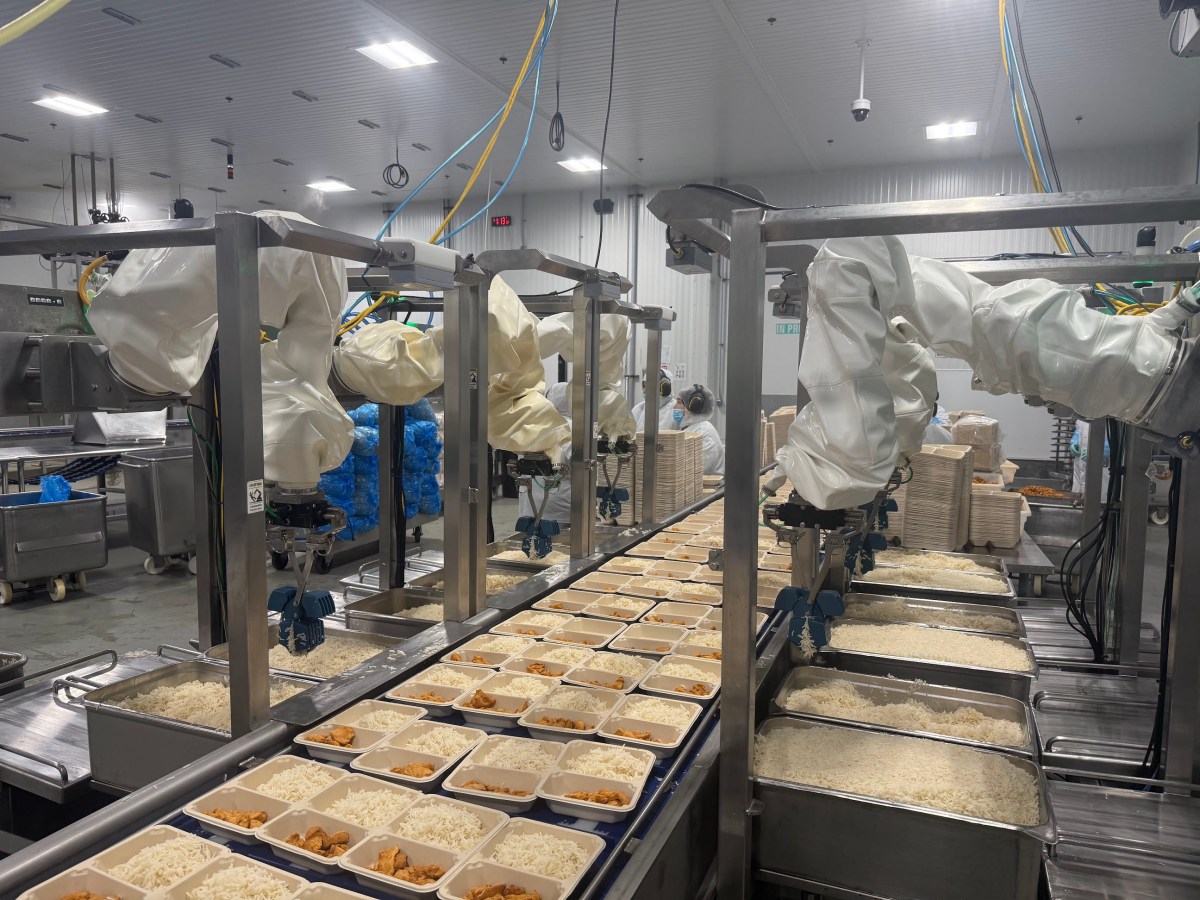

Chef Robotics CEO Rajat Bhageria emphasizes that the industry is notably challenging for startups, citing examples like Chowbotics, a salad-making startup acquired and later shut down by DoorDash, and Zume, which attempted to revolutionize pizza delivery and collapsed in 2023. Automating processes traditionally requiring human dexterity and intelligence has proven difficult. Bhageria believes he has found a solution: employing AI-driven robot arms to streamline large-scale food production. Initially targeting fast casual restaurants, Chef Robotics shifted focus to food manufacturing, now serving clients such as Amy’s Kitchen and Chef Bombay, and collaborating with a major school lunch provider.
The company recently announced reaching a key milestone of 100 million servings. A representative explained that a serving is a portion placed in a meal tray, representing a component of a meal rather than a full meal. With this shift to larger, institutional clients, Chef Robotics is busier than ever.
Looking ahead, Bhageria plans to enter what the company terms “smaller kitchens,” which intriguingly includes one of the world’s largest airline catering companies. The company is also seeking opportunities in other sectors, intending to expand into “ghost kitchens”—facilities providing meals for services like DoorDash—and eventually targeting fast casual restaurants, stadiums, and prisons.
The 100 million servings have generated data to enhance Chef’s AI models for food handling and packaging, aiming to refine the robots’ ability to manage food, which is inherently variable and challenging to grasp. By advancing these models, Chef Robotics seeks to improve technology, enabling their robots to perform more effectively and support scaling the business.