
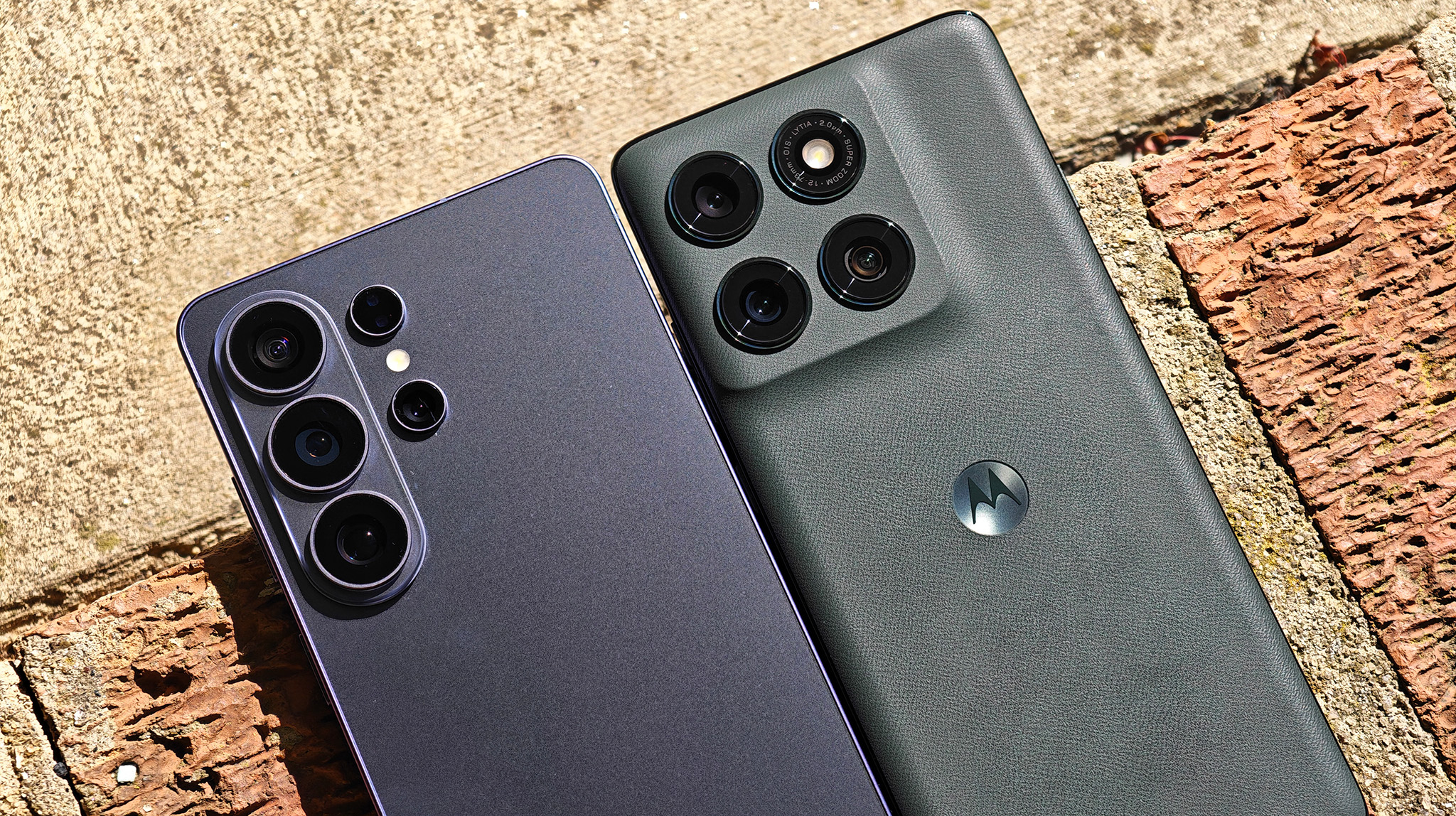

When Samsung debuted the Galaxy S26 series at the close of February, one of the standout highlights of the event was the Horizontal Lock, a novel video recording capability that ensures your videos remain stable and aligned, regardless of any movement or rotation of the phone.
While this feature attracted considerable attention, technology aficionados were quick to remind everyone that Motorola had introduced a similar capability as far back as 2019 (though I only had the opportunity to test it in 2023). Since then, Motorola has incorporated this feature into every flagship device it releases, provided it is equipped with an ultrawide-angle camera.
In essence, users opting for the pricey Galaxy S26 may be acquiring a fantastic new video recording functionality, but individuals can save a substantial amount by selecting Motorola without missing out. This means that devices like the $500 Motorola Edge 2025 and the more premium Motorola Razr Ultra 2025 both support the same functionality, but can their quality rival Samsung’s top offerings? Let’s delve into that.
Horizon Lock on Motorola devices and Horizontal Lock on the Samsung Galaxy S26 series seem to operate in a similar manner from a descriptive perspective. Both features utilize the main and ultrawide sensors located on the back of the phone to produce a combined video. Consequently, these functionalities slightly decrease video quality, usually peaking at 1080p resolution at 30 FPS, although the Galaxy S26 Ultra elevates that to QHD resolution.
While recording video, an advanced AI-driven algorithm analyzes the scene to ascertain the horizon line. Despite the implications, you don’t need to be outdoors or have a visible horizon line or landscape in your footage. I recorded inside a room with a bare wall, and the Motorola Edge 2025 kept the video oriented correctly, even as I rotated it.
In addition to employing both main and ultrawide cameras on the back, smartphones from Motorola and Samsung utilize the device’s gyroscope and accelerometers to interpret how the phone is being moved. This information is then processed in real time to maintain the video’s orientation in portrait or landscape mode, irrespective of how the phone is tilted.
Most demonstrations, like mine from 2023, center around rotating the phone 360 degrees. In typical real-life scenarios, it’s improbable that you’ll do this while recording video. However, that’s not an issue, as Horizon or Horizontal Lock are crafted to adapt to any movement and stabilize your footage.
You may find yourself as a passenger in a vehicle, capturing video from the window, or perhaps enjoying a summer getaway on a boat, filming the lake while someone else pilots the vessel. The usual jolts and turns of vehicle travel are smoothed out by these features, surpassing the performance of the electronic stability systems in older models.
In the video below, you can observe the contrast between Samsung’s Horizontal Lock and Super Steady mode on the Galaxy S26 Ultra compared to regular (non-stabilized) footage taken with the same movements. The Motorola Edge 2025 demonstration in the latter half showcases the two available modes, Horizon Lock and standard video, as Motorola does not provide the intermediary option on this device.
My colleague, Derrek Lee, additionally utilized his Motorola Razr Ultra 2025 to evaluate the feature and discovered that Motorola includes an orientation button on that model which is absent on the more affordable Motorola devices (or the Galaxy S26 series) to switch between portrait and landscape modes. This allows for recording in either orientation without needing to physically rotate the phone (although you may want to), which can be particularly useful when filming with one hand.
As one might anticipate when juxtaposing a $549 device against a $1,299 option, the less expensive model’s video recording quality is noticeably inferior. There’s a marked decline in quality on the Motorola Edge 2025 when Horizon Lock is activated, making it a feature less desirable for that device if premium quality is your goal.
On the other hand, the Galaxy S26 Ultra manages to maintain commendable video quality while using Horizontal Lock mode, despite a decrease in resolution from my usual 4k60 setting. More advanced Motorola devices such as the Motorola Razr Ultra 2025 will yield higher-quality video utilizing the Horizon Lock feature.
You’ll also see that videos captured with Horizon Lock or Horizontal Lock are significantly wider compared to those filmed with the main camera lens. This is due to these stabilization features leaning heavily on the ultrawide camera, using it as the primary video source.
I also observed that the Galaxy S26 Ultra performed better at keeping the video clear, even when spinning the phone. There are limits to this, as reduced lighting conditions or quicker (or less stable) rotation will result in diminished video quality, but the fringing on the Motorola footage is almost absent when compared to the video from the Galaxy S26 Ultra.
It’s remarkable to witness