

Digg has made a comeback. Again.
After launching just months ago, the reboot of Kevin Rose’s once-popular link-sharing site shutdown in March as the company shifted focus. Initially redesigned to compete with Reddit, the new Digg struggled to manage bot traffic and failed to differentiate itself from competitors.
The startup laid off staff and decided to reevaluate its strategy, with Rose, a partner at True Ventures, returning to work full-time on developing a new version of Digg in April.
On Friday, the founder previewed the newly redesigned Digg, which now resembles its original news aggregator format rather than a Reddit clone.
The revamped site focuses on ranking news, starting with AI news. In an email to beta testers, Digg stated its aim is to track the most influential voices and highlight news that deserves attention. If successful, the platform plans to expand to other topics.
The email noted the site is still raw and buggy, intended as a first look rather than a public launch.
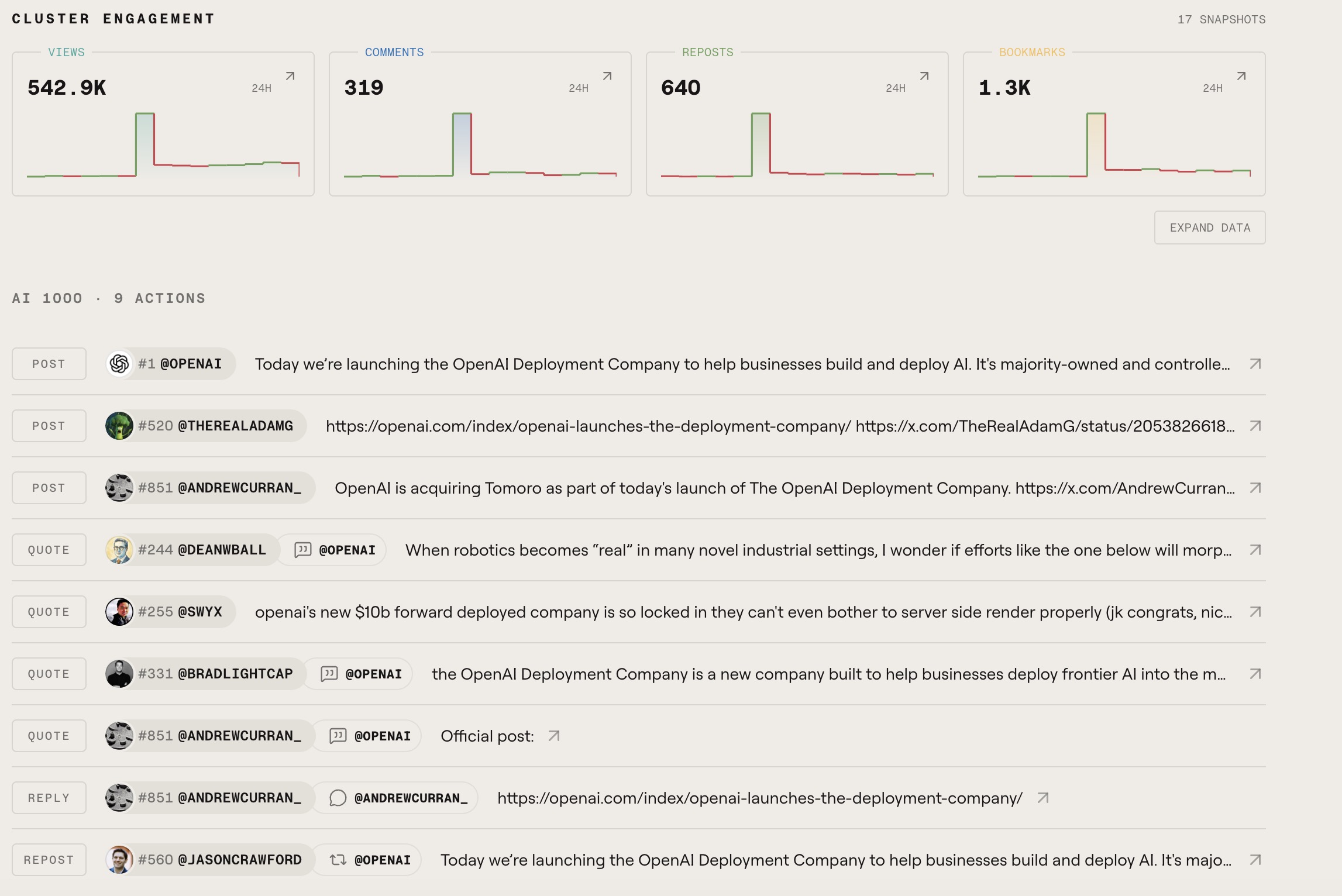
On its homepage, Digg showcases four main stories: the most viewed, a rising discussion, the fastest-climbing, and a “In case you missed it” headline. Below that is a ranked list of top stories for the day with engagement metrics like views, comments, likes, and saves. Interestingly, these metrics are not generated on Digg itself but are ingested from X in real-time, using sentiment analysis, clustering, and signal detection to highlight important discussions.
As Rose commented on X, when OpenAI CEO Sam Altman interacts with an AI-related story, it often triggers deep discussion and propagation on X. The new Digg can track this increased engagement.
This approach might appeal to data enthusiasts, revealing the impact of X-based engagement through charts and graphs, and offering a way to track signals amidst the noise. However, its value for everyday users, other than confirming a @sama tweet can go viral, is unclear.
Digg also ranks the top 1,000 individuals, companies, and politicians involved in AI issues.
For those lacking time to track breaking AI news on X, Digg might be a useful resource. But it’s uncertain why users would choose Digg over their preferred news app, RSS reader, or X’s “For You” feed, especially since there isn’t any discussion happening on Digg itself.
Digg may face challenges when branching out to other topics as AI news is one of the few areas still actively discussed on X. Other verticals may not have the same traction, especially after Musk’s Twitter takeover led to an ecosystem of competitors like Meta’s Threads. Many non-tech discussions now occur off X or offline entirely.
If Digg gains traction, it could provide valuable traffic to publishers impacted by declining clicks due to Google’s changing algorithms and AI-generated search summaries that often satisfy users’ queries without redirecting them to websites.