

We’ve previously encountered AI agents similar to OpenClaw for ESP32 devices, such as Mimiclaw and PycoClaw. Now, Espressif Systems introduces its own ESP-Claw framework, designed to develop local AI agents that utilize LLM-driven interaction and can operate directly on ESP32 devices.
ESP-Claw allows ESP32 boards to respond to stimuli, use LLM-driven decision-making processes, maintain context, and perform actions locally without the need for a cloud connection unless necessary. The agent can manage sensors and device states, performing tasks like controlling an RGB LED strip.
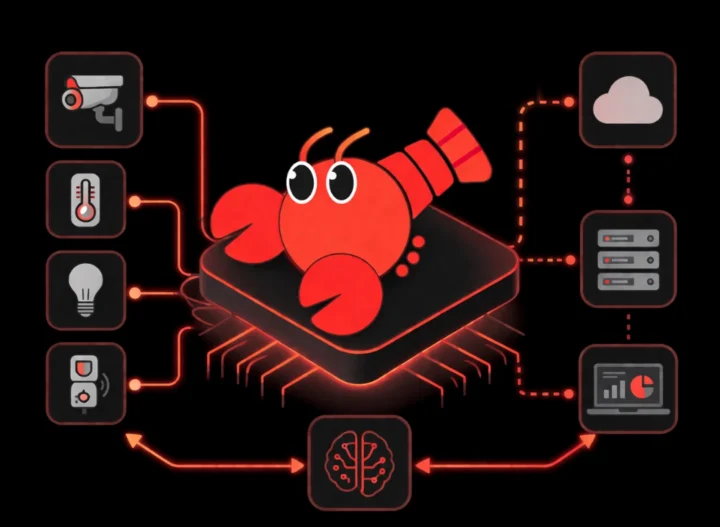
ESP-Claw’s key features include:
- Chat coding – Define device actions using natural language. The LLM manages dynamic decisions, while local Lua scripts ensure consistent execution, even when offline.
- Quick response time – Devices react to events in real-time, driven by a local event bus that applies Lua rules, ensuring responses within milliseconds, online or offline.
- Plug and Play with MCP – ESP-Claw functions as both MCP Server and Client, facilitating communication with agents and external services.
- On-chip private memory – Long-term structured memory stored on-chip keeps data secure. Preferences and routines derived from interactions are device-bound.
