

As malicious actors leverage AI to exploit software vulnerabilities quickly, companies are increasingly seeing the importance of strengthening their cybersecurity defenses.
The same AI tools are fortunately aiding businesses in their defense efforts.
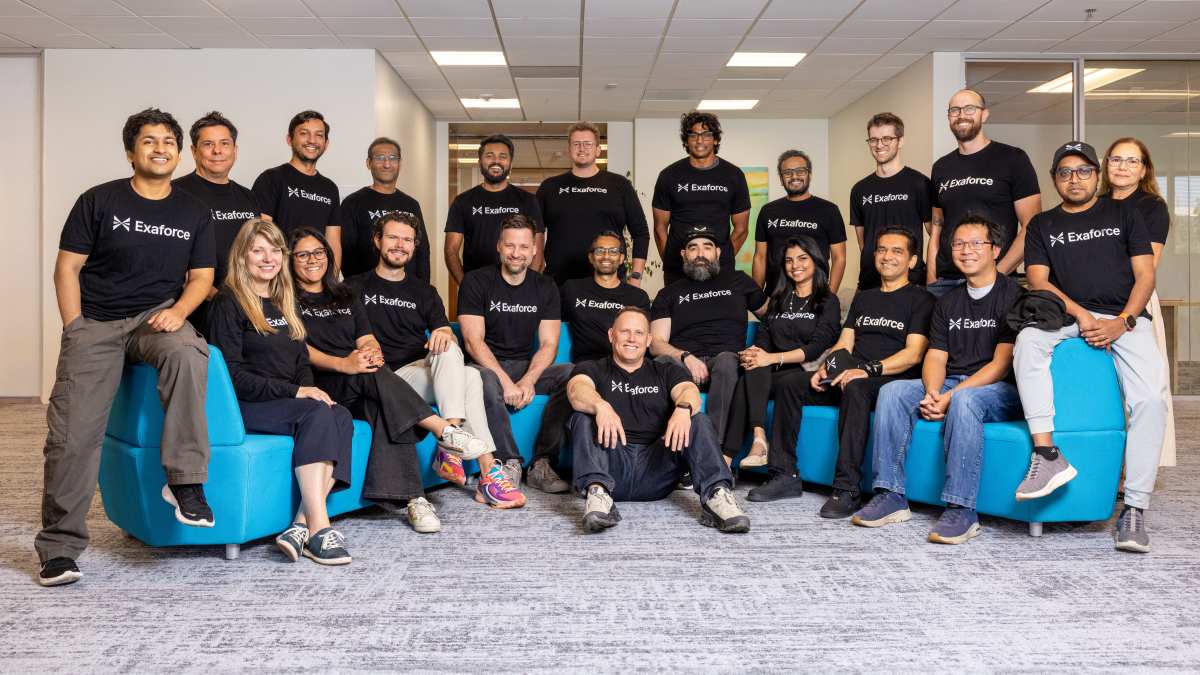
This demand has enabled Exaforce, an AI startup focused on real-time attack detection and prevention, to secure a $125 million Series B funding. The round valued the three-year-old company at $725 million, with participation from HarbourVest, Peak XV, Mayfield, Khosla Ventures, and Seligman Ventures.
The significant funding follows just a year after Exaforce raised a $75 million Series A, bringing its total funding to $200 million. This investment highlights both the hefty cost of building and deploying an AI-driven security operations center (SOC) and the substantial market opportunity seen by investors.
Exaforce employs AI agents called “Exabots” that utilize deep data analysis to automate security operations, thus easing the workload on human analysts.
According to co-founder and CEO Ankur Singla, their mission is clear: Use AI to catch and stop threats in real-time. “It’s a very simple mandate, but it’s very complex to execute,” he stated.
The real difficulty for security teams lies in the fact that most threat alerts are false positives. “A security operations person gets hundreds of alerts. How do you know what is a real, high-priority alert?” said Umesh Padval, a managing partner at Seligman Ventures, likening the task to finding a needle in a haystack.
Exaforce asserts its AI platform can cut manual, time-consuming tasks by up to 90%.
Recognizing the surge in cyberattacks, the startup introduced “vibe hunting,” a feature allowing security teams to use natural language queries on its AI platform to explore potential attacks based on simple hunches. “With vibe hunting, you can ask a very simple hypothesis like, ‘Did we get any new attacks from Iran?’” Singla explained.
Exaforce launched its product in the market in the fourth quarter of last year after two years of testing with design partners. Since then, the startup has gained 20 customers, including prominent entities like Replit and Guardant Health. With the increase in cyberattacks, Singla shared with TechCrunch that Exaforce anticipates having 40 to 50 customers by the year’s end.
High-profile attacks have “accelerated our ability to reach customers, because now customers don’t ask, ‘why do I need this?’” Singla said. The question now is more often: “How do I operationalize it?”
Exaforce isn’t the only company integrating AI into security operations. It faces competition from startups like 7ai, Dropzone AI, and Prophet Security, in addition to industry leaders Palo Alto Networks and CrowdStrike.