
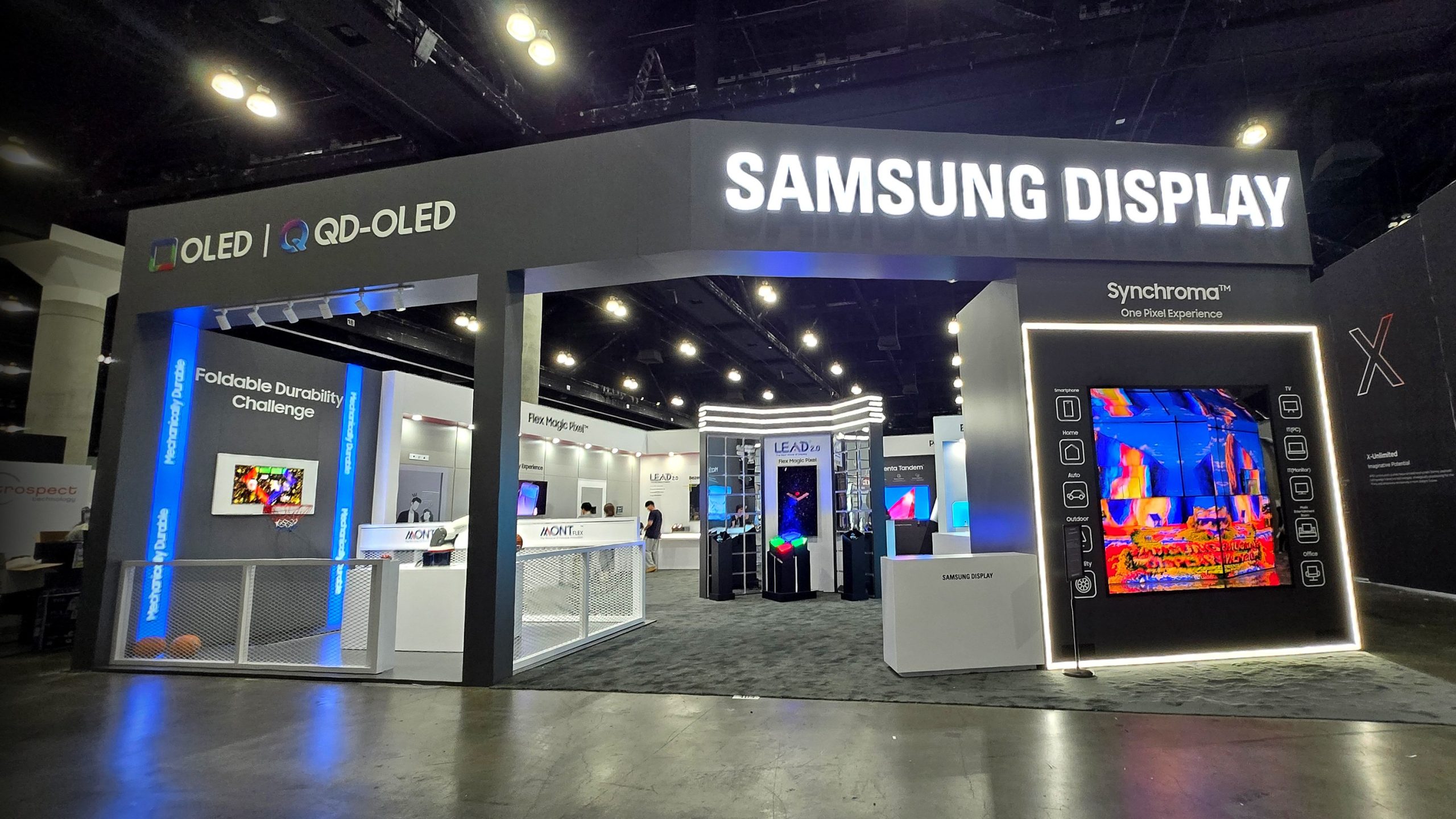

Vibrant displays have us gazing. In the current digital era, screens have become a crucial aspect of our everyday experiences. Ranging from mobile devices to large televisions, the lively screens enthrall us and hold our focus for extended periods. The progression of screen technology has been astounding, with brands like Samsung and LG at the forefront of innovation.
At the recent SID Display Week 2026, Samsung revealed its newest developments in OLED technology. The centerpiece was the Flex Chroma Pixel display, engineered for smartphones, which features a peak brightness of 3,000 nits and supports the BT.2020-96 color spectrum. This guarantees a more vibrant and dynamic display, establishing a new benchmark for UHD and HDR broadcasting.
Samsung additionally presented the Sensor OLED Display, which incorporates biometric reading features. This cutting-edge screen can assess biometric data, such as blood flow, merely by touching the surface. Such innovations emphasize the capability of displays to not only provide entertainment but also to improve our health and well-being.
Conversely, LG revealed its third-generation Tandem OLED technology. This new screen presents an 18% reduction in power consumption and has a lifespan that is double that of its predecessor. LG envisions utilizing this technology in AI-driven robots and vehicles, as well as in its OLED televisions, which now offer improved light efficiency.
The automotive sector is also witnessing a transformation in display technology. Samsung’s Stretchable Display 2.0 panel for vehicles adapts according to driving conditions, providing a dynamic and engaging experience for drivers.
As screen technology progresses, the potential is limitless. From enriching our viewing experiences to integrating with our health and daily routines, vibrant displays are not merely attracting our attention; they are revolutionizing how we connect with the world.