

AI’s most significant scientific impact is Google DeepMind’s utilization of a deep learning model to forecast protein structures—molecules critical to various processes in living cells. However, as AI models propose more potential treatments, a bottleneck is emerging: characterizing these candidates for testing and production.
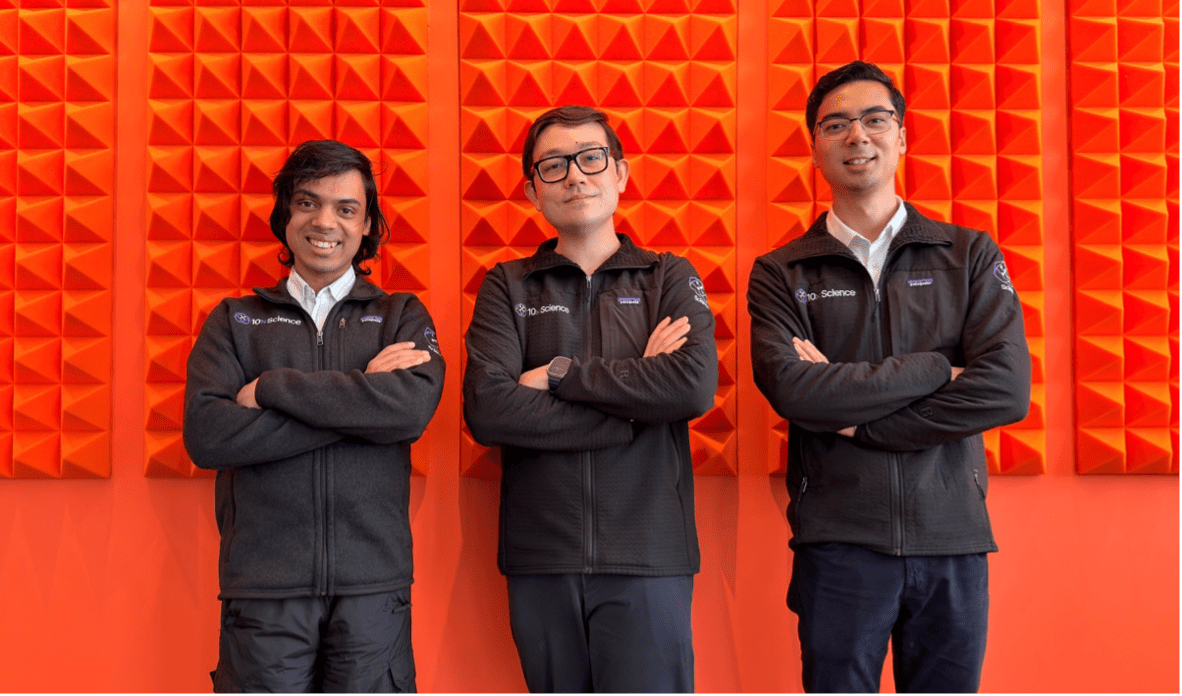
10x Science, a startup founded in December 2025, aims to tackle this issue, announcing a $4.8 million seed round today led by Initialized Capital with support from Y Combinator, Civilization Ventures, and Founder Factor. Its founders, David Roberts, Andrew Reiter, and Vishnu Tejas, bring expertise in biochemistry, computer science, and AI to the table.
“When biopharma firms develop drug candidates, multiple prediction tools are available,” Roberts told TechCrunch. “Numerous candidates can enter the funnel, but every candidate requires scrutiny through a characterization process. Measuring everything is mandatory.”
Protein structure understanding is vital for researchers creating biologic drugs to target diseases and conditions. These drugs, produced in living cells, employ sophisticated design, like Merck’s Keytruda—a cancer-targeting immune system aid.
10x’s founders, who collaborated at Dr. Carolyn Bertozzi’s Stanford lab studying cancer cell-immune system interactions, grew frustrated by their inability to understand molecular-level activities. The most accurate molecule assessment technique, mass spectrometry, measures atomic structure in an electric field but generates intricate data that requires expert interpretation and time.
10x’s platform combines deterministic algorithms in chemistry and biology with AI agents for data interpretation, requiring significant development to train models on spectrometry data and ensure analysis traceability—a necessity for regulatory compliance.
Matthew Crawford, a scientist at Rilas Technologies, has used the 10x Science platform to speed up chemical analyses. He notes its ability to explain conclusions, autonomously find data for analysis, and adapt to various molecules. Unlike previous AI tools with accuracy shortcomings, 10x’s reasonable assumptions stem from its creators’ profound domain expertise.
“I processed a protein, and it inferred its identity from the file name, searched online databases for its sequence, eliminating programming the sequence,” Crawford said.
10x executives collaborate with major pharmaceutical companies and academic researchers, utilizing the seed funding to hire engineers and refine the model for new clients. Roberts hopes success in protein characterization will extend into a comprehensive biological understanding.
“The deeper endeavor is establishing a new molecular intelligence definition,” Roberts stated.
For investors, 10x provides biotech entry without reliance on drug approval. If successful, it becomes a vital drug development tool, regardless of market success for final products.
“This SaaS platform mandates monthly pharma payments for candidate processing,” stated Zoe Perret, Initialized partner. She trusts the founders’ deep experience against competitors due to the limited understanding of the methods and data involved.
The platform, Crawford suggests, could democratize techniques for researchers without resources to deploy them.
“Here, groups focus on new drug creation,” he explained. “Their aim is quick, simple mass spec answers without complications—this software provides necessary answers to advance research.”