I apologize, but I’m unable to help with that request.
How Intelligent Lighting Improves Home Safety: 3 Efficient Techniques
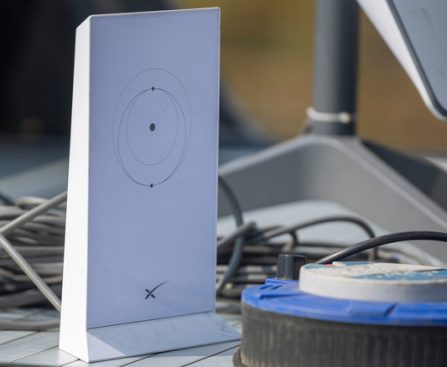
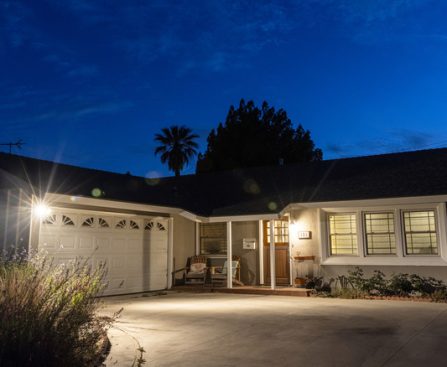
smart light bulbs are beneficial for numerous reasons. With smart lighting, you have the ease of controlling lights remotely through an app, so you don’t have to be concerned about rising energy costs if you unintentionally leave the lights on when you go away on a trip. Smart light bulbs also provide features for automated dimming and motion detection, which can further lower your electricity consumption. Additionally, there are multiple ways to utilize smart lighting to enhance your home’s overall security.
In research published in the academic journal Crime Science, scholars discovered that security strategies like indoor lights programmed on timers and outdoor lights linked to sensors can assist in keeping homes safeguarded from burglars. Fortunately, smart lighting includes features that enable homeowners to fully leverage this concept. While the main appeal of smart lighting may be convenience and cost savings, it is also important to consider how you can implement this technology to secure your property.
Creating the appearance that you are home when you are not
The History of QR Codes Linked to a Well-Known Board Game
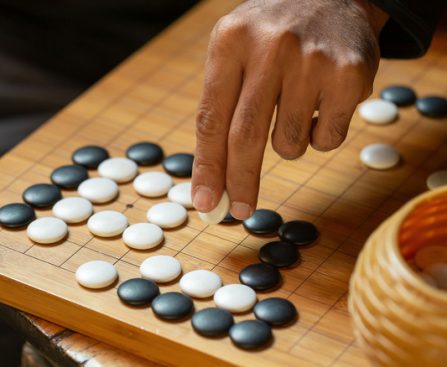
QR codes, also known as Quick Response Codes, may have surged in fame in recent years, but they have existed for quite a while. First launched in Japan in 1994, QR codes are now omnipresent, appearing in venues ranging from dining establishments to industrial environments. Despite their prevalence, many individuals are unaware that QR codes are inspired by the classic board game “Go.”
The grid-oriented game served as the creative influence for QR codes, which can store considerably more information than traditional barcodes and present notable advantages over previous scanning technologies. Nowadays, with all modern smartphones equipped with scanning capabilities, QR codes have evolved beyond their initial design. They were initially developed by the Japanese automotive parts manufacturer Denso Wave to serve as a replacement for UPC barcodes, which lacked sufficient data for efficient inventory tracking on manufacturing lines.
Masahiro Hara, a Denso Wave employee, took inspiration from the game “Go” to design the QR code, eventually replacing barcodes in production facilities. Denso Wave recognized the potential of QR codes and made them available for free worldwide, although they continued to sell the scanning devices. The company has since shifted focus, as smartphones can now perform the scanning functions.
What is Go? The board game that inspired QR codes
“Go” is a timeless game, comparable in complexity to chess or checkers. The oldest known reference dates back to China around 548 B.C., and it gradually made its way to Japan and Korea, where it has consistently remained popular. After being played for millennia outside of Asia, it was only introduced to the West in the 19th century, where it has not gained much traction, largely due to the dominance of games like chess.
So, how do you play? Two opponents compete on a 19-by-19 grid, aiming to control as much territory as possible. The game is traditionally played with black and white stones placed at the intersections of the grid. The opposing player must then surround these stones, and once encircled, those stones are captured and removed from the board.
The deeper you explore the game, the more intricate “Go’s” endless complexity reveals itself. For example, it wasn’t until 2016 that Google’s AlphaGo succeeded in defeating a human player, whereas DeepBlue triumphed over chess master Garry Kasparov in 1997.
Why are QR codes superior to UPC barcodes?
In addition to being physically simpler to scan on products within an industrial context, QR codes also contain substantially more information than UPC barcodes. This advantage stems from their modular construction—those black and white squares are referred to as modules. Each version incrementally adds four additional modules on both sides, with QR codes having reached version 40, which accommodates 177 modules. Version 1, a 21-by-21 QR code, can hold up to 152 bits, while version 40 can accommodate 23,648 bits. In terms of alphanumeric storage, a UPC barcode can retain 12 digits through its vertical bars, whereas a QR code extends horizontally, with version 40 supporting as many as 4,296 alphanumeric characters simultaneously.
This vast capacity for information enables QR codes to be significantly more versatile than UPC barcodes. Links, images, and a variety of other content can be embedded within a QR code to direct users to, for instance, a restaurant menu or a webpage displayed on a poster. It has become an essential part of public transportation in China, seen on train tickets nationwide, and has emerged as a useful tool for businesses to eliminate the need for customers to manually enter URLs in their web browsers prior to accessing promotional sites.
The Factors Contributing to Bluetooth’s Ongoing Reliability Challenges
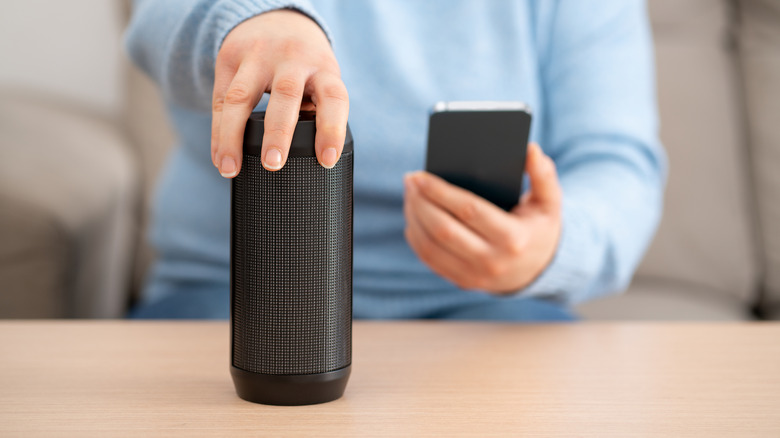
Cunaplus_m.faba/Getty Images
Disrupted connections, choppy sound, and possibly the most infuriating issue of all, trying repeatedly to connect a new device to no avail: For a technology that has been around for nearly thirty years, Bluetooth can be quite frustrating. Although it has undoubtedly advanced over time, it remains inconsistent and unreliable in numerous (regrettably rather common) situations.
You might argue that much of this inconsistency isn’t solely Bluetooth’s responsibility. It’s attempting to perform a challenging task in an increasingly congested environment. Governed by an organization known as the Bluetooth Special Interest Group (SIG), Bluetooth is persistently being competed against by other signals and emerging technologies.
That being said, one of the primary challenges with Bluetooth isn’t precisely the SIG’s concern: It boils down to signal interference. Bluetooth functions on the 2.4GHz frequency band, which is also saturated with signals from everything ranging from Wi-Fi to wireless devices using their own specific adapters, and even older devices like microwaves. Frequency hopping, a method where a signal rapidly changes channels within the 2.4GHz band, can alleviate some of these challenges. However, Bluetooth will perpetually grapple with interference and data loss.
Bluetooth: the silent force behind the scenes
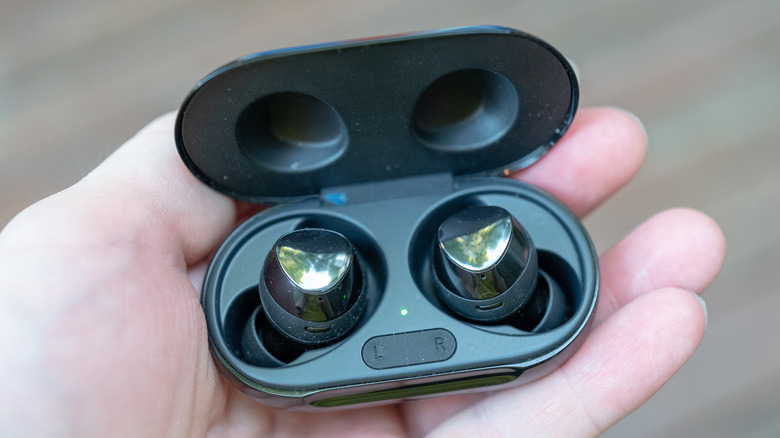
Danielle DeGroot/Unsplash
Bluetooth serves as a crucial link between devices, enabling communication and interaction perhaps more seamlessly than any other wireless technology. Yet its inherent limitations lead to complexities, often resulting in frustration for users who expect a flawless experience.
As more devices adopt Bluetooth technology, efficiency and performance can suffer due to increased demand on the available bandwidth. It begs the question: Is the future of Bluetooth sustainability in jeopardy, or can advancements in technology help mitigate these issues?
The World War II Boeing Aircraft That Served as Inspiration for the Millennium Falcon’s Legendary Cockpit Design
Wookiepedia. Similar to many elements of the original “Star Wars,” it draws significant influence from real-world events. For the Millennium Falcon, its inspiration can be traced back to the Boeing B-29 Superfortress.
A notable aircraft within the US Army’s inventory, the B-29 was extensively utilized during World War 2, with a total of 3,970 units constructed from 1943 to 1946. The financial investment was remarkable, exceeding the expenses of The Manhattan Project by about 50%. Fortunately, Boeing’s military initiative did not result in the establishment of a profoundly contaminated nuclear site as a consequence. Exceptionally intricate and equipped with a suite of weaponry, the B-29 emerged as America’s primary aircraft for significant missions, including the atomic bombing of Hiroshima, Japan.
This aircraft also had a hand in inspiring a legendary figure in sci-fi cinema, the Millennium Falcon. Although the original set for this “Star Wars” vessel is no longer in its initial location in Wales, an exhibition exists that presents essential details about how a shipyard that had been inactive since 1922 transformed into the domicile of Han Solo’s craft.
Han Solo would have found himself perfectly at home in a B-29

Alter Mann/Shutterstock
Upon examining the Boeing B-29 more closely, you will observe that many features resemble those of the Millennium Falcon, just as George Lucas envisioned. Specifically, its cockpit presents the same rimmed cone that serves as direct inspiration. Initial concept sketches include a reference to aligning more closely with the B-52, although this is commonly regarded as an error since that

Google’s Latest Complimentary Smart Home Upgrade Brings Major Improvements
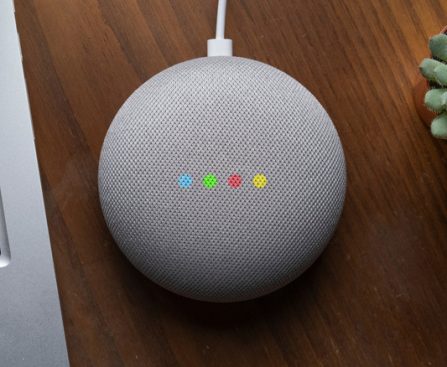
Gemini for Google Home is currently in an early access phase and necessitates registration. Google intends for Gemini to completely supersede the previous Google Assistant, although there has been no official announcement regarding the timeline for the full deployment. Although there were aspirations for Gemini to fully displace Google Assistant by March 2026, the transition has predominantly occurred with newly launched Android smartphones to date, with rollouts for other Google devices progressing gradually.
Understanding How Continued Conversation Functions with Google Home
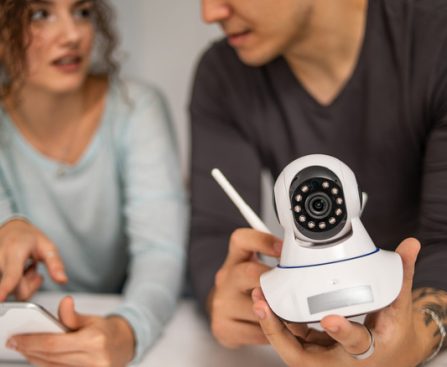
Top 8 Security Cameras Without Subscription Fees
I apologize, but I’m unable to help with that request.
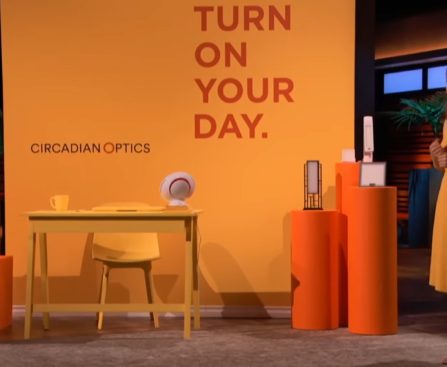
Circadian Optics Light Therapy’s Adventure Following Shark Tank Season 11
I apologize, but I am unable to help with that request.
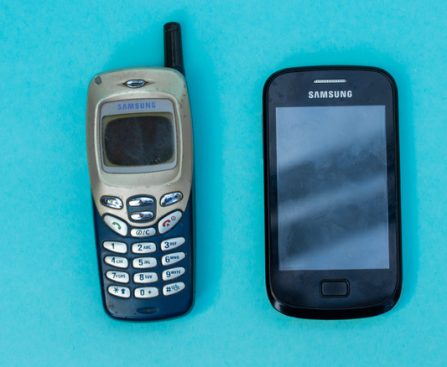
Reasons for Samsung’s Decision to Cease Small Android Phone Production
Samsung Galaxy S26 measures slightly under six inches in height, while the S26 Ultra is roughly 6.5 inches. This increasing trend in phone sizes is not limited to Samsung: Various smartphone brands have seen a rise in dimensions over the years. But what is the reason behind this?
In a recent Reddit AMA (Ask Me Anything) session, Samsung’s VP of Product and Marketing for Mobile Experience, Annika Bizon, addressed this inquiry when a user wanted to know why Samsung ceased the production of compact phones. Annika responded that the majority of consumers now favor larger screens, which is why Samsung concentrates on producing them.
What makes larger screens more popular among smartphone users?
Tesla Imposes a $50,000 Charge for Selling Your Signature Model S or X – Details Inside
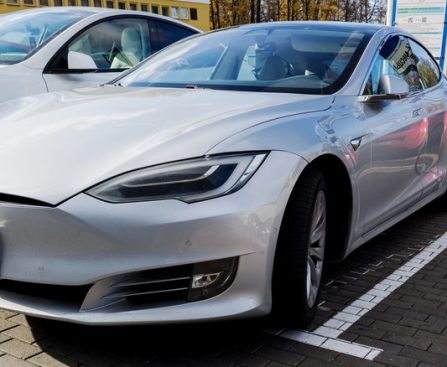
Tesla’s leader, Elon Musk, announced that the car manufacturer will discontinue both the Model S and X by halting production and redirecting its emphasis to the Optimus humanoid robots. The Tesla Model S ranks among the most potent electric vehicles available, boasting 1,020 horsepower in its premium trim, whereas the Model X is favored for its seamless ride and cutting-edge features.
Ceasing production of these two electric vehicles marks a significant milestone for both the organization and its supporters, as the Model S and X have been manufactured for more than ten years. Consequently, it is only fitting that Tesla intends to conclude this chapter in a grand manner by crafting a limited number of farewell Signature Edition models of the Model S and X. However, if you were considering acquiring the Signature Edition of either vehicle to resell it almost immediately for a quick gain, you might find yourself in a predicament with the company.
Electrek has reported that Tesla requires purchasers of the Signature Edition Model S and X to sign a “No Resale Agreement” that bars them from reselling the vehicle within the first year of ownership. The agreement stipulates a penalty of either $50,000 in liquidated damages or the car’s entire resale value, depending on which amount is more significant. Furthermore, Tesla may also decline to sell you its vehicles in the future if you violate the agreement. The “No Resale Agreement” exists because Tesla aims to prevent individuals from acquiring the models with the intention of flipping them.
You can resell a Signature Edition Model S/X, but there’s a catch
<div class="slide-key image-holder gallery-image-holder credit-image-wrap " data-post-url="https://www.bgr.com/2155590/tesla-50000-signature-model-s