

Tesla CEO Elon Musk began the company’s Q1 earnings call with a financial update — or a warning, depending on investor perspective. Tesla’s capital expenditures are projected to rise to $25 billion in 2026, significantly exceeding previous annual spending as it aims to outpace competitors and shift toward an AI and robotics focus, as detailed in its Q1 earnings report.
This figure, covering Tesla’s spending on physical assets beyond daily operations, triples past annual budgets. Comparatively, Tesla’s capital expenditures were $8.5 billion in 2025, $11.3 billion in 2024, and $8.9 billion in 2023.
Tesla announced in January that it anticipated capex to exceed $20 billion in 2026, a substantial increase to support AI initiatives, compute infrastructure, data centers, and manufacturing expansion. The $5 billion increase suggests higher expected expenses. The quarterly capex of $2.5 billion aligned with previous quarters, the report indicates.
Musk views this positively, likely shared by shareholders, as it positions Tesla for future AI and robotics advancement. “We’re significantly increasing future investments in 2026,” Musk stated during the earnings call. “Expect significant capex growth, justified by increased future revenue potential.”
Musk noted other companies are also boosting capex. Amazon projects $200 billion in 2026 for AI, chips, robotics, and satellites. Google plans to spend $175-$185 billion in 2026, up from $91.4 billion the previous year.
Tesla’s increased spending ties to Musk’s goal to expand beyond EVs, solar, and energy storage. Some spending will focus on core technologies like batteries and AI software. Tesla plans to invest in AI training, chip design, increasing manufacturing, and its robotaxi operations and new semiconductor fab in Austin.
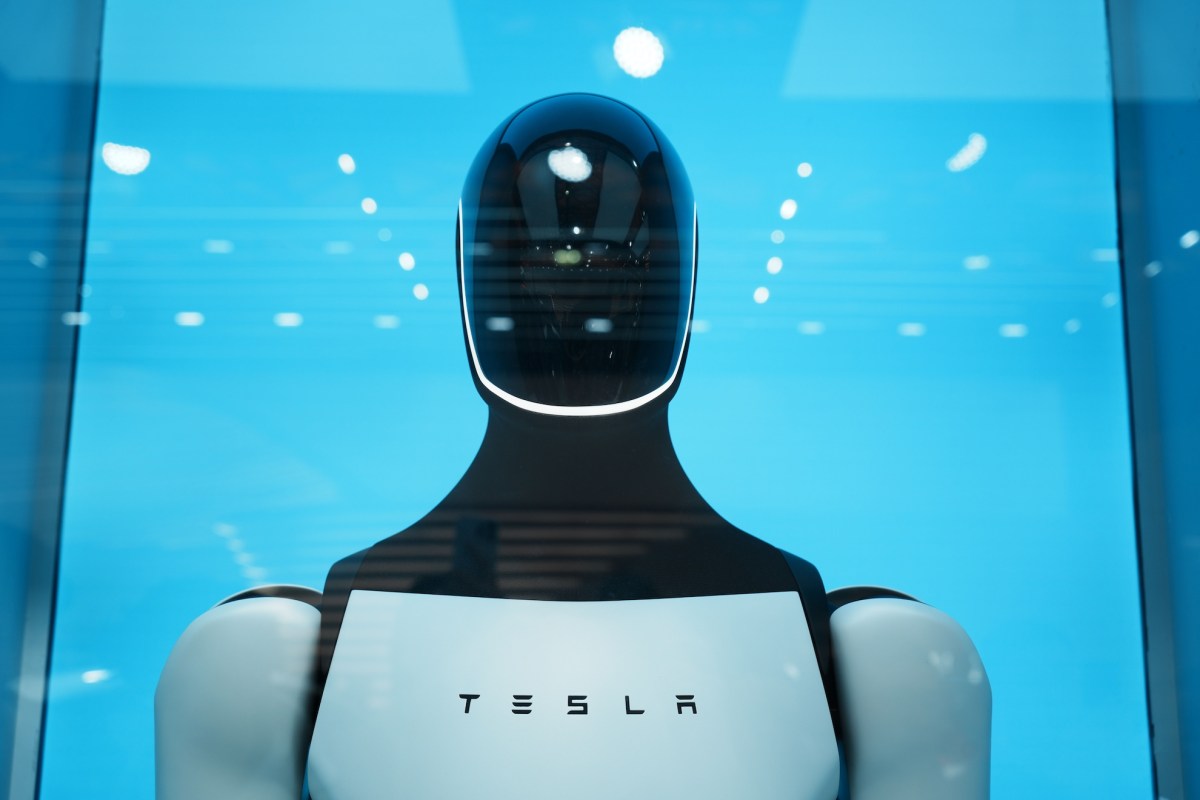
The Fremont factory may see capital as Tesla shifts from Model S and X production to Optimus robot scaling. On Wednesday, the company noted clearing ground for an Optimus facility outside its Austin factory.
Tesla aims to boost internal Optimus production for testing and potentially make Optimus useful outside Tesla next year. Tesla is also investing in enhancing its supply chain, covering batteries, energy, and AI silicon.
This spending, lasting a couple of years according to CFO Vaibhav Taneja, comes with a cost. Despite a brief 4% stock price rise partly due to $1.4 billion in free cash flow, Tesla will face negative territory later this year, Taneja said.
Tesla’s after-hours trading saw losses as Musk and Taneja presented plans to investors. Nevertheless, Tesla has substantial cash reserves, ending Q1 with $44.7 billion in cash, cash equivalents, and short-term investments.
“Though this may seem substantial, with a negative cash flow impact expected for the rest of the year, we believe this positions the company well for the future,” Taneja stated.