
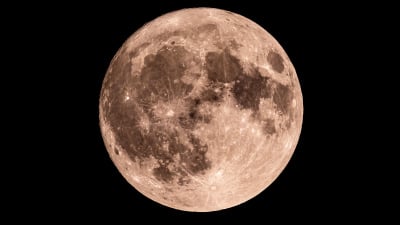

The Moon is beginning to return. Following the New Moon, each night more of the Moon’s sunlit side becomes visible from Earth, appearing bigger and brighter in the sky until the next Full Moon.
As of April 18, the Moon shines in its Waxing Crescent phase, with 1% of its surface illuminated, according to NASA’s Daily Moon Guide. The Moon is starting to brighten, yet still too dim to clearly observe details.
The next Full Moon is forecasted for May 1, marking the first of two occurring in May.
The Moon’s orbit around Earth takes approximately 29.5 days, during which it transitions through eight phases. Although we always view the same side, the sunlight’s reflections change, creating various luminous shapes known as lunar phases:
– New Moon: Situated between Earth and the Sun, its side visible to Earth is dark.
– Waxing Crescent: A slim light crescent appears on the right side (Northern Hemisphere).
– First Quarter: Half of the right side is illuminated, resembling a half-Moon.
– Waxing Gibbous: Over half is lit up, yet not fully.
– Full Moon: Fully illuminated and visible.
– Waning Gibbous: Light diminishes from the right side (Northern Hemisphere).
– Third Quarter: Another half-Moon, now the left side is illuminated.
– Waning Crescent: A slim, diminishing crescent remains on the left side before the dark phase returns.
Lois Mackenzie is a freelance reporter for Mashable with a background in Digital Journalism and English Literature, contributing to various publications.