
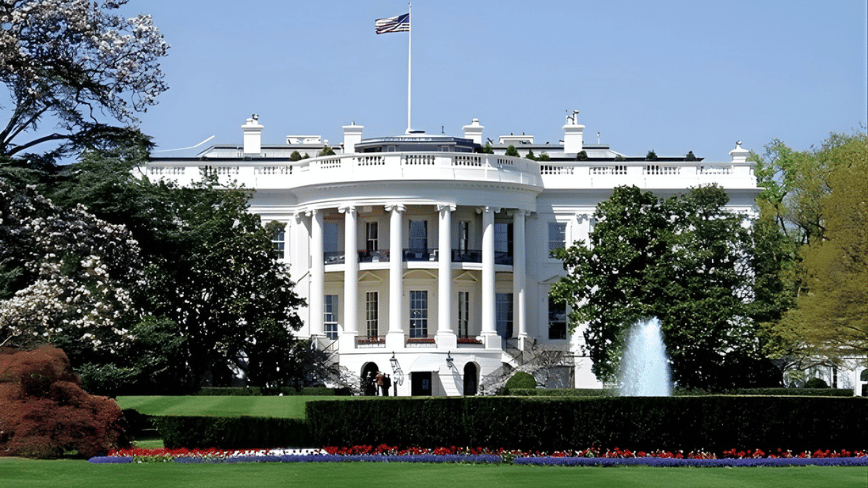

In summary, the Trump administration is aggressively attempting to stop states from regulating AI by employing a DOJ litigation task force, Commerce Department assessments of “burdensome” state laws, and proposing a legislative framework that encourages Congress to establish a “minimally burdensome national standard” rather than state-level regulations. Despite this, states have moved in the opposite direction with 1,208 AI bills introduced in 2025, of which 145 were enacted, and Congress has twice rejected preemption, including a 99-1 Senate vote against an AI moratorium in the One Big Beautiful Bill Act.
Doug Fiefia, a first-term Republican state representative from Herriman, Utah, and a former Google salesperson, introduced House Bill 286, the Artificial Intelligence Transparency Act. This bill would have required AI companies to publish safety and child-protection plans and included whistleblower protections. It passed a House committee unanimously but was blocked by the White House. On February 12, the White House opposed Utah HB 286 through a letter to Utah Senate Majority Leader Kirk Cullimore Jr., calling it an “unfixable bill.” Fiefia stressed the importance of states’ rights, especially with a Republican in power, stating his bill was quite modest by AI legislation standards.
The Trump administration’s campaign against state AI regulation involves three main elements. Executive Order 14365, signed on December 11, 2025, created an AI Litigation Task Force within the DOJ and ordered an assessment of state AI laws by the Secretary of Commerce by March 11. The second element involved a Commerce Department evaluation identifying AI laws in Colorado, California, and New York as problematic. The third was the release of a National Policy Framework for AI on March 20, recommending Congress preempt state laws imposing undue burdens.
State actions have increased despite federal resistance. In 2023, fewer than 200 AI bills were introduced, a number that rose to 635 in 2024, with 99 enacted. By 2025, 1,208 AI-related bills were introduced nationwide, with 145 enacted. Significant AI laws like California’s Transparency in Frontier Artificial Intelligence Act and Texas’s Responsible Artificial Intelligence Governance Act became effective on January 1, 2026. Utah Governor Spencer Cox emphasized the importance of state regulation of AI, particularly concerning child protection and work readiness initiatives.
The federal strategy requires Congress to act for legal force, but Congress remains divided. The most comprehensive federal AI bill is Senator Marsha Blackburn’s TRUMP AMERICA AI Act, a discussion draft aiming to impose duties of care for high-risk AI systems and create an AI liability framework. The One Big Beautiful Bill Act initially included a state regulation moratorium but was removed following a 99-1 Senate vote.
Lobbying efforts from both sides reflect the high stakes. The super PAC Leading the Future supports candidates backing AI-friendly policies, while Anthropic has donated significantly to pro-regulation candidates. A bipartisan coalition of state attorneys general opposes AI preemption, emphasizing the need for state protections against AI-related risks. Colorado’s attorney general intends to challenge the executive order in court.
The order revoking Biden’s Executive Order 14110 reflected a shift away from federal safety evaluations and toward preventing state regulations. The US approach contrasts sharply with Europe’s, where the EU AI Act provides a unified regulatory framework. In the US, AI governance is determined by litigation, executive orders, and the influence of companies benefiting from the regulatory gap. Doug Fiefia is now running for state senate, indicating a generational shift towards understanding and regulating AI from experience in the tech industry. The outcome of this regulatory vacuum remains uncertain.