Apple Seeks Supreme Court Examination of Contempt Decision and Injunction Extent in Epic Games Lawsuit

Apple has submitted a petition to the Supreme Court seeking to overturn significant lower court decisions related to the App Store injunction in its ongoing dispute with Epic Games. The conflict started in 2020 when Epic Games circumvented Apple’s In-App Purchase (IAP) system in Fortnite, resulting in the game’s removal from the App Store and a subsequent lawsuit from Epic.

Although courts have generally supported Apple’s App Store framework and dismissed Epic’s wider antitrust allegations, a ruling in 2021 permitted developers to guide users to alternative payment methods outside of Apple’s IAP system. Apple revised its policies but instituted new limitations, resulting in a contempt finding against the company for failing to adhere to the original injunction.

Apple’s appeal to the Supreme Court presents two primary issues: whether it should have been deemed in contempt for levying commissions on external transactions, and the extent of the injunction, which Apple argues goes beyond the involved parties. The Ninth Circuit upheld the contempt ruling based on the “spirit” of the injunction, a determination Apple disputes, contending that a definitive prohibition is required for contempt findings.

Moreover, Apple asserts that the injunction impacts all developers on the U.S. App Store, which contradicts a previous Supreme Court ruling that curtailed broad injunctions. The Supreme Court has previously opted not to entertain earlier appeals from either side and has recently rejected Apple’s motion to suspend the case. Nonetheless, the current filing aims for a reassessment of the case, with a possible ruling from the Supreme Court anticipated by late June or early July.

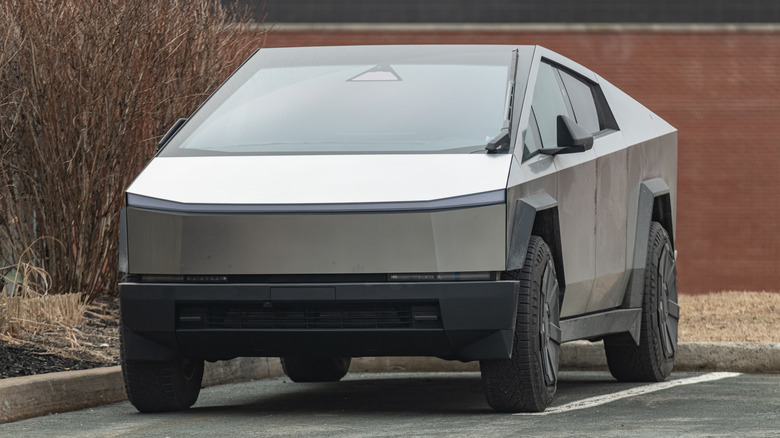
Tesla Cybertruck Driver Detained After Engaging ‘Wade Mode’ and Finding Themselves in a Lake

whether the Tesla Cybertruck can be trusted for reliability, this frequently divisive vehicle is once more in the limelight, although probably not for the reasons Tesla would hope for. The truck, which boasts a 325-mile range, includes several features designed to enhance the driving experience, such as an Overland Mode for off-road use and a Slippery Surface option to help maintain grip. However, the truck’s “Wade Mode” has recently landed one driver in trouble.

A driver of a Cybertruck in Grapevine, Texas, is currently facing legal charges after deliberately driving his truck into a lake. The driver claims that he was testing the Wade Mode function, which permits operation in water bodies. According to his statement, he has previously taken the vehicle into water several times, even in the Atlantic Ocean. Ultimately, he describes the incident as a “miscalculation” because water may have infiltrated the truck’s charging port.

Tesla’s CEO Elon Musk has praised the water capabilities of the Cybertruck since at least September 22, 2022, when he tweeted on X that “Cybertruck will be waterproof enough to serve briefly as a boat, so it can cross rivers, lakes & even seas that aren’t too choppy.” Moreover, discussions on X have been notably polarizing, with users either criticizing or supporting the driver’s actions. There has been no indication yet whether the lake incident has caused the truck’s value to drop like others that faced a decline post-launch.

Cybertruck driver faces charges after entering lake with vehicle

Lenovo’s Creative Strategies to Revolutionize Viewing Experience for the 2026 World Cup

exciting new Lenovo tech concept items you must check out. What surprises does the company have in store for this year’s tournament?

Leading Lenovo’s strategy is the introduction of 3D Digital Avatars crafted from 3D assets and cutting-edge generative AI. Lenovo claims that these avatars, along with the company’s new Football AI Pro tool, will enhance officiating technology and support decision-making for FIFA’s match officials. Viewers will also witness these AI-generated avatars in 3D animations during offside replays, designed to offer greater visual clarity for audiences both at home and in the stadium.

Lenovo will also integrate its AI technologies into FIFA’s current referee body-camera systems and intelligence operations. The company plans to advance venue surveillance by creating “digital twins” of each location. For fans, there may be new opportunities to watch the games and engage with the cities hosting them.

The significance of Lenovo and FIFA’s collaboration

The technological solutions set to be implemented at this year’s World Cup were revealed at Lenovo’s Tech World innovation event during the Consumer Electronics Show 2026. We showcased some of the most impressive tech advancements from CES 2026, but this year’s exhibition was clearly more than just consumer goods. For soccer enthusiasts, it was a first opportunity to hear from FIFA President Gianni Infantino and Lenovo Chairman and CEO Yuanqing Yang about what to anticipate when viewing the upcoming World Cup.

During a Q&A session at CES 2026, Yang discussed the incorporation of Lenovo’s technology into the World Cup experience (via <a href="https://www.techradar.com/pro/we-are-helping-innovate-at-the-frontiers-of-what-is-possible-to-evolve-the-sport-and-make

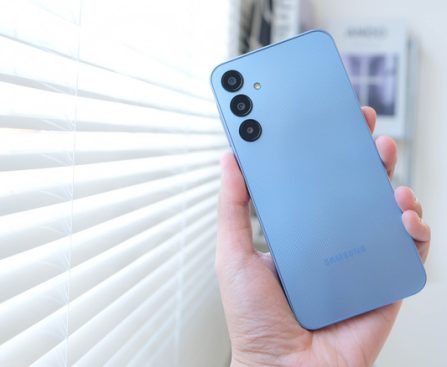
Consumer Reports Suggests Purchasing the $300 Samsung Smartphone

Consumer Reports. There are indeed some budget-friendly Android smartphones that are worthwhile options, and the Galaxy A25 might be one to think about at $300.

Cost is a key factor in why Consumer Reports ranked the Galaxy A25 among the top smartphones of 2026. Their evaluation of phones considered various aspects of smartphone performance, such as battery life and camera quality. The A25 received a recommendation for those in search of a premium smartphone at a reasonable price.

Regarding pricing, Galaxy phones can be found at both lower and higher price points compared to the A25, and even the A25’s price can change depending on the specific model and memory size you choose. On Amazon, you can purchase a Samsung Galaxy A17 5G phone for <a href="https://r.bttn.io?btn_ref=org-225e4e0aac880b8f&btn_url=https%3A%2F%2Fwww.amazon.com%2FSamsung-High-Res-Charging-Expandable-Manufacturer%2Fdp%2FB0FXY1DZ78%2Fref%3Dsr_1_1%3Fcrid%3D1KOP6XGHGLIGC%26dib%3DeyJ2IjoiMSJ9.xnmqklw94LxkXzfwLIdXhGhd2Ukj79JfFO_4gpIxdT1g4qEVPM6jJz2sLXesJacShofx7LKb8PkxpsmKDTStifT28TZn-vPhFzHyBNWUm4y7YUEB8rjC1LfqpQenyiov_QHxkabPriYi3vcXHazCXEx1bUeEYLNhGYp8kBWpdo6sZoJxgca_ZZksOsCHG7vOC3QueWf_-szTXNA8v8rjq4OhirJXXlB5vTb1UQw2Ses.xssWcl6ovNEzCrmyBbYLXdr6lWW9vcEwlOfLTsXM

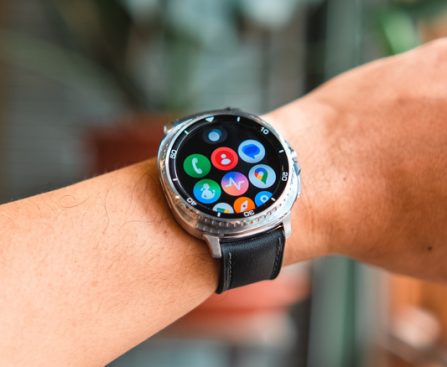
Five New Functions of Wear OS 7 for Android Smartwatches in 2026

Android smartphones are set to receive numerous new functionalities in 2026, but Google has not overlooked smartwatch enthusiasts. The company has officially introduced Wear OS 7 in a post on the Android Developers Blog, outlining various enhancements it will deliver. Users can anticipate accessing this update later in 2026, while developers have already been granted access to the Wear OS 7 Canary emulator to evaluate their applications for compatibility.

Along with the timeline for release, Google also disclosed several thrilling new capabilities that you’ll enjoy on your smartwatch with Wear OS 7. Some of these address significant concerns that have previously caused users to abandon their smartwatches, while others enhance the overall smartwatch experience.

The primary objectives behind this update are to minimize the necessity of frequently retrieving your phone, enhance the customizability of Wear OS to resemble Android, and extend battery longevity. Google is also integrating Gemini Intelligence more deeply into Wear OS 7 following its recent assertive drive for AI integration across the Google ecosystem, and is simplifying the process for developers to create native applications for smartwatches.

1. Real-time tracking with Live Updates