
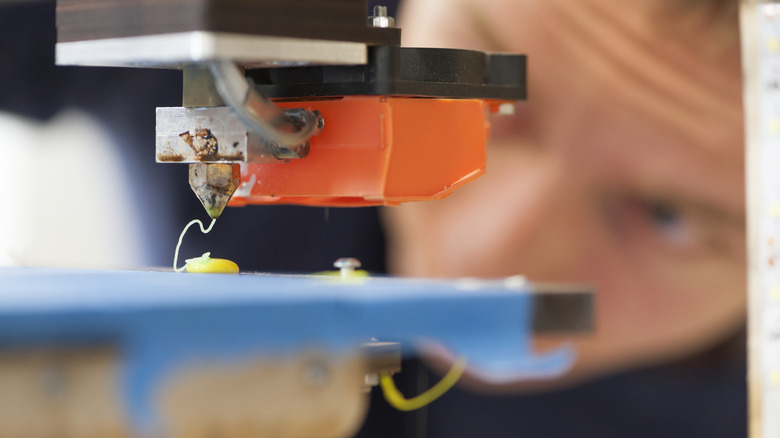

Environmental Protection Agency has discovered that printers emit gases and hazardous particulates throughout the printing process due to these materials and their handling. Without adequate ventilation or protective equipment, contact with these pollutants may pose health risks.
In particular, 3D printers release a substance known as volatile organic compounds (VOC). Simply put, VOCs are gases emitted from certain solids or liquids, often under specific conditions, which can be harmful in high quantities. Common examples include paints, strong chemicals, and adhesives. However, 3D printers and the various filaments utilized can also emit these compounds, making proper ventilation essential for 3D printers.
Regrettably, this is not the sole safety risk linked to contemporary 3D printers. While in operation, they can also emit ultrafine particles capable of entering the body and causing additional health issues. If inhaled, for instance, they may lead to inflammation, asthma, headaches, coughing, and other disturbances. Depending on the filament type, these health issues could be worsened.