
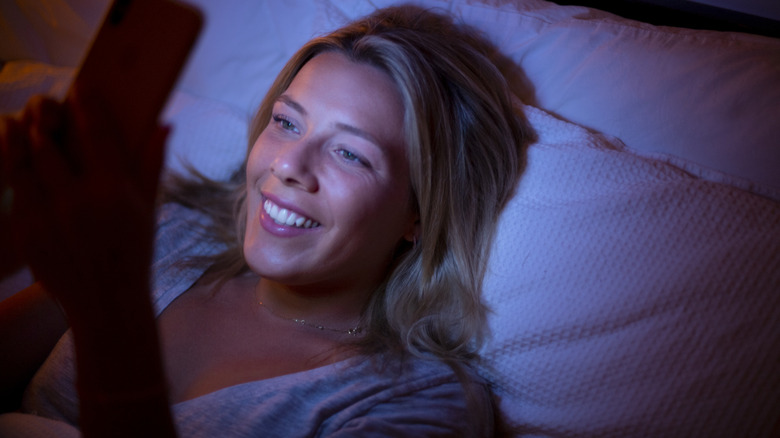

The blue-light-blocking eyewear market might hit $5 billion within the forthcoming decade. However, specialists suggest that blue light has its benefits, and your smartphone could be disrupting your sleep for factors that extend beyond mere light exposure.
The sun is a key provider of blue light. Humans are inherently designed to rise when blue-infused daylight enters their vision. Researchers from Oxford indicate that light that reaches the eye aids in aligning the body’s internal clock with the external cycle of light and darkness throughout the day. Exposure to blue light during nighttime can mislead our biological systems, disrupting circadian rhythms that control hunger, hormone release, and sleep. Yet, it’s not the sole type of light creating issues. Melanopsin, the retinal protein that signals to the brain whether it’s day or night, is most responsive to blue light but also reacts to various light types.
Hence, attributing your sleep troubles solely to your phone’s blue light is an oversimplified view. A study from Portugal discovered that blue-light exposure from typical digital devices was less than what individuals receive from natural sunlight, which indicates that timing and bedtime routines are more critical than blue light exposure on its own. Screen brightness, the time of day, length of use, and mental engagement all impact sleep quality. There are measures you can adopt to enhance your sleep – even if you are unwilling to forgo your nighttime rounds of that iPhone word puzzle that’s more challenging than Wordle.