
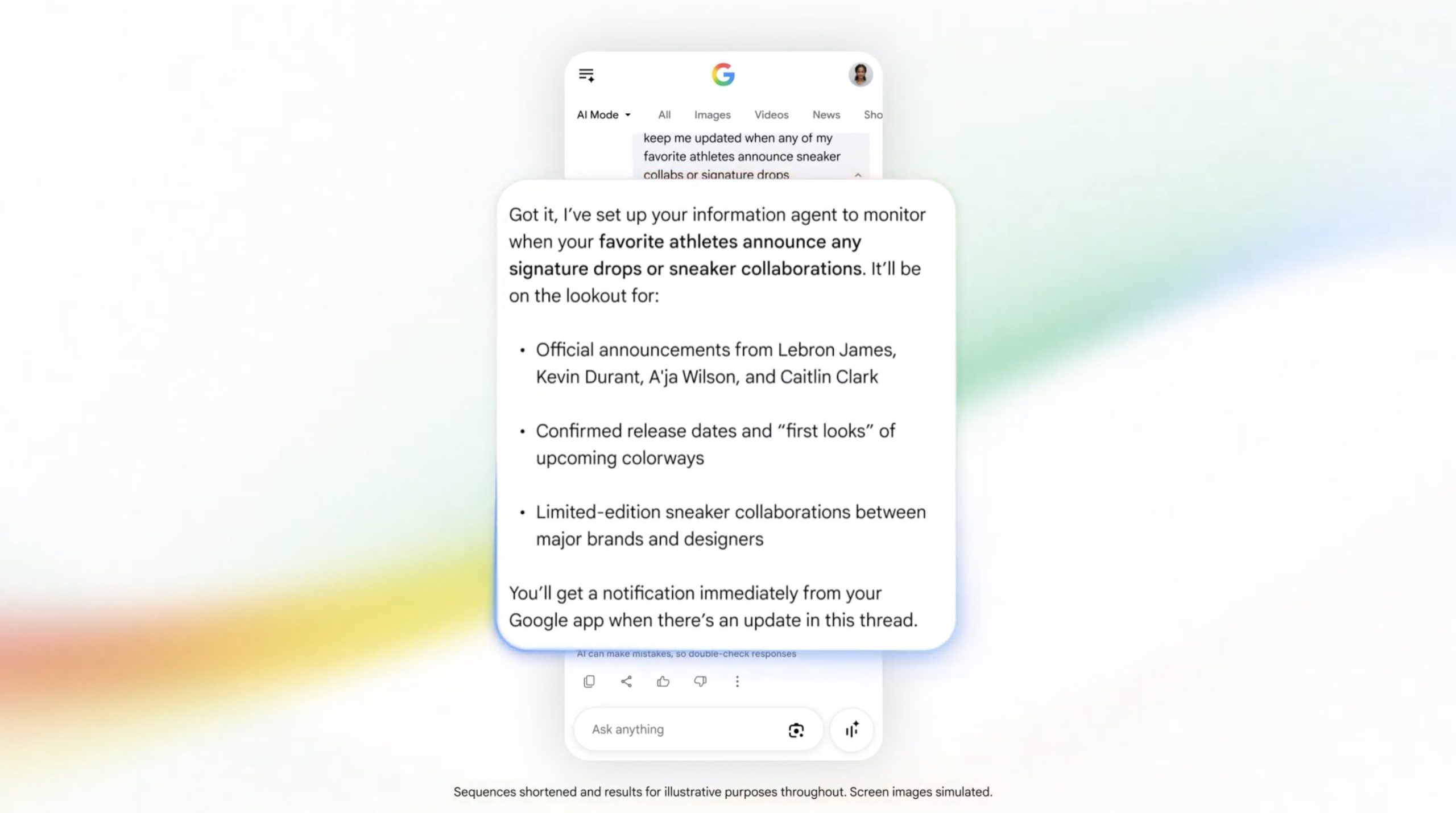

At Google’s I/O developer conference, a key introduction was AI agents, a new way for consumers to interact with the web, albeit confusing for many. Google revamped its Google Alerts service into AI-powered information agents for continuous updates on various interests like market trends or weather alerts.
Google Spark, another AI agent, integrates with Google products, assisting with tasks such as email management, inventory tracking, or group trip planning. An example given was organizing a neighborhood block party.
Notifications from Spark can be tracked using Android Halo. Additionally, Gemini’s app is receiving an AI feature called Daily Brief, summarizing your Gmail inbox, calendar, and tasks.
Though many products aren’t widely released yet, they’re available to subscribers of Google’s Gemini Ultra plan. Products like Information agents, Spark, and Halo will soon be rolled out to users in the U.S., with varying availability based on subscription levels.
The introduction of AI agents aims to transform screen interaction, with a future focus on expanding access to non-paying users. Meanwhile, there’s a growing divide between heavy AI adopters and average consumers. Many people today link AI mainly to chatbots, rather than tools aiding in tasks and reducing screen time.
The conference also highlighted various Google products that integrate AI, sometimes overshadowing real consumer problems. Startups like Poke, Poppy, and Wingman offer simpler methods for interacting with AI agents via text messaging.
In summary, AI agents are being showcased as advanced solutions, but their current availability is limited, and Google has yet to emphasize their potential for everyday users effectively, keeping these innovations mostly inaccessible to the general public.