
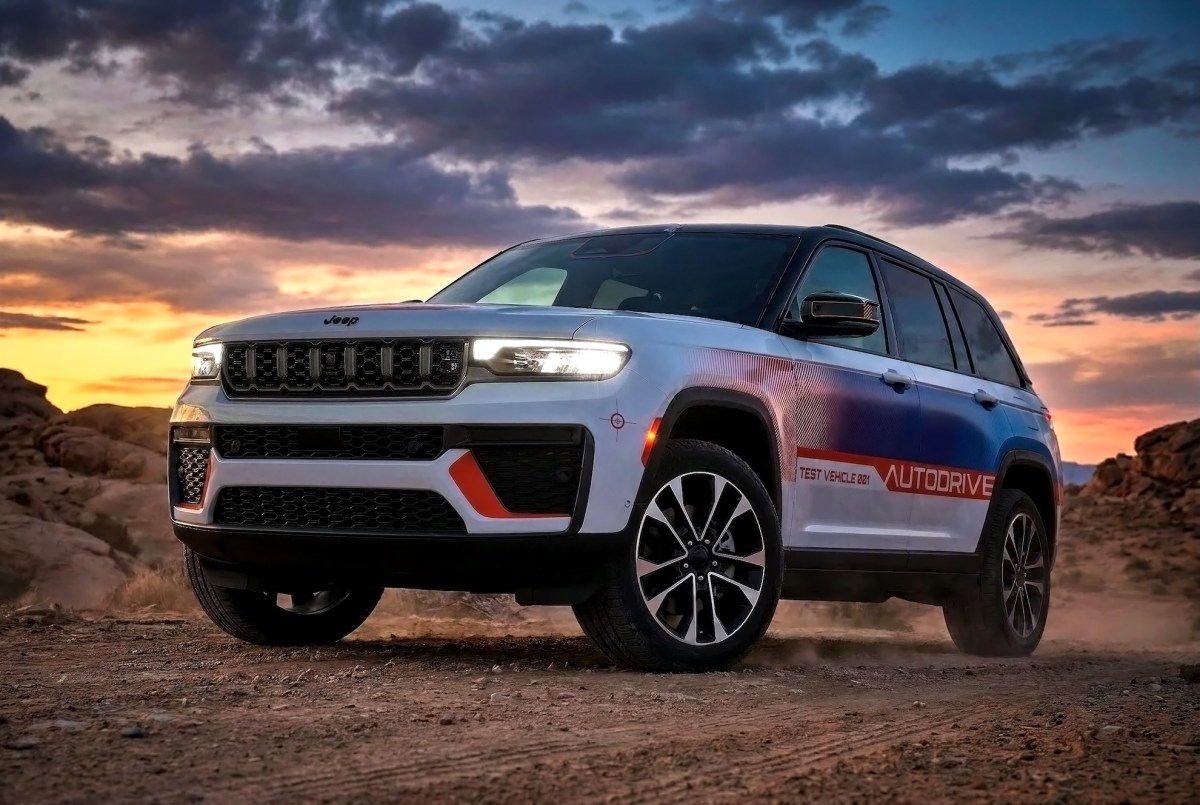

Stellantis, the automaker of brands like Jeep and Ram, has partnered with self-driving startup Wayve to introduce hands-free driving to its vehicles by 2028. The collaboration was announced during Stellantis’ investor day at its headquarters in Michigan.
This marks the second automaker deal for Wayve, a UK-based startup, following a $1.2 billion Series D funding round with investors like Nissan, Stellantis, Microsoft, Nvidia, and Uber. The partnership’s financial details and the specific Stellantis vehicles to receive Wayve’s self-driving software have not been disclosed. However, Wayve CEO Alex Kendall described it as a commercial contract aimed at integrating the tech at scale, initially focusing on the North American market.
Kendall highlighted Stellantis’ vast global scale and diverse product offerings, which align well with Wayve’s adaptable AI technology. By 2028, Stellantis plans to expand its North American market with 11 new vehicles by 2030, under a $70 billion turnaround plan, with seven priced under $40,000 and two under $30,000.
It remains uncertain if Wayve’s technology will feature in lower-cost models. Wayve’s self-driving system isn’t dependent on specific sensors, chips, or high-definition maps, instead using an end-to-end neural network based on data from vehicle sensors. This system can run on any chip that the OEM partners provide.
Wayve offers two products: a hands-off assisted driving system similar to Tesla’s Full Self-Driving (Supervised) and a driverless system meant for robotaxis and passenger vehicles. Stellantis will adopt the hands-off, eyes-on system; a prototype was developed in just two months, with engineers having the vehicle operational within weeks using the AI-based system.
“I think that what we’ve been able to show is that we’ve built a version of FSD that’s truly set up to generalize,” Kendall said, highlighting its capability across different compute stacks, sensors, and vehicle models.