
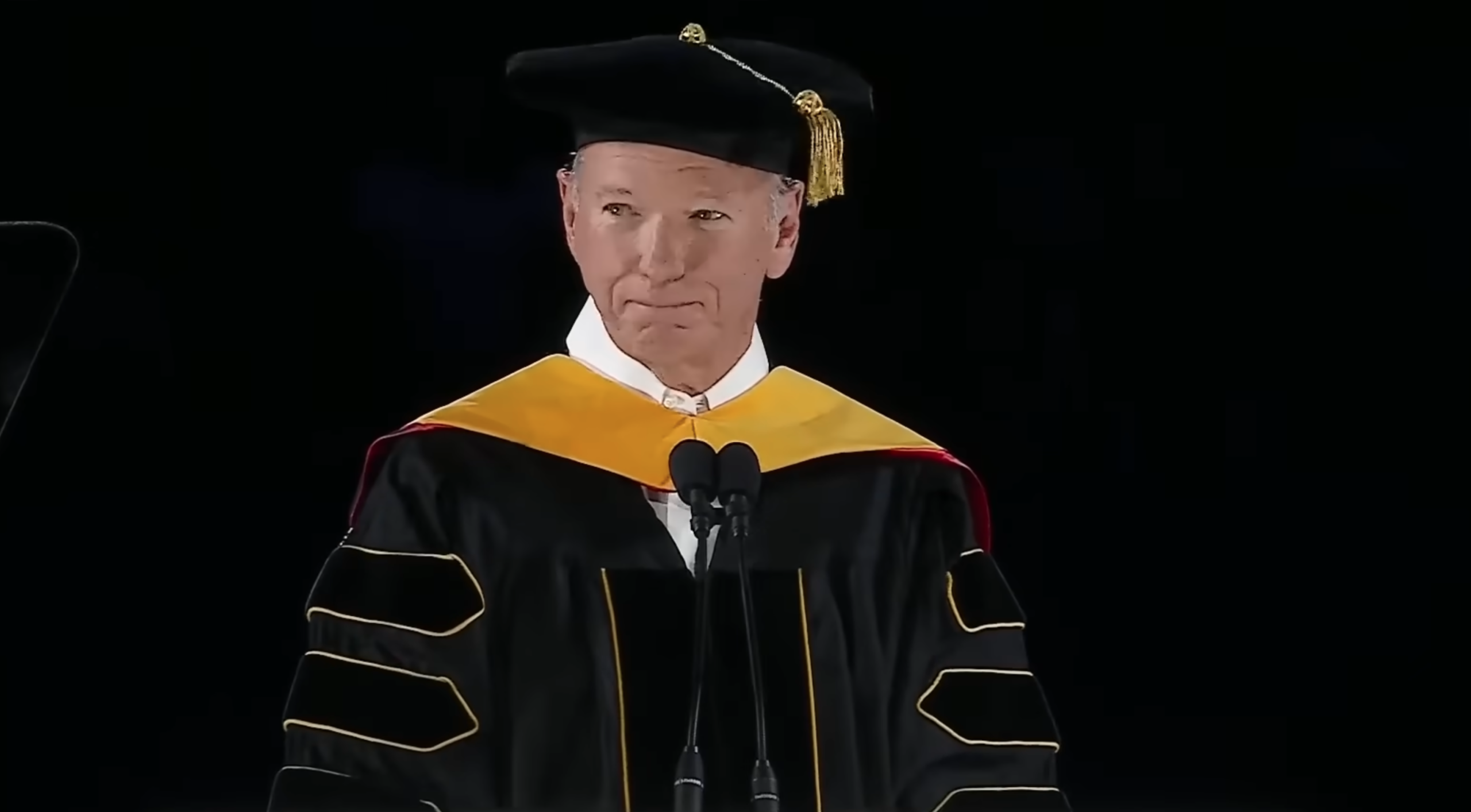

Graduates are heckling corporate leaders who endorse AI in their commencement speeches, a reaction that seems to surprise only the executives. Viral videos have captured the likes of former Google CEO Eric Schmidt being booed for advocating AI as essential and unavoidable. This resonates with young people confronting a challenging job market and global instability.
“They deserve everything they’re getting,” said Penny Oliver, a George Mason University political science graduate. She suggested the executives’ dismissive attitude highlights a disconnect. Schmidt faced ridicule at the University of Arizona for urging graduates to embrace AI. Journalist Marisa Kabas noted that young people are being forced onto the AI “rocket ship” without seats.
At the University of Central Florida, property executive Gloria Caulfield received a chilly reception for likening AI to the industrial revolution. Scott Borchetta, a music CEO, was jeered at Middle Tennessee State University after mocking AI critics. These incidents underline the growing anti-AI sentiment among graduates.
“They’re understandably angry,” said Oliver. She highlighted the frustration of investing in education only to face tech-driven job insecurity. The clashes showcase a rift between tech advocates and young graduates facing AI’s daunting implications, from environmental concerns to critical thinking erosion.
Game designer Austin Burkett, an NYU graduate, noted the disconnect of well-off executives promoting AI without considering its repercussions on job security. While varied reactions to AI-promoting speeches exist, liberal arts students show the strongest opposition, particularly those eyeing careers in creative fields threatened by AI.
Recent incidents, like AI failing to read names at a Glendale Community College ceremony, exacerbate student skepticism. Young people, aware of AI’s shortcomings, are vocal critics against Silicon Valley’s influence. Viral videos may spark momentary unity, but lasting change demands organized action.
Movements against AI data center construction exemplify tangible resistance, reflecting public concern over their environmental impact. Graduates like Burkett are hopeful, inspired by youth-driven initiatives highlighting AI’s environmental harm. These actions demonstrate young people’s commitment to addressing AI challenges.