
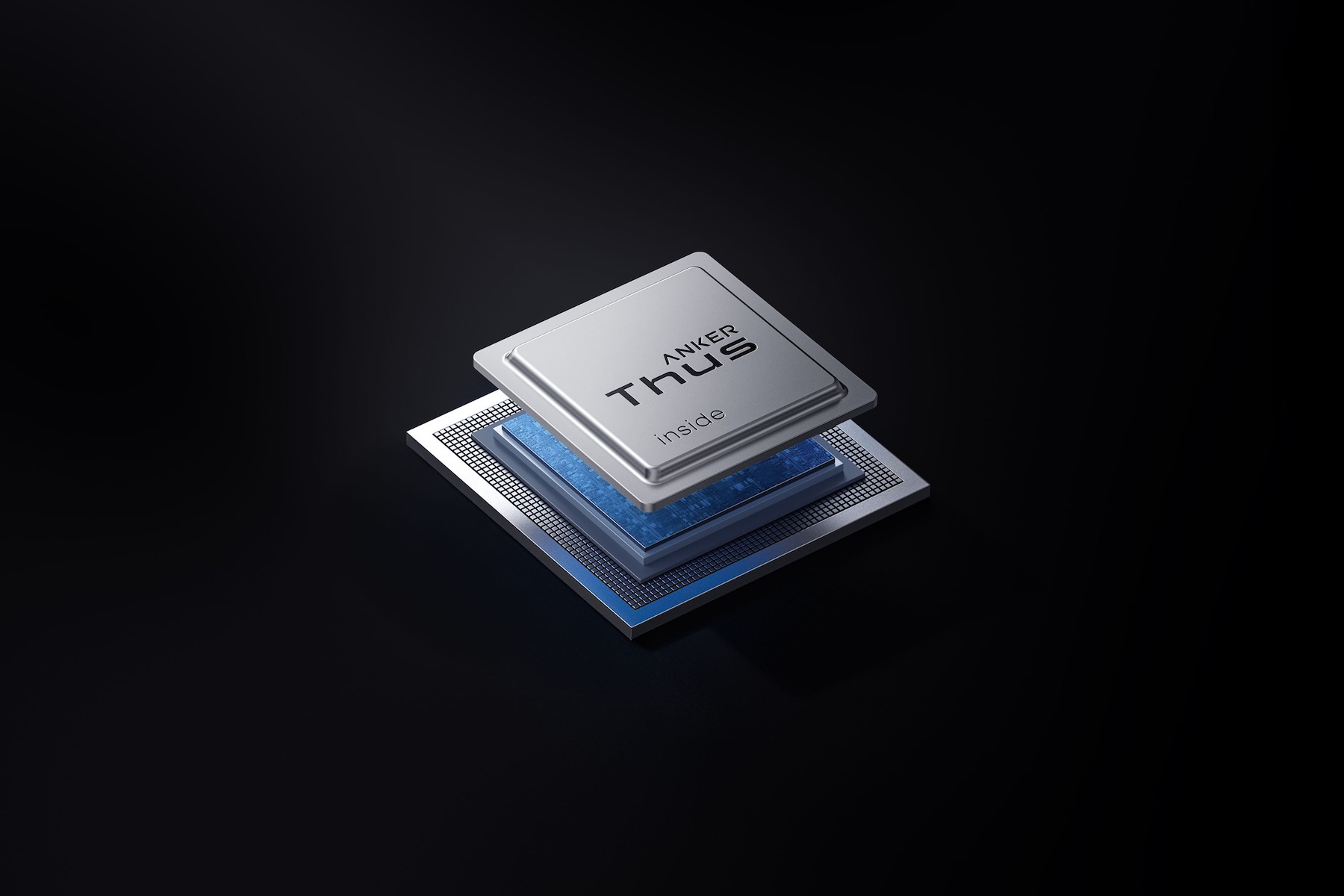

The Thus chip will initially be introduced in earbuds before being incorporated into other Anker products.
Anker has unveiled its custom silicon, the Thus processor, designed to integrate local AI into various devices, including audio products, mobile accessories, and IoT gadgets. The Thus chip is the world’s first neural-net compute-in-memory AI audio chip, boasting a smaller size and reduced power consumption for complex computations, making it ideal for compact devices.
Anker CEO Steven Yang explained that unlike previous AI chips, which separate the storage and computation of data, Thus combines both in one location, eliminating the need to transfer parameters multiple times for each inference.
The first application of the Thus chip is in Soundcore’s upcoming flagship earbuds. These earbuds present significant challenges due to their limited size and power capacity. The constantly active chip had previously restricted designs to small neural networks, but the energy-efficient compute-in-memory design allows Thus to manage several million parameters, enhancing computing power for complex tasks like noise reduction.
Traditional call noise canceling on smaller neural networks often struggles in noisy environments, leading to compromised audio quality. Anker claims its forthcoming earbuds, featuring Thus, eight MEMS microphones, and two bone conduction sensors, will deliver clearer call audio in any setting.
While the promise is exciting, the real-world performance of the compute-in-memory Thus chip against competitors like Apple AirPods Pro 3 and Sony WF-1000XM6 remains to be seen. According to a March leak, the earbuds incorporating Thus will likely be the Liberty 5 Pro Max and Liberty 5 Pro, priced at $229.99 and $169.99. Anker plans to reveal full details and additional AI features on May 21 at Anker Day.