
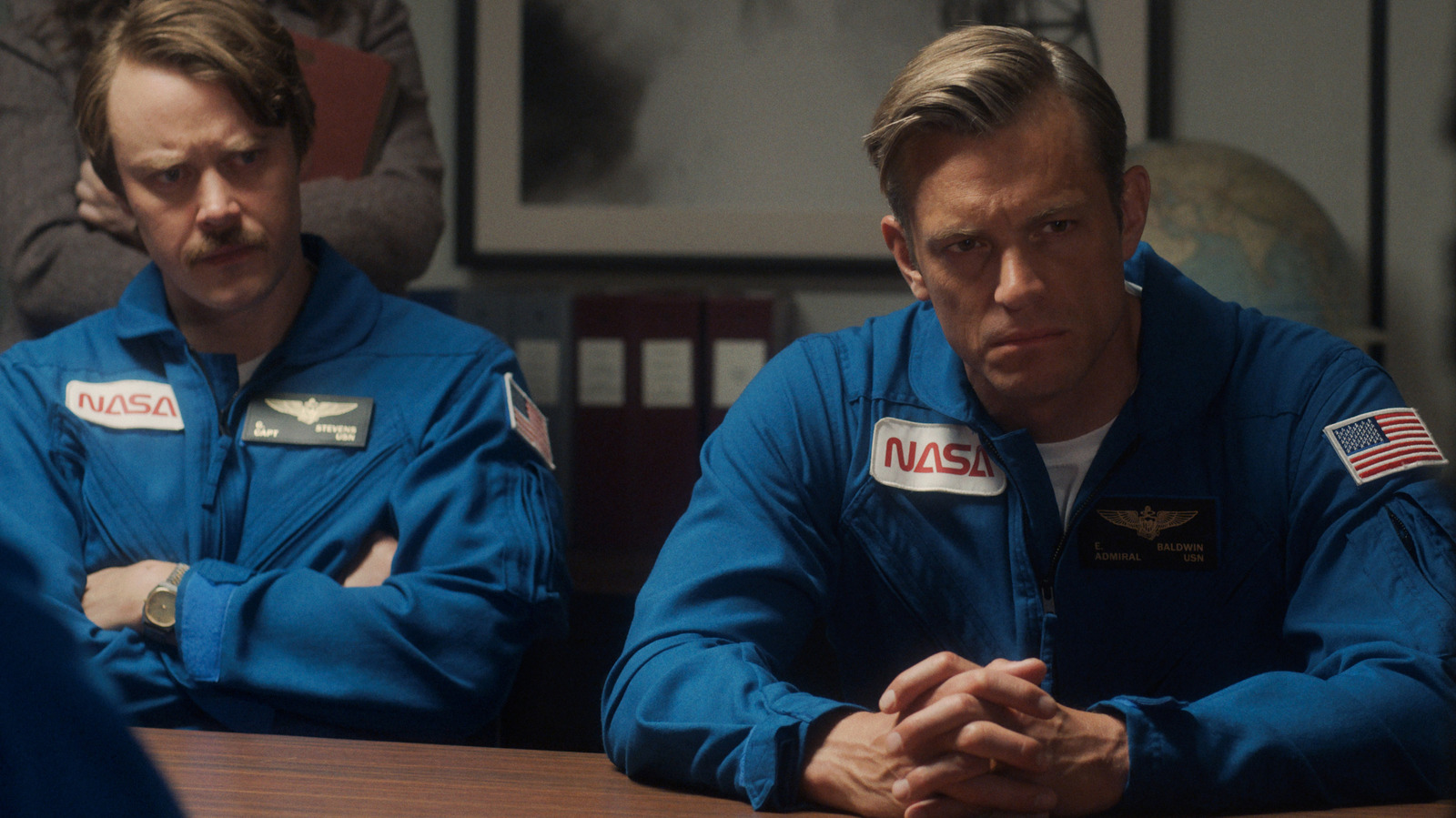

“For All Mankind” has been referred to as a contemporary sci-fi masterpiece by enthusiasts of the acclaimed Apple TV series, currently in its fifth season. It presents an alternate reality where the USSR landed a cosmonaut on the moon prior to NASA, leading to a prolonged Space Race that carries into the 21st century. The series poses intriguing inquiries about humanity and illustrates how a single event can alter the course of history.
As a series influenced by true events and scientific principles, “For All Mankind” strives for accuracy and factual representation. However, this doesn’t imply that it refrains from making alterations. Certain elements are deliberately distorted to meet audience expectations and align with the show’s creative vision, while others, such as utilizing a modified NASA logo, are made out of respect. Consequently, although the show features historical figures like Neil Armstrong and Sally Ride, they have assumed supporting roles or appeared briefly rather than taking center stage.
Incorporating some recognizable names and others associated with space exploration serves to anchor the narrative in reality, despite the story straying further from actual history. Nevertheless, by concentrating on fictional characters, “For All Mankind” can narrate the tales it intends to share without completely reinventing the lives of real individuals, many of whom have passed away. As co-creator Ronald D. Moore mentioned in a conversation with the “Liftoff” podcast, “if you’re doing wild and radical things with characters or making them alcoholics or whatever for story purposes, you don’t really want to do that to someone who’s real.”
For All Mankind emphasizes fictional characters out of esteem for real individuals.
Moore also conveyed a wish to portray historical figures in a manner that “honors them and who they were.” That being said, the series is open to straying for the narrative’s sake. As the storyline diverges further from reality, it embraces more creative liberties. For instance, in the world of “For All Mankind,” the ongoing Space Race accelerated civil rights advancements, resulting in female astronauts appearing much earlier than in 1983.
Nonetheless, Sally Ride appears frequently in Season 2 and, without revealing specifics, has a significant moment in the finale that underscores her importance even apart from her primary achievement. This is also likely a reference to the real Ride’s role as a whistleblower in the Challenger disaster investigation, recognizing that she was more than simply the first American woman in space.
As an alternate history series that portrays real individuals through actor depictions and archival footage, “For All Mankind” must find a balance between storytelling and honoring those whose narratives are being reinterpreted. By its very nature, the show must implement certain adjustments if it intends to feature historical figures at all. Therefore, it is logical to center the plot and drama on original characters as much as possible.