
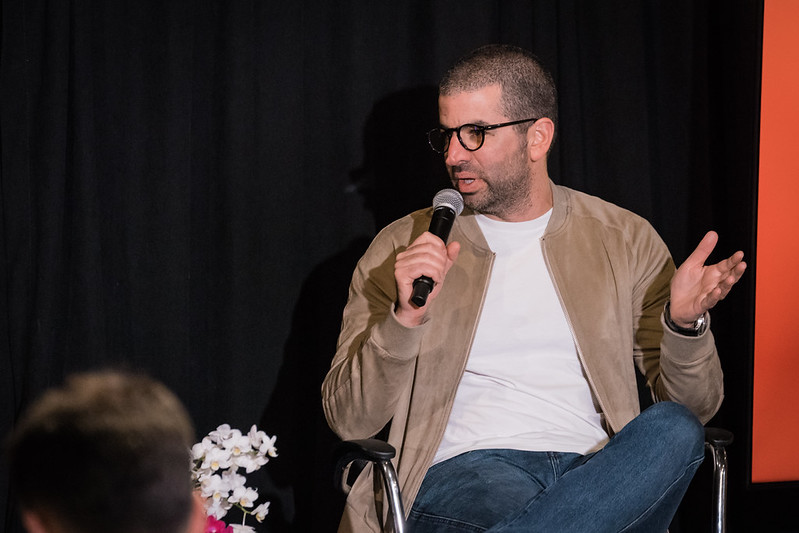

In 2015, Lior Susan launched Eclipse Ventures with a focus on digitizing the physical world, a concept not widely embraced in Silicon Valley at that time. “It was the era of enterprise software and SaaS, and it felt fairly lonely the first couple of years,” Susan recounted at a recent StrictlyVC event in San Francisco.
Over a decade later, Eclipse has become integral to the tech world. The firm’s $6.5 million Series A investment in Cerebras Systems in 2016 led to a total return of $2.5 billion when the semiconductor company recently went public. Eclipse invested $147 million in Cerebras, resulting in a 17-fold return at the IPO price of $185 per share, as per Eclipse.
Susan views the success with Cerebras as just the start of substantial gains from his conviction that with 85% of global GDP tied to the physical world, investing in more than just software companies can be highly profitable.
Both public markets and startup founders are now appreciating the value of physical-world tech. Susan highlighted the recent all-time high shares of TSMC and Micron and the aspiring founders eager to integrate hardware with software in their startups.
“The real moat in software is gone. You can vibe code pretty much whatever you want,” he stated.
Susan referenced the public market’s earlier belief this year that enterprises might turn to Anthropic’s Claude Code or OpenAI’s models for custom software, leading to a decline in many SaaS stocks.
“What you cannot do with ‘vibe code’ is manufacture wafers, because you need machines and silicon, and they need clean rooms, and a bunch of other things,” Susan said.
Investors and founders are increasingly interested in tech that interacts with the physical world, not just semiconductors. Last year, Eclipse’s portfolio companies in sectors like robotics, energy, and defense attracted nearly $15 billion from outside investors, with $4.5 billion raised in Q1 2026 alone, a significant contrast to the firm’s early years, where their companies raised less than $4 billion in total.
Eclipse’s recent follow-on rounds showcase a track record that many venture firms would covet. This year’s late-stage deals include $1.2 billion for Wayve, $650 million for True Anomaly, $270 million for Bedrock Robotics, and $200 million for Oxide Computer, all of which had Eclipse as the Series A investor.
At a glance, the interest in physical-world tech might seem AI-driven, whether through infrastructure like chips and data centers, or AI’s potential to make robotics viable. However, Susan points out other substantial drivers behind the momentum.
Beyond technology — specifically AI — the market needs capital, customer demand, talent, and policy to thrive. Susan noted that besides investors and engineers pivoting from SaaS to sectors like robotics, semiconductors, space, and mining, the U.S. government is also promoting these industries with subsidies and favorable regulation.
“This is the first time I believe in America ever, from Henry Ford and Carnegie, those five forces are aligned,” Susan commented. “For builders like us, this is the best time to build those companies.”
When you purchase through links in our articles, we may earn a small commission. This doesn’t affect our editorial independence.