
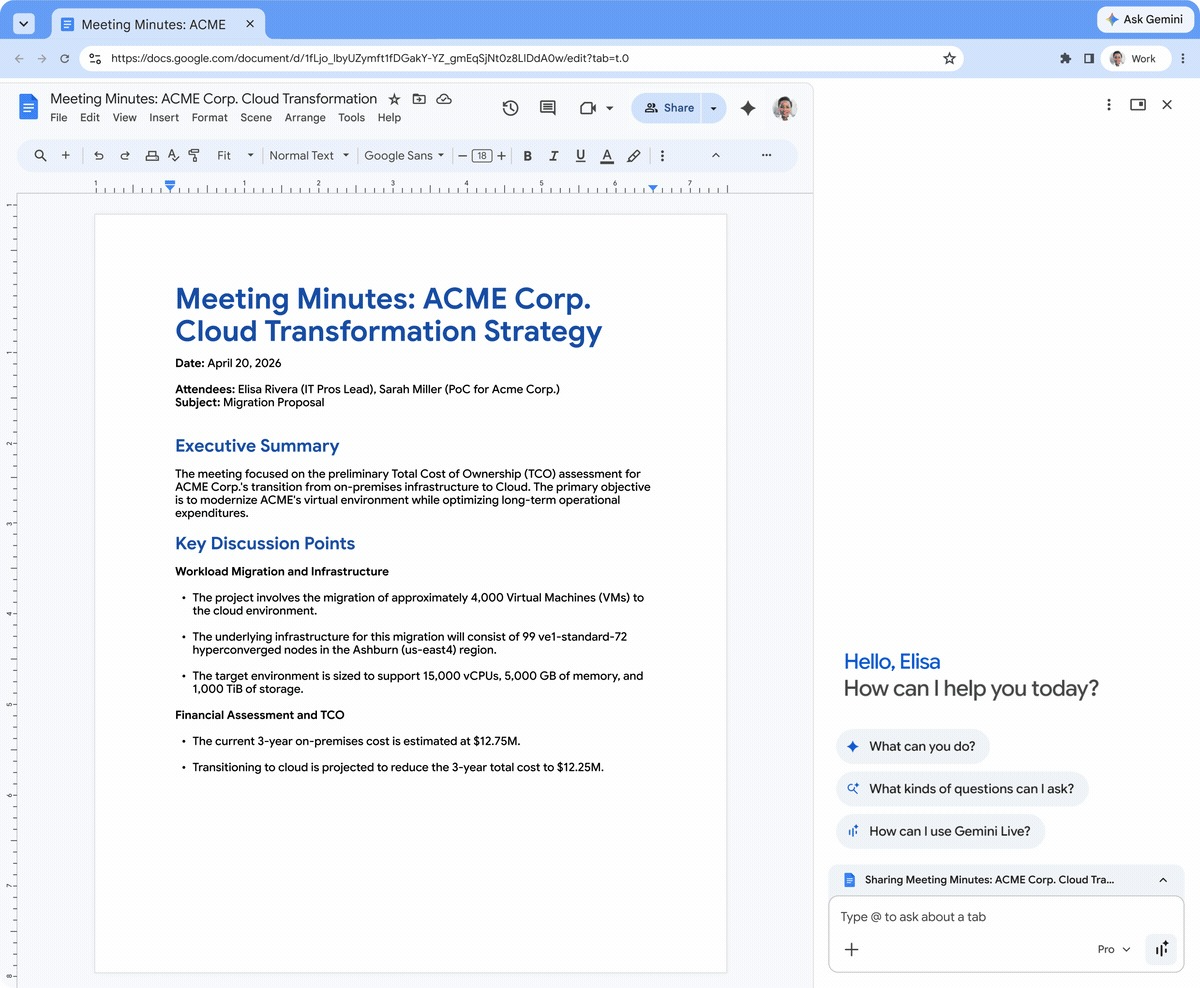

As part of Google Cloud Next’s announcements, the company plans to introduce “auto browse” agentic capabilities to Chrome users in enterprise environments, alongside improved security features. Auto browse will leverage Gemini to understand live context in a user’s browser tabs to perform tasks such as booking travel, inputting data, and scheduling meetings.
Google suggests the tool can aid in entering information into a CRM system from Google Docs content, comparing vendor prices, summarizing a candidate’s portfolio before an interview, and extracting key data from competitors’ product pages. While workflows will still require user review and confirmation, the aim is to streamline mundane tasks, allowing users to focus on more strategic work.
This promise from AI advocates is to reclaim users’ time. However, studies indicate AI may intensify work. Its impact at the enterprise level remains to be fully seen, as AI integration may lead managers to expect more tasks completed in less time.
The feature will initially be rolled out to U.S. Workspace users. It will be accessible via policy and won’t use organizational prompts to train AI models. Users can save common workflows, referred to as “Skills,” for future use and accessed with a slash (“/”) or plus sign. Google aims to detect unauthorized AI tools in workplaces via Chrome Enterprise Premium, expanding to help IT identify compromised extensions or services, specifically detecting “anomalous agent activity.”
This feature, termed “Shadow IT risk detection,” will allow IT teams to monitor both approved and unapproved Gen AI and SaaS site usage. IT teams will also receive AI-generated “Gemini Summaries” of important updates, policies, and suggestions. Additionally, Google announced a wider partnership with Okta for enhanced security against session hijacking and improved security controls for extensions with Microsoft Information Protection (MIP) integration to ensure uniform security policies across organizations.