
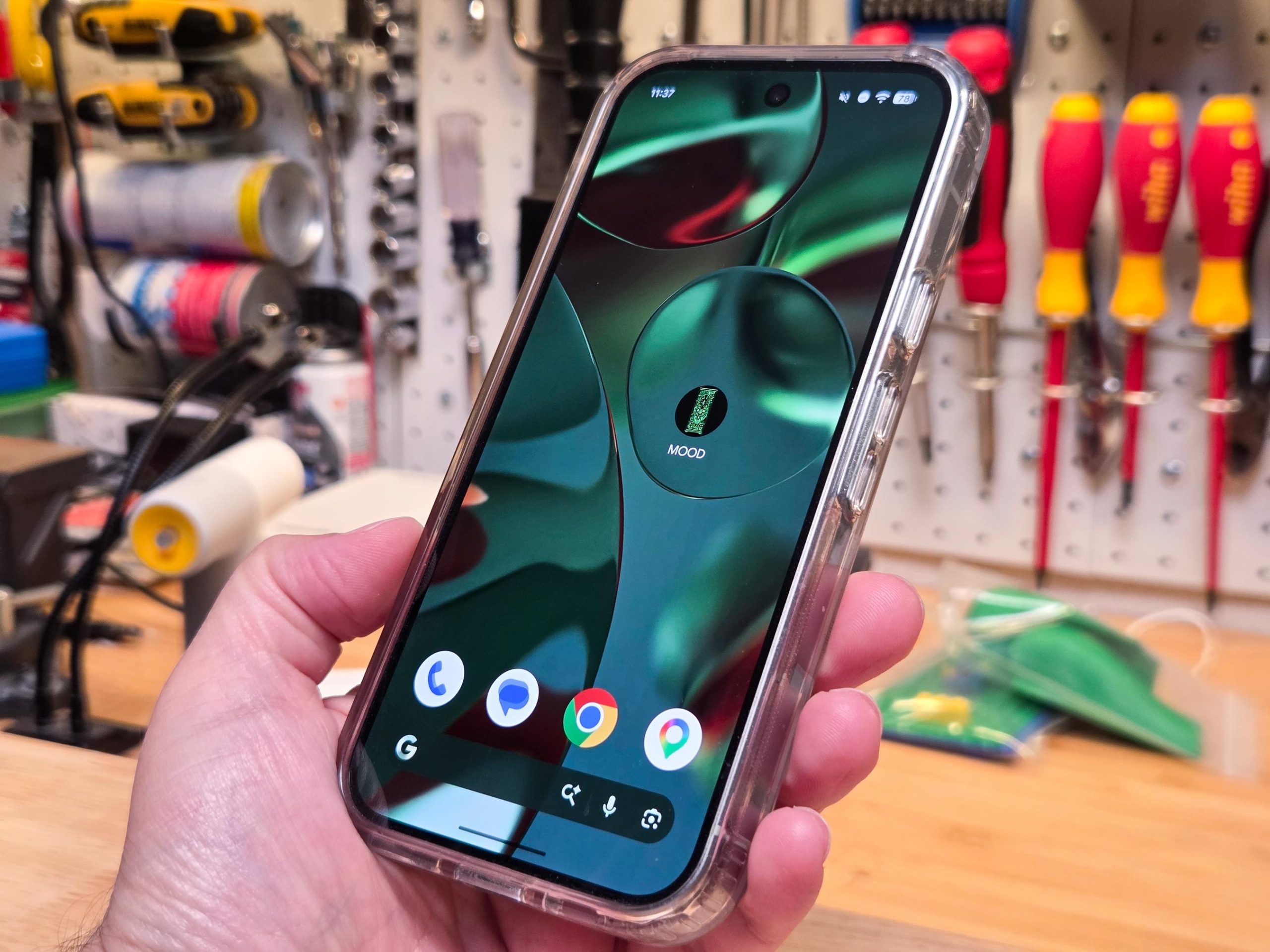

Google AI Studio delivers what it promises: from a prompt to a phone app in a short time.
Yesterday, I created my first Android app and then built two more, achieving three in just one afternoon.
For one of them, I typed 148 words into my web browser and took a break. Ten minutes later, a new app was on my Android phone. I only needed to enable USB debugging mode on my phone and connect it to my PC; Google’s AI Studio handled the rest.
I entered some words, clicked install, and there it was: a functioning program. I was nearly convinced by David, Allison, and Jen: The personal software revolution is here, it’s arriving on our phones, and soon, the average person will be able to manage complex smart home devices without coding skills.
Then I tested my three apps: a calorie counter and two games. They lacked quality. As I started refining them, AI Studio notified me I had reached my daily usage limit and would need to pay or wait to continue.
Despite this, the capabilities are impressive. In one morning, my colleague Stevie Bonifield created a personal workout tracker that was effective enough for daily use. Faced with Gemini’s upsell, I even contemplated subscribing for a few months—something unexpected from Google.
How Google’s AI Studio creates an Android app:
On Tuesday, Google demonstrated AI-driven coding with a game similar to Doom, and we joked about creating “MOOD,” a text-based adventure game. Google took that idea and began expanding on it when I typed, “Create a Doom-like text adventure game called MOOD, which stands for Modern Online Oratory Dungeon,” into AI Studio. Gemini started adding to the idea, suggesting the game should feature procedurally generated levels and challenging, turn-based combat.
I wasn’t interested in random levels but wanted a classic text adventure with a well-defined map. Still, the turn-based combat and auto-generated map ideas were intriguing. Gemini also suggested having secrets and a satisfying progression system, to which I mostly agreed.
This was the final input before coding began.
Then, the development process started. Unlike Claude Code, as noted by my colleague Jake, Gemini proceeds without consulting the plan with the user, although you can review the code if necessary.
One minute later, there were already five design prototypes available:
Twenty minutes later, I clicked “Install” to transfer the game to a Pixel 9 device.
As expected, the writing was subpar. There were no demons in sight. The dungeon consisted only of 11 rooms, beatable in under a minute by repeatedly pressing the attack button. You can now finish the game quickly, thanks to Gemini addressing two major bugs.
Here’s a glimpse of MOOD:
The game’s narrative, supposedly full of branching dialogues and multiple endings, ended with a single decision: defeating the “Core Orator,” an AI turning online outrage into profit, through several means including a backdoor password.
The game revealed supposed “secrets” as obvious interactive buttons, making text input unnecessary. For instance, encountering a treasure chest immediately warns you it’s a Mimic, the Dungeons & Dragons creature disguised as treasure, and even labels it as an enemy, preventing you from leaving without combat.
Furthermore, the game provides the backdoor password for the secret ending right when needed.
Bug fixing is mostly smooth, provided Gemini identifies the issue correctly. Reporting that the game stalled during a conversation with “The Whistleblower” due to a missing exit button, it quickly generated a new app version. After installing it, the app resumed exactly where it was left off, now including the necessary button.
My other apps need more refinement. The calorie counter tried using the paid Gemini API to estimate food calories but without a key, it was inaccurate. Directing it to other databases, it significantly underestimated calorie counts.
For instance, insisting a 16-ounce boba milk tea never contained just 190 calories, I realized Gemini’s error: it equated “boba milk tea” with low-calorie “milk.” Gemini promised better accuracy henceforth. However, estimating Taiwanese popcorn chicken at 140 calories for three ounces seems off, so more adjustments are needed.
Finally, I checked if Google still allows poor Nintendo imitations, like colleague Jay Peters with Project Genie earlier this year, or if they’ve learned from past mishaps.
Introducing Super Peach Rescue:
This poorly executed program crashes immediately once its horror-like version of Princess Peach contacts any power-up blocks. Gemini hasn’t resolved this yet. Additionally, Peach can’t clear the game’s second obstacle due to jumping limitations.
Still, Gemini readily built “a functional Super Mario game, starring Princess Peach rescuing Mario, complete with traditional Mario side-scroller elements,” and sort of succeeded!
It even proposed adding iconic Mario power-ups and independently labeled the controls as “NES System.” This one’s destined for deletion.
Nevertheless, at least one game I developed was immediately playable, no extra effort required