
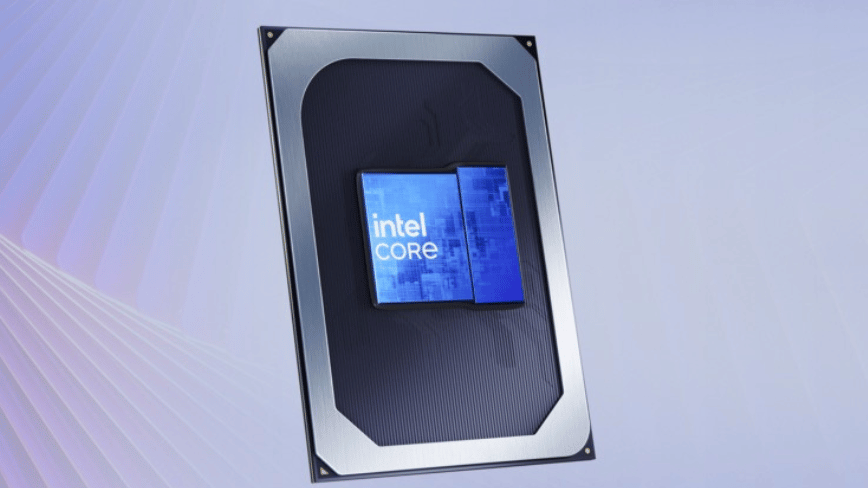

Intel has introduced its Core Series 3 processors, codenamed Wildcat Lake, as a direct response to the MacBook Neo. Announced on April 16, these new chips are aimed at the budget laptop segment that Apple recently redefined with its $599 offering, promoting more choice, enhanced AI capabilities, and the backing of the Windows ecosystem.
Apple’s MacBook Neo is already sold out through April, with production orders doubled to 10 million units. Benchmarks indicate Wildcat Lake falls short in raw performance compared to the Neo, but Intel argues that performance isn’t the sole important metric. The AI capabilities in its 18A process node offer something Apple can’t yet provide at this price point.
**Wildcat Lake Features:**
Core Series 3 is based on Intel 18A, also used in premium Panther Lake chips and the Terafab foundry partnership with xAI. It features up to six cores, two performance Cougar Cove cores, four low-power Darkmont efficiency cores, up to two Xe3 graphics cores, and Intel’s NPU5 neural processing unit. The AI performance reaches 40 TOPS, aligning with Microsoft’s Copilot+ PC requirements. Intel claims improved performance and efficiency, with significant gains over five-year-old PCs. The Core 7 360, the top consumer model, supports various advanced features and runs at a base power of 15 watts, expandable to 35 watts.
The initial lineup includes six consumer models and an edge variant. More than 70 laptop designs are available or coming from brands like Acer, Asus, HP, Lenovo, and Infinix. MSI has introduced its Modern 14S and 16S as direct competitors to the MacBook Neo, indicating the industry’s interest in challenging Apple’s budget goals.
**MacBook Neo Overview:**
Released on March 11 at $599 (or $499 for education), the MacBook Neo has set new standards for budget laptops. Its A18 Pro chip offers up to 16 hours of battery life in a 13-inch Liquid Retina display. Despite selling out quickly, Apple increased production orders to meet demand. Benchmark comparisons show Wildcat Lake struggles against Neo’s superior performance. However, Intel emphasizes Wildcat Lake’s AI processing power as a differentiator, offering capabilities the Neo can’t supply at this tier.
**Intel’s Strategic Moves:**
Though not as high-profile as Panther Lake, Wildcat Lake is crucial for Intel, showcasing that the 18A process node is scalable. The premium Panther Lake chips, aimed at the MacBook Pro and Air, boast impressive specifications and exceed Apple’s M5 graphics benchmarks, although Apple remains superior in single-core CPU performance.
Intel’s 18A node represents an advanced U.S. semiconductor manufacturing capability. It’s utilized in the Terafab project, a collaboration with Tesla, SpaceX, and xAI, positioning Intel as a major foundry partner. This initiative marks a turnaround from previous setbacks and demonstrates Intel’s technology viability across various categories.
The AI race of 2025 focused on data center GPUs, but 2026 is about enhancing on-device performance. Microsoft’s Copilot+ PC initiative sets an NPU performance standard that Intel meets with affordable laptops, though not outperforming Apple in benchmarks.
**Impact on AI in Budget Laptops:**
The rivalry between Wildcat Lake and MacBook Neo reflects a broader consumer tech question: does AI capability justify a performance compromise? Apple’s MacBook Neo emphasizes efficiency and battery life but uses cloud-based AI features. Intel bets on a dedicated NPU for local AI tasks as a selling point for its 2026 range.
The outcome remains undecided. MacBook Neo dominates the budget market, but Wildcat Lake equips Windows OEMs to compete in AI readiness at comparable price points. Consumer preference will determine whether AI features merit choosing Windows machines over Apple’s enticing design and ecosystem.
Though Intel’s foundry lost $10.3 billion in 2025 and MacBook Neo thrived at $599, Wildcat Lake’s success lies in supporting the 70-plus OEM products that compete with Apple’s “good enough” standard. The AI aspect is Intel’s main argument, contingent on software advancing to meet the hardware’s potential.