
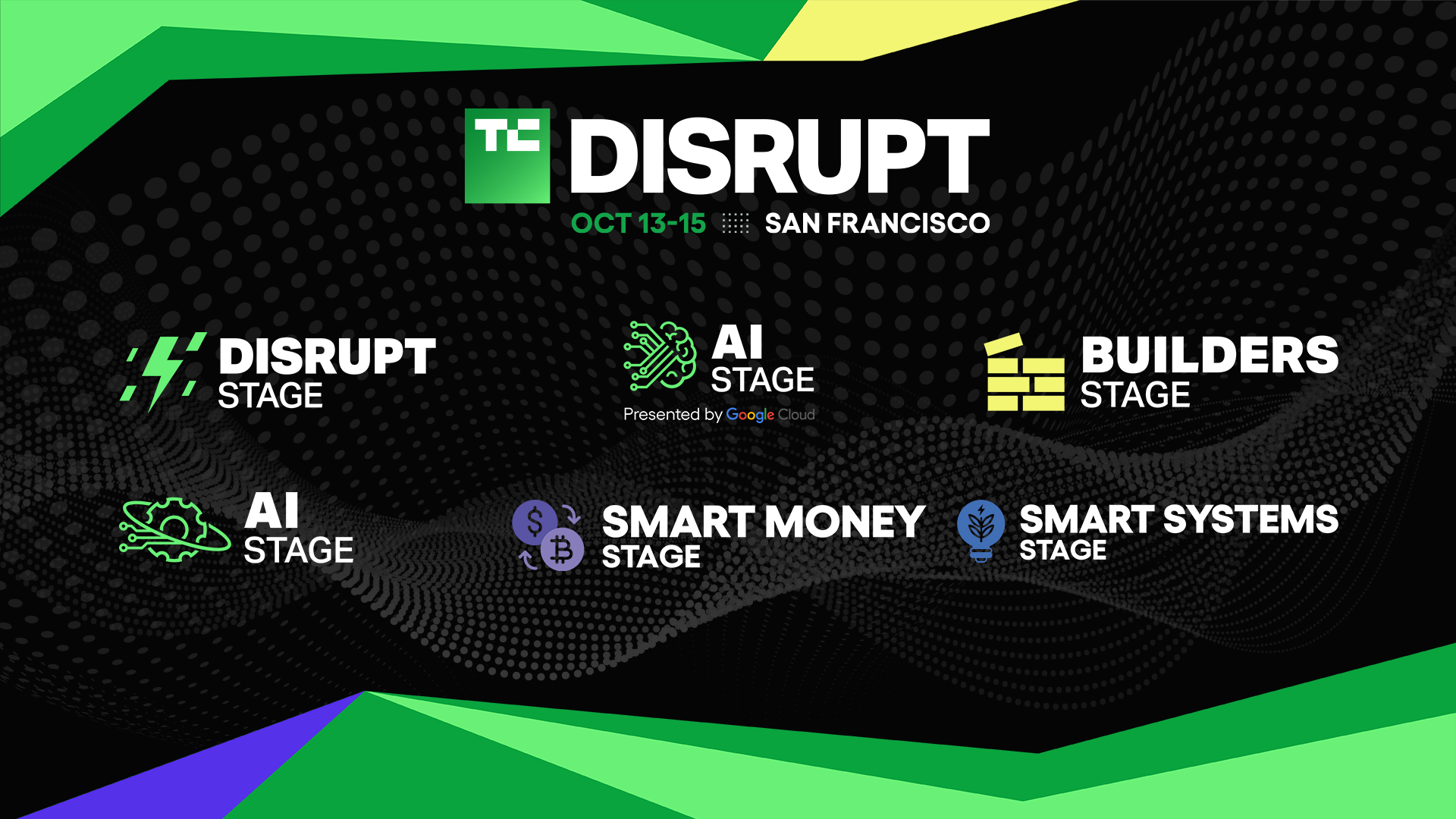

The primary risk for founders and investors today isn’t slow movement, but delayed reactions to market changes. The new stages at TechCrunch Disrupt 2026 assist founders and investors in making quicker, data-driven decisions within today’s complex, dynamic markets. From October 13–15 at Moscone West in San Francisco, Disrupt gathers over 10,000 founders, investors, and operators for more than 250 sessions across six stages, addressing the operational challenges reshaping startup innovation, from AI-native competition and infrastructure limitations to shifts in venture dynamics and enterprise adoption. Explore the six stages planned for 2026 and secure your pass before prices rise. Currently, you can save up to $410 with Early Bird rates, along with a 50% discount on a second ticket.
Explore all six stages at Disrupt, designed for hands-on experiences in launching, building, and selling in today’s tech industry.
Disrupt Stage: This remains the hub for TechCrunch Disrupt, featuring headline founders, major technology leaders, and top-tier investors discussing market shifts. Startup Battlefield 200 also occurs here, offering a glimpse into startups with high potential before market recognition. Nominate and apply by May 29.
Conversations focus on the future of AI, company building and funding, global industry leaders, and upcoming tech shifts. For all stakeholders, it highlights the signals shaping opportunities and where successful companies are positioning themselves in tougher markets. For a limited time, bring your community to Disrupt and save up to 30% on tickets. Register here.
Builders Stage: This stage addresses the operational realities of building companies now, including fundraising, hiring, achieving product-market fit, go-to-market execution, and scaling under challenging conditions. It tackles current pressure points affecting founders. Sessions like “How to Win When You’re Not Building AI” explore competing for attention and capital as investors focus on AI-first companies. Other programming includes topics like fundraising before product-market fit, transitioning from seed to Series A, AI-native hiring strategies, and new growth and revenue expectations. Speakers include prominent figures from Index Ventures, Sapphire Ventures, Gusto, Gamma, Google, and CapitalG.
Smart Money Stage: As fintech markets mature and scrutiny increases, success hinges on financial technologies creating durable growth. This stage focuses on evolving financial infrastructure, beyond hype, towards digital financial systems. Sessions examine stablecoins, embedded finance, payment infrastructures, fraud prevention, and fintech systems, highlighting surviving models amidst skepticism. Speakers include leaders from Airwallex and Emergence Capital.
Smart Systems Stage: With AI expansion, demand for data centers, energy, connectivity, and industrial systems is rising. This stage addresses the operational infrastructure of modern software companies. Sessions explore the AI data center energy crisis, grid bottlenecks, infrastructure automation, robotics, and energy scalability. Industry leaders Jeff Lawson of Inertia and David Kirtley of Helion are featured.
AI in the Real World Stage: This stage examines the impact of AI on business reliability when integrated into physical systems. It addresses operational reality over hype, covering autonomous systems, manufacturing, industrial operations, and the risks of deployment failures. For evaluating AI companies, this stage offers insights into those capable of transitioning successfully.
AI Stage: This stage, presented by Google Cloud, examines how AI is transforming software companies. Sessions address AI-native SaaS models, LLM applications, enterprise AI adoption, AI agents, DevSecOps, and the evolution of software pricing and workflows. Understanding these adaptations can highlight where competitive advantages might soon vanish.
Save up to $410 on your pass to TechCrunch Disrupt 2026 and get 50% off a second ticket. Register now to attend this event featuring over 200 sessions across six stages and led by over 250 tech leaders shaping today’s industry.