
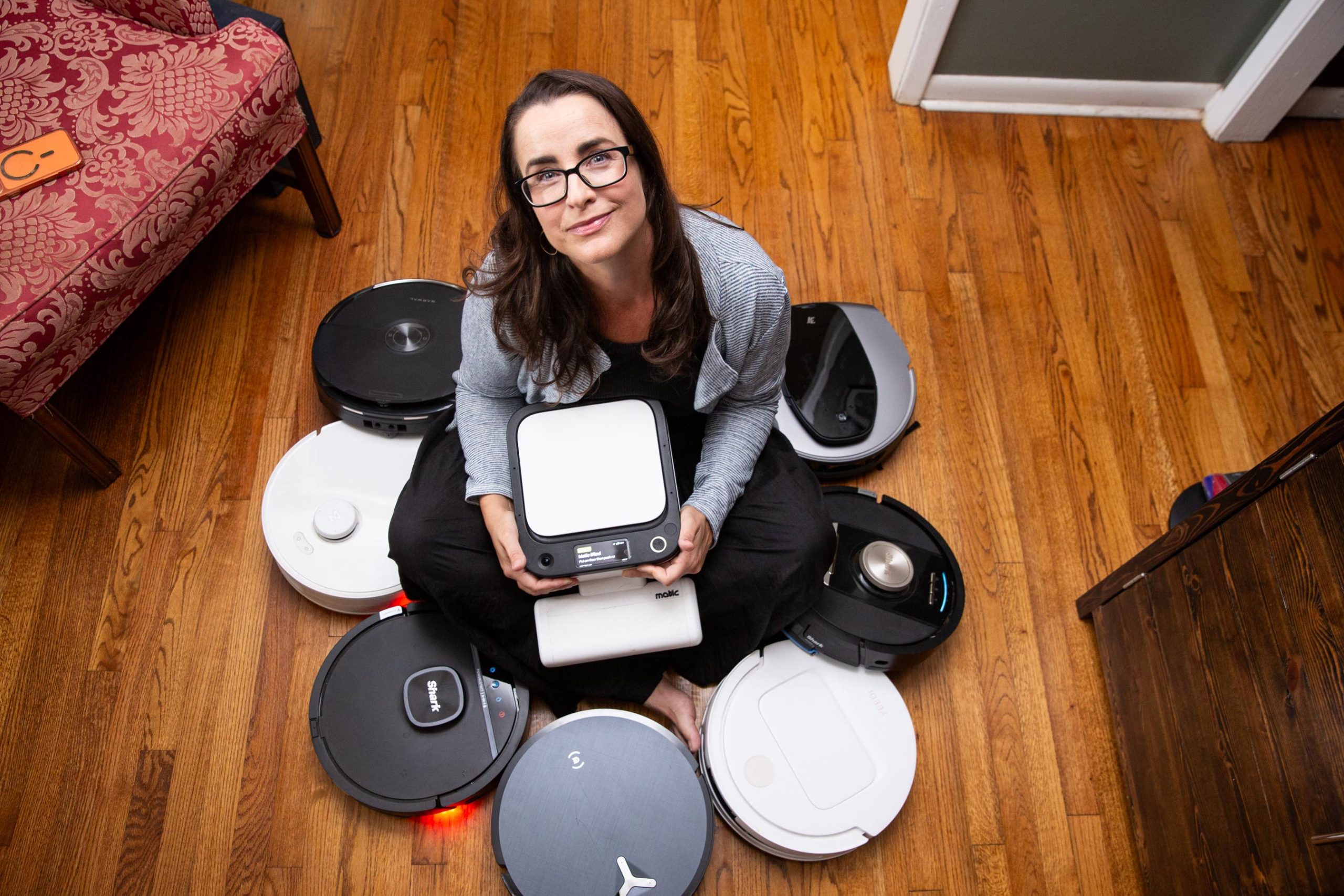

Selecting the right robotic cleaner for your home isn’t just about technical specifications; it depends on your specific floor types, rugs, the level of clutter, and your patience with robot quirks.
Bringing a robot vacuum-mop into your living space is a big commitment. These autonomous cleaners can be both wonderful and intrusive. If they perform well, you might overlook mishaps like tangling with rug tassels or tracking jam across your carpet, as I’ve experienced in years of testing.
Over time, I’ve discovered that the best robot vacuum-mop is one that reliably cleans with minimal fuss, and this has more to do with your home’s layout than any spec sheet. I first ask potential buyers about their home: What are the floor types? How many rugs? How’s the furniture and room layout? All these factors influence which robot will be the best fit.
Now, I’ll share which robot vacuum-mop I’d choose for my home and offer suggestions for various common home layouts, including ones with mostly hardwood floors or extensive carpeting. These recommendations arise not from lab tests but from actual experiences with these devices.
Set your expectations: Robot floor cleaners have greatly improved, especially in mopping, with many now capable of “scrubbing” rather than just wiping with a damp cloth. However, they still don’t match manual cleaning efforts and usually require some human intervention.
Most struggle with corners, baseboards, tight areas, and difficult stains. They all need some maintenance, with mopping robots requiring more upkeep than vacuum-only models. If these conditions are okay with you, these robots can effectively manage dirt and pet hair with reduced personal effort.
The primary decision in selecting a robot vacuum-mop is the mop design. Spinning mops excel on textured tiles; roller mops are ideal for hardwoods or vinyl; flat vibrating pads are better for delicate surfaces using less water. Each has pros and cons, but your home’s specific needs will dictate the best choice.
For an effective mopping robot, I also look out for:
– Reliable obstacle detection
– Automatic carpet sensing
– Mops that can be raised or removed when detecting carpet
– Mops that clean edges and corners effectively
– A docking station that offers hot water washing and drying
I’m skeptical about new AI-powered stain detection features; they’re often inconsistent. Nonetheless, most recommended robots manage well with pet hair, including input from my cats and big dog.
For this article, I tested 16 robotic vacuum mops, and here are my recommendations.
The robot vacuum mop I would pick for my home:
**The house:** I reside in a historic three-story home with predominantly small rooms, hardwood floors, and several high-pile rugs, which I’ve found to be potential robot traps.
We have four tiled bathrooms with different floor transitions. My household includes pets, my spouse, two teenagers, and me, all contributing to the daily clutter and dust. Working from home, it’s crucial to have a quiet robot that doesn’t disrupt meetings.
**The robot:** The Matic is ideal for my house due to its excellent navigation, strong suction, methodical mopping with a roller mop, and minimal interruption. It completes its task 90% of the time, outperforming other robots. While a full bag sometimes hinders it, it continues vacuuming even if its water supply is empty, unlike some models.
Matic requires minimal attention, a relief amidst multiple home robots. It includes tasks typically handled at the docking station, like emptying dirty water into its dust bag, which contains absorbent crystals. Though it requires periodic refilling, it autonomously moves to the sink for water.
The Matic smoothly navigates floor transitions and climbs onto my rugs, though once caught on a rug tassel. Multi-floor compatibility and easy portability enhance it further. It operates on local processing, negating Wi-Fi needs.
Its shortcomings include subpar edge cleaning, exclusive and pricey bags necessary for function, and a slower mopping function that can’t simultaneously vacuum. However, its quiet operation allows for extended use without disturbance.
Due to its size, it struggles under beds but cleans under coffee tables and the couch edges. Exploring under such furniture often leads to robot entanglement with rugs and tables. You can read more in [my full review](https://www.theverge.com/tech/816645/matic-robot-vacuum-review).
For the clean, minimalist home:
**The house:** A modern, open-plan design with minimal clutter, prevalent smooth flooring, and sparse low-pile rugs.
**The robot:** The Narwal Flow 2 is suitable for hard floors and simple layouts, excelling in mopping with a wide-track roller, covering extensive surfaces. It also performs well in vacuuming, offering impressive navigation and obstacle capability.
Apt for spaces with low furniture clearance, though struggling with pronounced transitions and thick carpets, Flow 2 functions well with minimalistic furniture setups, low-pile rugs, and a tiled room, providing consistent