

Drug discovery ranks among the most costly failures in contemporary industry. Identifying a single viable molecule can span a decade and cost billions, with most candidates still failing. A generation of AI startups has promised improvements, making the task less burdensome for researchers already adept in using such tools.
However, SandboxAQ believes the bottleneck isn’t the models but the interface.
The company has partnered with Anthropic to directly integrate its scientific AI models into Claude, positioning powerful drug discovery and materials science tools behind a conversational interface free from specialized computing infrastructure requirements.
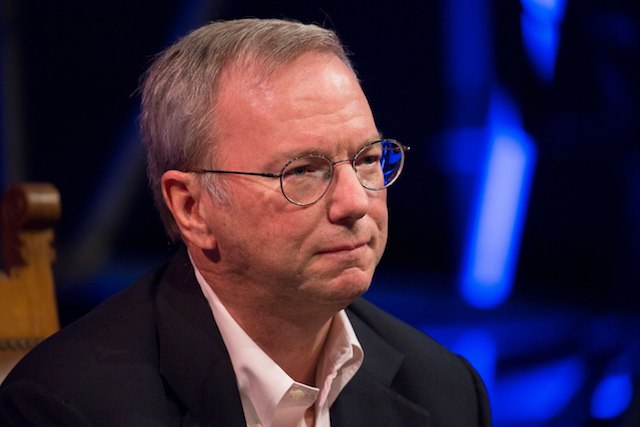
Founded around five years ago as an Alphabet spinout, SandboxAQ includes Eric Schmidt, Google’s former CEO, as its chairman. The company has raised over $950 million from investors and has established multiple business lines, including a cybersecurity business.
A novel aspect of SandboxAQ is its production of large quantitative models, or LQMs. These proprietary models are “physics-grounded,” built on physical world rules rather than text patterns. They perform quantum chemistry calculations and simulate molecular dynamics and microkinetics, crucial for predicting candidate molecules’ behavior before laboratory testing.
“Trained on real-world lab data and scientific equations, LQMs are AI models crafted for the quantitative economy, a $50+ trillion sector covering biopharma, financial services, energy, and advanced materials,” the company stated in a release, suggesting SandboxAQ isn’t creating another chatbot or code assistant but targeting a transformative economic sector.
Chai Discovery and Isomorphic Labs — substantial investments in superior models — have prioritized science. SandboxAQ is emphasizing usability.
“For the first time, we have a frontier [quantitative] model on a frontier LLM that can be accessed in natural language,” Nadia Harhen, SandboxAQ’s general manager of AI simulation, told TechCrunch. Previously, SandboxAQ’s LQMs required users to supply their own digital infrastructure for model operation.
SandboxAQ’s clientele often includes computational scientists, research scientists, or experimentalists. Typically, these individuals work at major pharmaceutical or industrial firms searching for new materials with market potential.
“Our clients approach us because they’ve tried all other software available, yet due to their problem’s complexity, it failed to work or didn’t produce positive results when applied in the real world,” stated Harhen.