
The radio signal persisted for 19 days, exceeding previous records and suggesting the presence of a massive magnetic structure trapping energetic particles above the sun. Typically, “type IV radio bursts” from solar eruptions last only hours, but this occurrence lingered nearly four times longer. Several NASA and European Space Agency spacecraft detected the phenomena in August as the sun rotated. The Solar Orbiter was the first to observe it, followed by the Parker Solar Probe and Wind spacecraft near Earth, and lastly by STEREO-A. This sequence indicated a singular source rotating with the sun, not isolated eruptions. The regular 45-minute to hourly pulsing of the signal suggested large magnetic structures vibrating above the sun, altering the trapped electrons’ brightness. The observations reveal that the sun can sustain vast reservoirs of energetic particles for weeks, offering scientists a chance to estimate solar radio sources’ locations with a single spacecraft, potentially enhancing space-weather forecasting. Large magnetic traps surviving weeks, fueled by ongoing solar eruptions, are suspected to be responsible. Radio waves displayed strong polarization, hinting at organized magnetic environments. The mechanisms behind these radio waves remain uncertain, but possibilities include plasma emission or a rarer process akin to a natural microwave laser occurring in low-density magnetic cavities. Researchers developed a correction method for solar radio waves’ distortion due to low-frequency limitations, tracing the source to a height of 2.5 to 4.3 million miles above the sun. Future missions might use this method along with improved radio imaging and particle measurements to more accurately track solar eruptions.
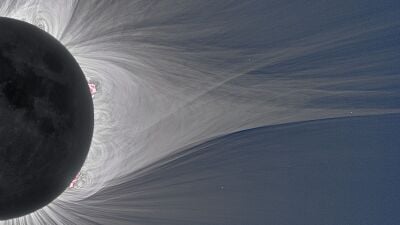
Scientists Astonished by Unprecedented Solar Eruption Displaying a Heartbeat

2 Min Read