
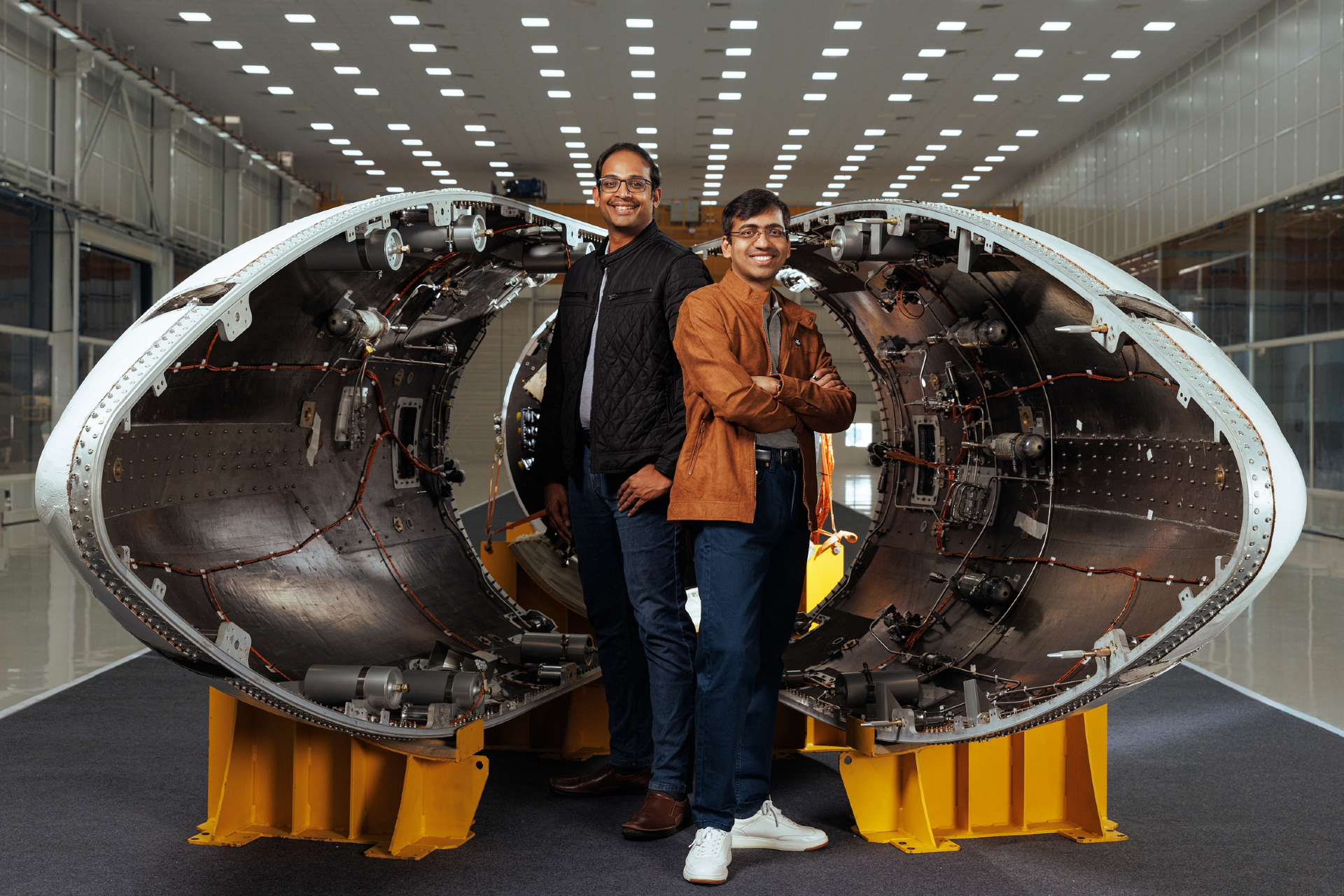

Skyroot Aerospace has achieved the status of India’s first space tech unicorn by securing $60 million in a recent funding round, in anticipation of the upcoming inaugural orbital launch of its Vikram-1 rocket. The Hyderabad-based startup is now valued at $1.1 billion pre-money, with approximately $50 million raised from primary equity co-led by Sherpalo Ventures and GIC and about $10 million through structured debt from BlackRock-affiliated funds, as reported to TechCrunch.
The investment marks a significant moment as Skyroot aims for the first orbital launch attempt by an Indian private company. Set off to the spaceport in Sriharikota in April, the Vikram-1 rocket is slated for a June launch following flight qualification and launch campaign preparations.
Established in 2018 by former ISRO engineers Pawan Kumar Chandana and Naga Bharath Daka, Skyroot is developing small satellite launch vehicles akin to those by U.S. firms like Rocket Lab and Firefly Aerospace. Vikram-1 is intended to deliver payloads up to 350 kilograms into low Earth orbit.
Skyroot’s valuation has over doubled since its last funding round in 2023, reflecting increased investor confidence in India’s burgeoning private space sector. The round also saw participation from Playbook Partners, Arkam Ventures, and Greenko Group founders, with Sherpalo Ventures founder Ram Shriram joining Skyroot’s board.
While Skyroot has not disclosed revenue or backlog specifics, it notes robust demand for dedicated small satellite launches, with one-third of anticipated demand domestic and the remainder international.
Skyroot garnered attention in November 2022 by launching Vikram-S, India’s first privately developed rocket. The fresh funds are meant to bolster manufacturing, escalate Vikram-1 mission frequency, and aid in developing Vikram-2, a more substantial vehicle expected in 2027.
Vikram-2 will be a one-ton-class vehicle with a cryogenic stage, widening Skyroot’s capacity for complex missions and competing in the global small satellite launch market.
Skyroot’s progress aligns with India’s initiative to grow its global space economy footprint by enabling private sector participation and leveraging cost advantages. India’s space economy, valued at $8.4 billion, is expected to reach $44 billion by 2033, with nearly 400 space-tech startups reported as of early 2026, per government data.
Skyroot’s imminent Vikram-1 mission coincides with India’s efforts to enhance commercial launch capabilities alongside ISRO, which has encountered recent mission failures. Since 2020, reforms allowing private firms access to ISRO facilities have catalyzed the growth of startups in launch systems, satellites, and propulsion technology.