
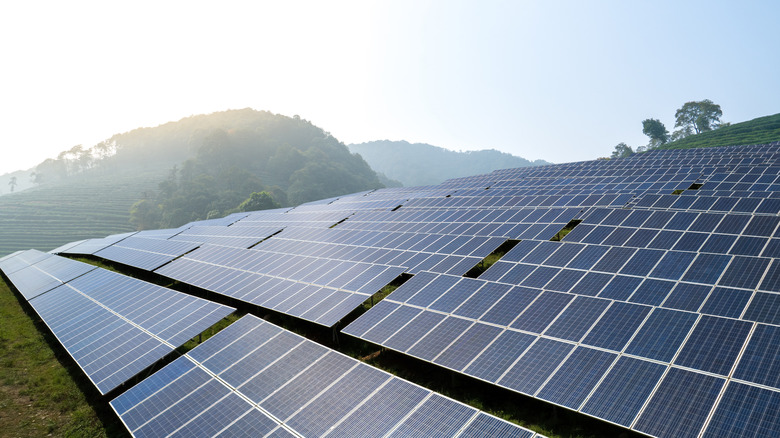

Installing solar panels on your residence is an excellent strategy to decrease your carbon footprint while also saving money over time. Nevertheless, while they significantly reduce dependence on fossil fuels, solar farms are extensive and affect the local environment. A study published in Renewable and Sustainable Energy Reviews by researcher Patricia A. Fleming from Murdoch University indicates that birds and bats face particular threats from large solar farms since they may confuse the panels with bodies of water, a phenomenon referred to as the Lake Effect.
Numerous animals, including birds, possess polarization vision, meaning they can interpret information from light for purposes such as navigation. The paper explains that the sleek, dark, and even surfaces of solar panels “can mislead and attract animals to entrapment,” and “may have fatal outcomes for birds and bats.” The Lake Effect not only leads birds to crash into the panels and suffer burns but also disorients migrating birds that depend on light for navigation.
Further research is required to comprehensively grasp the effects of solar farms on wildlife; however, the findings of this study align with similar research released by the California Energy Commission in 2024. Both suggest that solar panels polarize light in a manner akin to water, with the presence of aquatic birds near solar farms serving as evidence for the Lake Effect hypothesis.