
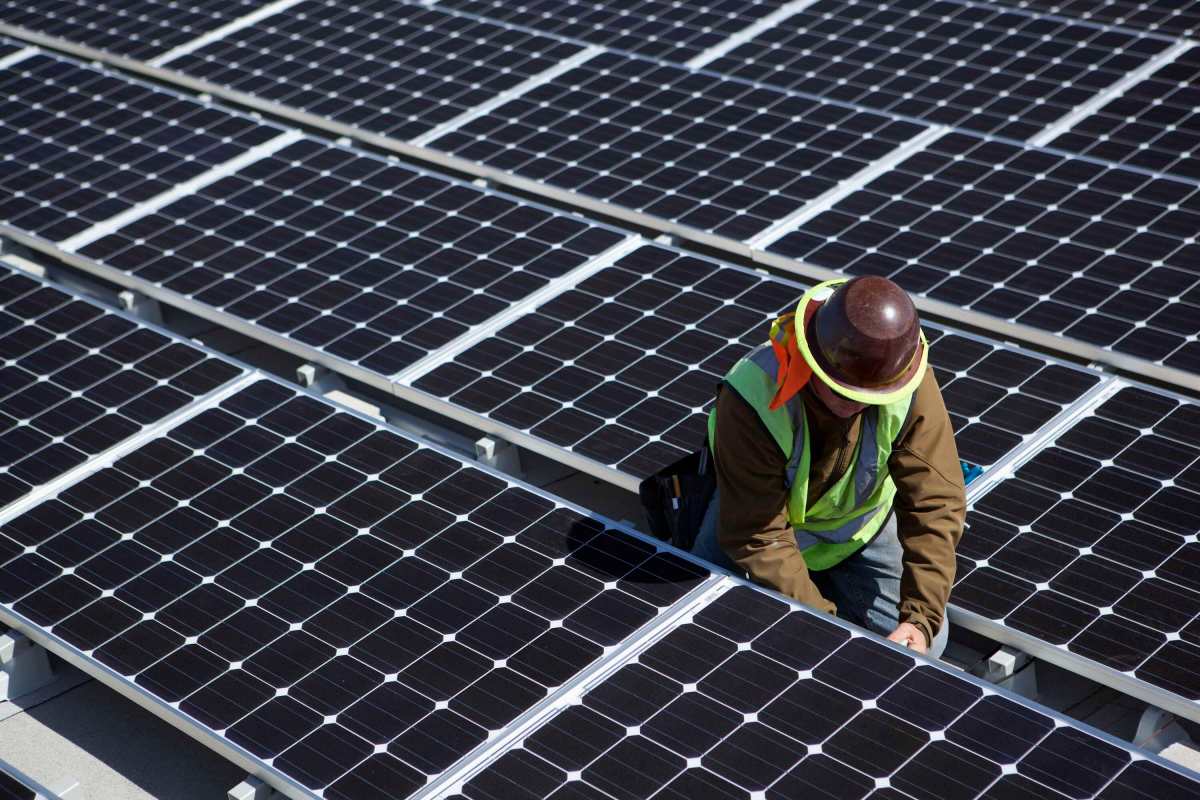

Solar energy is poised to become the leading power source within the next decade, overtaking coal, oil, and natural gas, as reported by BloombergNEF. This significant shift is coupled with an unprecedented rise in energy usage driven by AI and the electrification of entire industries.
“Solar is winning the race,” said Matthias Kimmel, BloombergNEF’s head of energy economics, to TechCrunch.
The transition is expected to occur on economic grounds, with solar becoming too affordable to overlook. For instance, Pakistan has added 25 gigawatts of solar in two years following a spike in natural gas prices after Russia’s invasion of Ukraine. The shift could accelerate if nations take proactive measures to reduce carbon emissions.
Investors see energy as a major growth opportunity, with data centers at the heart of this trend. BloombergNEF predicts data centers will drive the addition of 1 terawatt of utility-scale solar, 400 gigawatts of solar, 370 gigawatts of natural gas, and 110 gigawatts of coal. However, due to their around-the-clock operations, gas and coal are expected to provide 51% of incremental generation for data centers by 2050, with tech companies having a significant influence on which energy sources prevail.
Despite these forecasts, other technologies are competing for a share of the data center market, including long-duration energy storage, geothermal, and nuclear. Google’s recent data center project included $1 billion worth of 100-hour batteries from Form Energy. Both geothermal and nuclear also show promise, following the recent IPOs of Fervo Energy and X-energy.
Competition from solar will remain strong. Solar panels have rapidly expanded due to decreasing costs, expected to fall another 30% by 2035, outpacing coal and natural gas. By 2050, solar is projected to produce more than twice the electricity of natural gas.
Solar’s cost reductions are due to China’s supportive industrial policies and mass manufacturing efficiencies. “Costs fall with every doubling of installed capacity,” Kimmel stated, noting that solar’s cost decline has been even faster.
The surplus of solar energy is now pushing grid-scale battery development. In Spain and Italy, standalone solar farms are unprofitable as daytime prices drop, leading developers to build hybrid renewable plants with solar and battery storage to benefit from higher evening prices.
The battery market is currently where solar was in 2020. Last year, 112 gigawatts of grid-scale batteries were installed globally, expected to almost triple by 2035. Companies like Redwood Materials and Ford have launched energy storage ventures to capitalize on this trend.
An absent factor in this report is the Iran War, which emerged when BloombergNEF was too far along to make changes. They tested how two scenarios impact energy import reliance: an economic transition, reducing reliance based on financial incentives, and a net-zero scenario driven by regulation, virtually eliminating reliance on imports. “The transition, which is cost-efficient, also promotes energy independence,” Kimmel noted.