
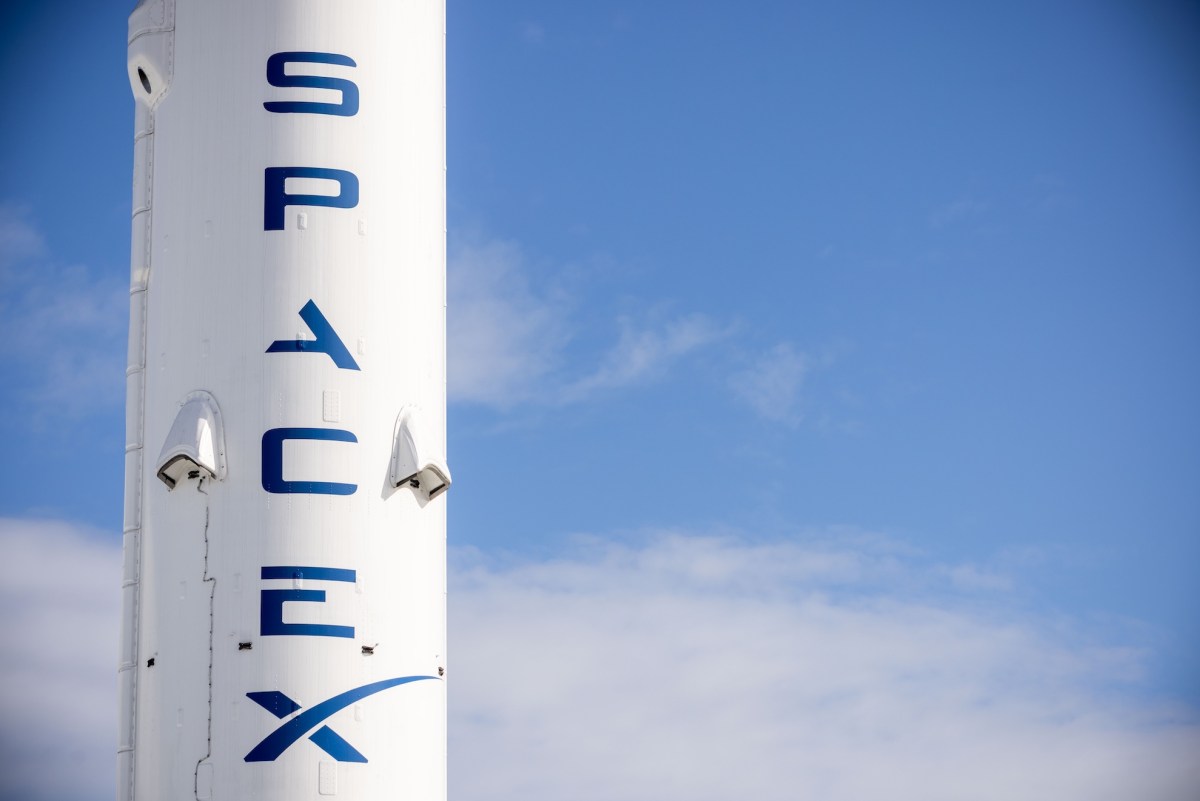

SpaceX, the aerospace company established by Elon Musk 24 years ago, has finally released its IPO filing publicly. Once the company goes public, Musk will be at its helm as CEO, CTO, and Chairman of the board.
The extensive filing indicates a company that has evolved significantly beyond its original goal of reusable rockets — although its long-term vision of creating a multi-planetary species stays firm. SpaceX is now a technology conglomerate involved in satellites and AI, making it one of the world’s most valuable private firms.
Upon going public later this year on the Nasdaq exchange, it will rank among the most valuable publicly-traded companies. SpaceX will use the ticker “SPCX” for the listing.
The S-1 regulatory filing provides an in-depth, financially transparent analysis of SpaceX’s business to date. It is set to be the largest IPO ever, with expected fundraising of around $75 billion and an overall valuation of reportedly $1.75 trillion. The filing highlights 36 pages of risk factors and legal challenges following the integration of Musk’s AI and social media companies, which could cost SpaceX $530 million.
In recent weeks, major details have surfaced since SpaceX’s confidential S-1 submission to the SEC on April 1. The company reportedly lost about $4.9 billion in 2025 with revenue of more than $18 billion.
SpaceX’s business is largely driven by its Starlink satellite internet offer, which accounted for over half of its revenue last year, about $11 billion. The filing reveals SpaceX’s cumulative loss of over $37 billion since its inception.
XAI, Elon Musk’s AI company recently integrated into SpaceX, presents challenges. In 2025, SpaceX spent around 60% of its capital, about $20 billion, on its AI division. However, the division lost billions last year and saw just 22% revenue growth, trailing behind frontier AI labs.
Promising significant future opportunities, the company claims it has identified a $28.5 trillion total addressable market, primarily attributed to AI’s enterprise applications, valued at $22.7 trillion.
Despite its complex business structure, SpaceX’s future heavily relies on the success of Starship, its fully reusable heavy-lift rocket undergoing several iterations. The company aims for its 12th Starship launch soon and plans payload deliveries to orbit by late 2026. Success would see Starship launching Starlink satellites in late 2026 and V2 mobile satellites by 2027.
SpaceX’s Starship plans extend to Mars exploration and launching AI data centers into space. The company has invested significantly in Starship, with $3 billion spent in 2025 and $930 million in early 2026.
SpaceX asserts that Starship could reduce orbit-reaching costs by 99% or more compared to historical averages.
The S-1 highlights SpaceX’s ambitious goals, including multi-planetary habitation, moon and Mars missions, and building satellite networks for space-based computing.
Further ambitious ideas in the filing include transforming Starship for terrestrial transportation, an idea proposed by Musk in 2017. This concept, foreseen as a “future market,” envisions ultra-fast travel between major cities but lacks immediate plans.
Another future market mentioned is “space tourism,” a concept SpaceX previously explored with private Dragon spacecraft flights and planned missions around the moon, which were ultimately canceled. The filing anticipates growing interest in human space travel as access to space evolves.
SpaceX also envisions in-orbit and lunar/martian manufacturing facilities for producing unique materials possible only in microgravity. These would support the production of essentials like fuel and construction materials and harness solar energy.
Lastly, the filing references future involvement in asteroid mining, though details remain sparse.
Certainly, Elon Musk remains crucial to SpaceX. As per the filing, he will be CEO, CTO, and Chairman post-IPO.
The S-1 shows Musk holds 93.6% of SpaceX’s Class B stock, which offers 10 votes per share, granting him 85.1% of its voting power. While this will decrease post-IPO, it will still exceed 50%, exempting SpaceX from certain independent director requirements.
Musk was awarded a new compensation package at the start of the year, potentially netting him up to 1 billion shares of Class B stock if the company reaches a value of $7.5 trillion and establishes a permanent Mars colony with at least one million inhabitants. He could gain more shares if SpaceX creates space-based data centers delivering 100 terawatts of compute annually.