
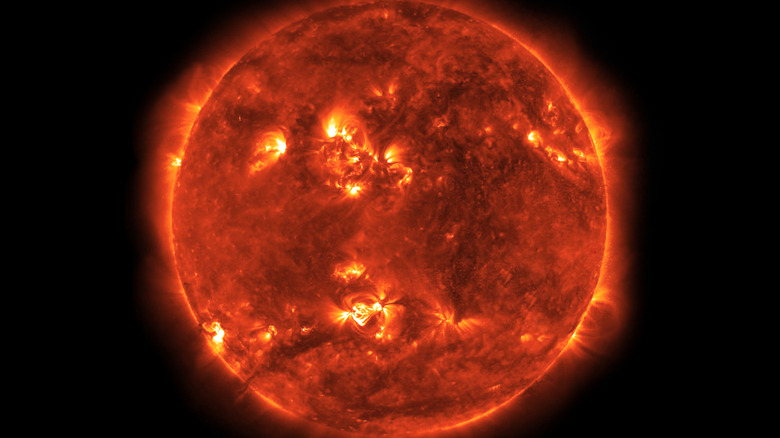

Nature Astronomy in February featured an article by Hideyuki Hotta and Yoshiki Hatta – coinciding with the journal’s publication of a study that revolutionized our understanding of Jupiter.
The occurrence of various sections of a star rotating at differing velocities is termed differential rotation. This rotation typically resembles that of the sun, where the equator rotates faster than the poles. For many years, our comprehension of differential rotations suggested that when a star’s rotation slows past a specific limit, the dynamic between its equator and poles alters, resulting in the transition from solar-like differential rotation to anti-solar.
This belief stemmed from theoretical conjectures and calculations; there were few observations that validated this in the stars we have examined in space. Although the prospects for space exploration appear promising and missions such as the Parker Solar Probe have taken us closer to the sun than ever before, we remain far from directly observing stars ourselves. This emphasizes the necessity for simulations to carry out a significant portion of the research.