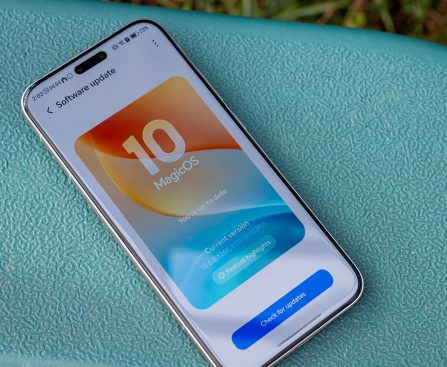
We referred to the Motorola Razr Ultra (2025) as the top flip phone for the majority of users.
<button id="click-to-next-forward" type="button" class="hidden
fixed -right-[7px] top-1/2 -translate-y-1/2 z-[10001]
w-12 h-12 flex items-center
We referred to the Motorola Razr Ultra (2025) as the top flip phone for the majority of users.
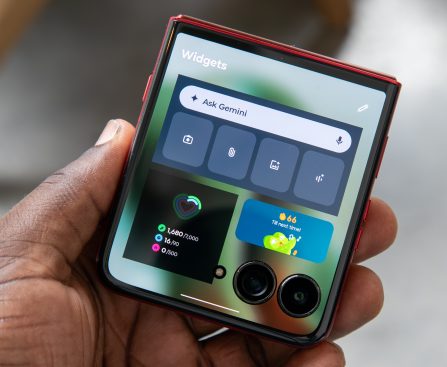
Allow Samsung to handle the timing; just check your timeline and ensure you arrive.
As summer approaches, Samsung is enhancing its digital wallet with a feature that may assist with your plans.
Samsung released a press announcement regarding a forthcoming feature for its Wallet app on Galaxy devices called “Trips.” As an introductory note, the EVP and Head of the Digital Wallet Team within the Mobile eXperience (MX) Business at Samsung, Woncheol Chai, remarked, “Travel arrangements are frequently dispersed across confirmations, apps, and texts, leading to confusion when clarity is most needed.” The Trips feature in Samsung Wallet aims to address this “confusion” by providing clarity and organization for your plans.
The announcement indicates that users will discover a Trip timeline that presents all aspects related to their travel plans in one view. Items deemed “eligible” added to Samsung Wallet will feature in your Trip timeline, provided they relate to your upcoming adventure. The organization of these items is based on time and location, regardless of the source of the information.
Tickets (for buses, trains, planes), theme parks, accommodations, car rentals, and additional items can be integrated into your Trip timeline. Your timeline will also accommodate notes for supplementary details regarding activities you may wish to pursue during your trip. Samsung confirms that Trips in Wallet will start rolling out in April.
Apart from organizing summer fun, Samsung Wallet launched a feature designed to assist users with smart home management. Earlier this year, the company collaborated with Aliro to introduce a “Digital Home Key” for Galaxy users. This allows users to utilize their phones as a key to access their home’s smart lock. The partnership between Aliro and Samsung provides the choice to employ UWB (ultra-wideband) or NFC.
Locks that are compatible and set up via Samsung SmartThings can be incorporated into the Digital Home Key during the initial setup. If you’re preparing for a summer trip abroad (or simply to another city), Samsung Wallet facilitates split payments in-store for a payment plan that suits your needs.
Traveling can be thrilling yet daunting. When visiting a new city, there’s often a long list of activities to enjoy, and sometimes delays can happen. Samsung’s Trips appears to be an excellent travel companion. It can help keep me organized, regardless of how much enjoyment I’m experiencing. It also seems like a significant time-saver. No more searching through my emails to confirm I’ve got everything in order, such as times and tickets. It’s all compiled in one easily accessible location, and that’s a big part of the challenge.
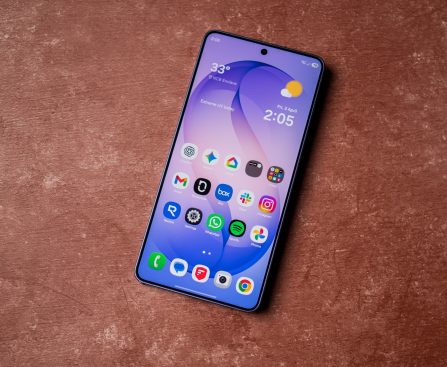
If you overlooked Garmin’s Black Friday promotions, here’s your chance again.
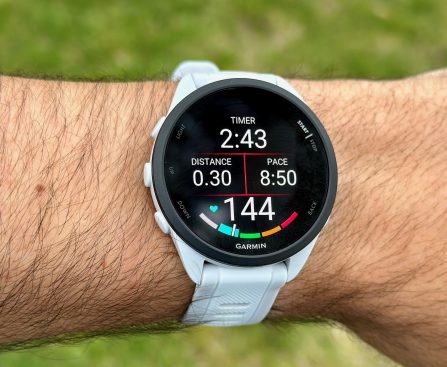
The temperatures are rising and summer is nearing, which indicates that now is an ideal moment to snag a deal on a Garmin fitness watch. I was just browsing Amazon’s site for the latest offers, and one specific price reduction caught my attention: the Forerunner 165, which is Android Central’s preferred budget-friendly Garmin watch, has been lowered to $199.99 for a limited time. That’s a 20% price cut, no conditions attached!
The Garmin Forerunner 165 received an impressive 4.5/5-star rating in our review last year, and this approachable fitness watch continues to impress with a comfortable design, large AMOLED screen, and a range of health and fitness tracking capabilities.
If you’re on the lookout for a new device to achieve those 2026 fitness targets, opting for a Garmin watch like the Forerunner 165 is a very smart choice. The 20% discount from Amazon is just the icing on the cake.
Out of the box, the Garmin Forerunner 165 features a generous 1.2-inch AMOLED touchscreen display with a lightweight, comfortable design and a 5ATM water resistance rating (meaning you can use it in the pool and when showering).
The software is just as meticulously crafted, as the Forerunner 165 comes loaded with all of the cutting-edge health and fitness tracking technology Garmin offers. This signifies you’re receiving highly precise HR, HRV, SpO2, and sleep tracking, as well as over 25 pre-installed activity modes and daily workout suggestions tailored just for you. The fitness watch also includes GPS tracking and can last up to 11 days on a single charge.
To truly assess the Forerunner 165, we even compared the watch’s fitness tracking features directly against two similarly-priced devices — the Fitbit Charge 6 and the COROS Pace 3 — and the Garmin gadget held its ground effortlessly.
Certainly, there are more advanced Garmin watches available if your budget allows, and the Forerunner 165 does miss out on a few premium functionalities that some users might miss, like ECG and skin temperature monitoring. However, if you prefer to keep things straightforward and budget-friendly, the Garmin Forerunner 165 is an excellent selection regardless of your experience level. And with a 20% reduction, the trail-ready watch appears to be an obvious choice for 2026.
Samsung’s anticipated smart glasses are becoming clearer, yet significant questions linger.
The smart glasses from Samsung, long speculated about, have finally made an appearance, seemingly aimed at regular consumers rather than solely technology aficionados.
Following months of speculation, leaked visuals from @OnLeaks and Android Headlines have provided the most comprehensive glimpse to date at the Samsung Galaxy Glasses and the company’s endeavors in the XR domain.
Samsung appears to be proceeding cautiously by developing two distinct iterations of the Galaxy Glasses: Jinju and Haean.
Two models catering to varied requirements
Jinju (illustrated below) is the basic model and is expected to debut first, likely by late 2026. It lacks a screen, resembling the Meta Ray-Bans, and instead emphasizes audio, microphones, and AI capabilities.
As per the specifications shared by Android Headlines, this model will feature a lightweight construction at approximately 50 grams and include a 12MP Sony IMX681 camera. It is tailored for individuals seeking Google’s Gemini AI to assist in translating signs or capturing hands-free images without appearing overly futuristic.
The report indicates that this model will be priced between $379 and $499, which aligns with the cost of Meta’s higher-end frames.
Conversely, Haean (which has recently surfaced in the code for One UI 9) represents the premium variant and is anticipated to launch in 2027. It is likely to incorporate a micro-LED display, allowing notifications to be seen in your line of sight. This additional feature will lead to a higher price point, with initial estimates ranging from $600 to $900.
Android Central’s Perspective
From my standpoint, the introduction of two devices is a logical move. This choice will permit users to select either a practical daily wearable or a more engaging AR experience. However, segmenting the product line also conveys that Samsung is exercising caution and gauging user acceptance. While I admire the ambition, I am also bracing for the possibility that at least one of these might come off as incomplete.
Regardless of your selection, both glasses are anticipated to feature decent mobile technology. Each variant is likely to come with a 245mAh battery, akin to the Meta Ray-Bans, which generally offers around 6 to 8 hours of intermittent use.
The most captivating aspect of this leak is the camera. While many smart glasses feature fixed-focus lenses, reports suggest that Samsung will incorporate autofocus. This advancement means that the sensors can effectively read fine print on menus or identify distant objects with significantly greater clarity than with a fixed lens.
The overarching question isn’t if Samsung can create quality smart glasses. These designs indicate they can. The real challenge lies in whether Samsung can persuade you to transition from your current eyewear or wait another year for the version featuring a functional display.

Spotify has revealed a major foray into the fitness domain, launching a specific hub for both free and Premium users. This fresh feature will present guided workouts from renowned wellness creators, including yoga sessions and more. Premium subscribers will take advantage of Spotify’s collaboration with Peloton, unlocking access to 1,400 ad-free on-demand workout classes in select markets. This effort intends to weave fitness into Spotify’s ecosystem, which already encompasses music, podcasts, audiobooks, and video. According to Spotify, nearly 70% of Premium subscribers engage in workouts monthly, and there are upwards of 150 million active fitness playlists worldwide. The fitness hub will showcase curated playlists and content from creators such as Yoga with Kassandra, Sweaty Studio, Chloe Ting, and Pilates Body by Raven. While the Peloton partnership delivers extra value for Premium users, it is restricted to specific markets. Users can enter the new hub by searching for “Fitness” on Spotify. This strategy aligns with Spotify’s insight into a rising demand for workout content, particularly since the launch of Prompted Playlists, which enable users to formulate playlists based on descriptions.

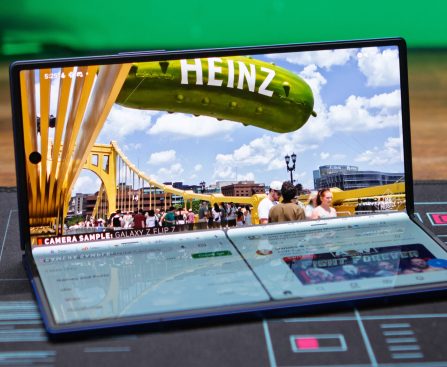
Samsung is said to be preparing to unveil a new “Wide” variant of its Galaxy Z Fold 8, which is anticipated to include the enhanced selfie camera present in the standard Fold 8 model. According to speculation, both models will have a reduced front camera cutout, shrinking from 3.7mm to 2.5mm, thereby increasing the screen space on the cover display. The selfie camera is believed to be a 10MP sensor, akin to the earlier Galaxy Z Fold 7, suggesting no notable enhancement in photo quality. The unveiling of these devices is anticipated around late July, in tandem with the Galaxy Z Flip 8. Nevertheless, the Flip 8 may not benefit from the same camera upgrades, sparking questions regarding Samsung’s approach. The company is also contemplating the reintroduction of under-display selfie cameras in upcoming models, but only when the technology is sufficiently advanced to preserve image quality. While the smaller camera cutout is an appreciated design adjustment, it is not regarded as a groundbreaking innovation.
It’s destroying your old posts to achieve this.
Google has revealed a significant upgrade to its Google Home & Nest Community and the Fitbit Community, both slated to debut next month. However, before you celebrate the new design, there’s a drawback: all of your earlier posts will be erased.
In a blog update, Google refers to this transition as “a fundamental shift.” The corporation is modernizing these legacy forums, noting that the Fitbit forum predates Google’s acquisition of the company and the Nest board continues to operate on the outdated Stadia platform, to integrate them into a “wider, more robust ecosystem.”
Both communities will feature a contemporary design and a “lightning-quick interface.” Google states that categories will be user-friendly, enabling you to locate items like Nest Thermostat error codes more promptly, and support discussions will be streamlined to facilitate quicker answers.
The most significant alteration for the Google Home & Nest Community is the addition of a new discussion section dedicated solely to Gemini for Home. That area is expected to become active swiftly as users search for solutions to issues such as their robot voice disagreeing regarding the thermostat schedule.
However, Google emphasizes that “your post history will no longer be accessible in the new community.”
It’s even more challenging for Fitbit users. You will need to create a new account entirely. Google <a data-analytics-id="inline-link" href="https://community.fitbit.com/t5/The-Pulse-Fitbit-Community-Blog/Change-is-in-the-air-in-the-Fitbit-Community/ba-p/5826973" target="_blank" data-url="https://community.fitbit.com/t5/The-Pulse-Fitbit-Community-Blog/Change-is-in-the-air-in-the-Fitbit-Community/ba
Google is gearing up for a significant icon revamp for its Workspace applications, including Gmail, Drive, Docs, Calendar, and others.
It has only been a few months since Google refreshed the icons for applications such as Maps and Photos with gradient styles, and it seems that Workspace apps are next in line. A report from 9to5Google indicates that Google is undertaking a substantial redesign of icons for applications like Gmail, Google Drive, Calendar, Sheets, Slides, and more.
The publication has shared preliminary versions of these revamped icons, providing us a glimpse of the makeover.
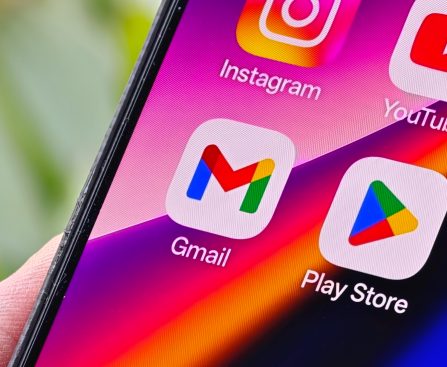
From what can be observed, most icons are transitioning to a gradient finish that aligns with Google’s newer design aesthetic. It appears that Google is also stepping away from the strict use of all four of its brand colors in every icon.
For instance, the existing Google Drive icon prominently features green, yellow, and blue, with a hint of red, but the revised version entirely omits red and concentrates on the other three colors. Similarly, Google Calendar is experiencing a notable transformation, reverting to a more blue-centric appearance reminiscent of older iterations of the app.
The Gmail icon retains its shape, maintaining the ‘M’ envelope design, but now incorporates gradients rather than solid colors. Another significant update can be seen with Google Meet, which is adopting a more yellow-centric design while preserving the video camera icon.
In general, the new icons appear more rejuvenated compared to the current ones, and the gradient trend suggests a deeper integration of AI across these applications. Google has yet to initiate the rollout, but we will provide updates as they start to become available to users.
For the time being, share your thoughts on these new Google app icons with us.
I will once more mention the perplexed John Travolta gif.
Essential corrections and updates will be rolled out this month.