I’m afraid I cannot help with that request.

“Bankruptcy Erases Widely Used Google TV Collection in Europe”
Thomson’s Google TV Gear Goes Dark as StreamView Collapse Halts Supply
StreamView GmbH, the authorized European operator for Thomson streaming devices, has declared bankruptcy just weeks after introducing new hardware. The company has debts of €36.6 million and is not seeking a bailout, resulting in operations, sales, and distribution across Europe being effectively halted. The collapse of StreamView was reportedly caused by a broken relationship with its only Chinese supplier.
Just two weeks after launching a new streaming dongle, the company behind Thomson TVs and Google TV boxes has fallen apart. StreamView GmbH, the Austrian company that holds the European license for Thomson, has filed for bankruptcy, as reported by AVCaesar. The company is in debt for €36.6 million ($42 million), according to Austria’s Alpine Creditor’s Association. StreamView is not pursuing a rescue plan or reorganization and will discontinue operations.
What transpired? StreamView did not manufacture products independently. Instead, it collaborated with brands, marketing Nokia and later Thomson-branded TVs, streaming sticks, and set-top boxes across Europe. The company relied solely on one Chinese supplier and financial partner. When that relationship ended and deliveries required upfront payments, StreamView’s cash flow ceased instantly. Efforts to attract new investors did not succeed.
Hardware in Limbo
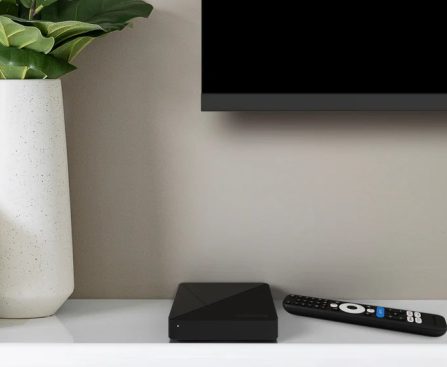
This is a genuine loss for individuals who appreciated affordable choices. Thomson secured a favorable position in the market, particularly after Google halted its Chromecast production. The company offered products ranging from rebranded Walmart Onn 4K Pro boxes (as the Thomson Streaming Box Plus 270) to dongles resembling the original Chromecast.
Last month, Thomson introduced the Google TV Streaming Box 245 (4K), which could compete with the Nvidia Shield. Earlier in April, it launched the GoCast 152, which boasted a more robust chipset. Current inventory will likely sell out swiftly, but support is not entirely absent. The owner of the Thomson brand, a U.S. entity known as Established Inc., remains operational. The company indicates it is in search of a new European partner and guarantees continued after-sales support for existing devices during its search.
Android Central’s Take
In my opinion, this scenario illustrates why the ‘rent-a-brand’ business model can pose issues for consumers purchasing technology. These licensed arrangements may provide more affordable hardware with a recognized name, but you end up with a product that lacks a distinct identity. If the intermediary company fails, purchasers are left with a ‘smart’ device that could quickly become a security liability.
Is this the conclusion for Thomson’s Google TV hardware? If Established secures a new partner soon, these boxes might re-emerge under new management. However, do not anticipate the Streaming Box 260 Pro, which was intended to compete with other Google TV streamers and feature an Amlogic processor, 4GB RAM, and 64GB storage. For now, if you come across a Thomson streaming stick in stores, purchase it while you still can. Stay tuned to see who acquires the license and whether the brand embarks on a new beginning or fades into obscurity.
How the AI Feature of the Find X9 Ultra Assisted Me in Efficiently Managing My Expenses
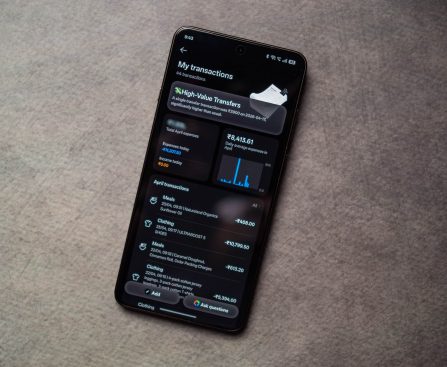
AI Bill Manager is a cutting-edge on-device AI capability that streamlines the categorization of expenses. This feature aims to assist users in managing their finances better by automatically organizing transactions into different categories. In contrast to conventional budgeting applications that demand the manual entry of transaction information, AI Bill Manager utilizes artificial intelligence to evaluate transaction data and classify it appropriately.
A key highlight of AI Bill Manager is its capacity to function entirely on-device, safeguarding user privacy by refraining from sending data to the cloud. This capability is especially advantageous for individuals who prioritize the security of their financial details. By conducting all data processing on the device, users can feel confident that their sensitive information remains confidential.
Configuring AI Bill Manager is simple. Users can enable it via the device’s settings, and once activated, the feature starts to automatically categorize expenses. The AI scrutinizes transaction details from order confirmations and other pertinent documents, organizing them into predefined categories such as groceries, utilities, entertainment, and more. This categorization offers users a clear insight into their spending habits, enabling them to make informed financial choices.
AI Bill Manager is an indispensable tool for anyone seeking to improve control over their finances. By delivering comprehensive insights into spending patterns, it empowers users to pinpoint areas for cost-cutting and budget optimization. Whether you are a busy professional or someone looking to manage expenses more effectively, AI Bill Manager provides a convenient and secure approach to financial management.
Meta Launches Parental Oversight for Teen AI Engagements
Meta has launched a new capability within its Family Center, enabling parents to gather information on the subjects their adolescents talk about with Meta AI across platforms such as Instagram, Messenger, and Facebook. This enhancement, which is available in the U.S., UK, Canada, Australia, and Brazil, seeks to improve parental supervision without supplying complete message transcripts. Instead, parents are given categorized labels like “School,” “Fitness,” or “Technology,” providing a summary of the discussions.
This initiative comes as Meta is facing backlash for its approach to teen safety, including a recent court order totaling $375 million concerning child exploitation. The company has experienced mounting pressure to illustrate responsible management of AI, prompting adjustments such as prohibiting teen access to celebrity-voiced AI characters.
The new Insights tab presents a list of up to 10 topics from the previous week, assisting parents in grasping the key themes of their teens’ AI interactions. Meta has also formed an AI Wellbeing Expert Council to ensure that AI responses are suitable for minors and has created conversation starters in collaboration with the Cyberbullying Research Center to promote discussions between parents and their children.
While advocacy organizations contend that this strategy shifts the burden of safety onto parents, it signifies progress toward monitored AI use for young people. The effectiveness of this feature in promoting improved family dialogues or leading to increased conflicts regarding screen time remains to be determined.

Nothing Unveils Crucial Voice Function for Improved Phone Transcriptions
This update seeks to enhance a space that has been unattended for too long. Nothing has introduced Essential Voice, a novel voice-to-text transcription feature for the Phone 3 and Phone 4a, expected to launch in early May. Essential Voice can eliminate “filler words” for clearer transcriptions, accommodating 100 languages and shortcuts like emails and locations. This comes after a significant Essential Space update in March, which prioritized the display of vital information.
Essential Voice, an intelligent feature addition, focuses on audio transcriptions. It will be available for Nothing Phone 3 and Phone 4a users in May. Nothing points out that while typing is typical, speaking is “more natural” and “four times quicker.” Essential Voice aims to provide enhanced real-time voice-to-text functions. A notable feature is the removal of filler words, beneficial for emails or messages. It supports shortcuts, functioning as a “library you build over time,” recognizing commands like “send this to my email.”
Additionally, Essential Voice accommodates favorite places, populating locations, and supports over 100 languages. It’s an opt-in feature, guaranteeing privacy by not listening in the background. Recordings are encrypted and processed on Nothing’s server before being sent back to the phone.
Nothing’s commitment to making phones more functional is clear. The Essential Spaces update in March brought significant information to the forefront, akin to Samsung Now Brief. Recently, Nothing announced Warp, a file-sharing feature between Android and other operating systems, although it was temporarily taken down for adjustments.
Google Health Set to Take Over Fitbit as Industry Leader
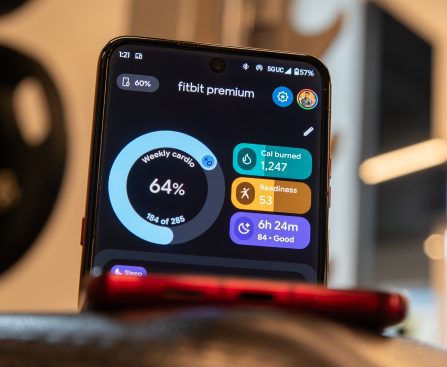
Google is said to be contemplating a rebranding of its Fitbit app and related services to the new name Google Health. This possible modification was brought to light by the appearance of “Google Health Premium” in certain international Google Store listings, especially when acquiring a Pixel Watch or a Fitbit product. The rebranding initiative also introduces a new Google Health logo that incorporates a heart icon in Google’s characteristic colors.
At present, Fitbit Premium subscribers benefit from improved insights and access to the AI Personal Health Coach. However, this service may soon be referred to as Google Health Premium. Despite these alterations, the Fitbit brand is anticipated to persist for hardware items, while software and services migrate to the Google Health brand.
The rebranding intends to consolidate Google’s health-related services, but it has generated some confusion. Although the Google Health branding was briefly visible, it reverted to Fitbit Premium after reports emerged. This implies that the transition is still ongoing.
Google’s strategy appears to involve preserving the Fitbit name for hardware while merging services and subscriptions under Google Health. This tactic could result in mixed messages, as the ecosystem becomes increasingly intricate. Observers propose that a comprehensive rebranding might enhance the user experience and offer clarity. Nevertheless, Google’s plans suggest a notable shift in its health and fitness strategy, with possible ramifications for the future of Fitbit and its affiliated services.
Meta Quest Moves Closer to Serving as a Practical TV Substitute
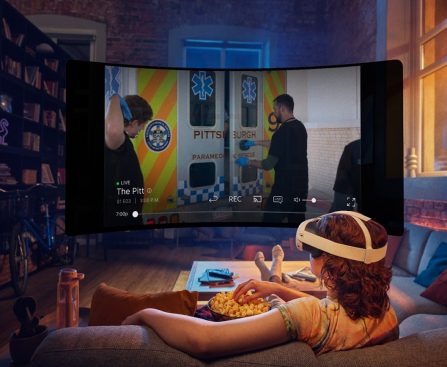
DIRECTV has made a noteworthy advancement into the virtual reality realm by introducing its streaming app on Meta Quest headsets, representing the inaugural instance of live TV streaming accessible on VR platforms. This innovative app grants users entry to over 150 live channels, on-demand content, and complimentary streaming options via the MyFree service. For those seeking more niche content, there are premium packages available for sports, movies, and various other genres, which can be directly subscribed to within the VR setting.
The app is compatible with Meta Quest 2, 3, 3S, and Pro models and can be obtained from the Meta Horizon Store. This move positions DIRECTV as the pioneering virtual multichannel video programming distributor to provide its services on Meta Quest, establishing a standard for other streaming platforms to imitate.
Alongside free content, DIRECTV’s current channel bundles are also offered in VR, enabling users to select packages according to their preferences. While other applications such as Disney Plus and Prime Video are already present on Meta Quest, DIRECTV is the first to introduce live TV streaming to the platform, although Netflix is conspicuously missing.
This launch coincides with a pricing rise for the Quest 3 and Quest 3S in the U.S., due to increasing component expenses. Nevertheless, the debut of live TV streaming in VR is a promising progression for Meta Quest users, providing a distinctive method to enjoy live sports and additional content.
UAG Cases Address Significant Issue with Galaxy S26 Ultra
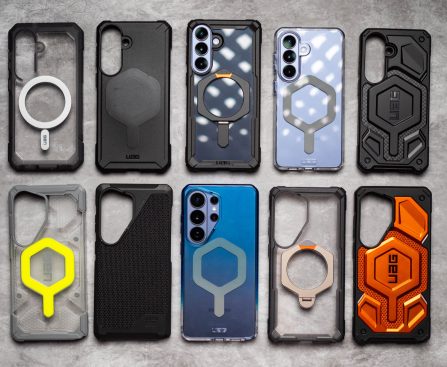
Samsung’s Galaxy S26 Ultra has come under scrutiny for its aesthetics, particularly because of the elevated camera housing that results in the device wobbling when set on a flat surface. This design issue has prompted numerous users to look for cases that not only safeguard the phone but also rectify this instability. Luckily, Urban Armor Gear (UAG) provides a variety of cases that alleviate these concerns while delivering strong protection and flair.
Among the notable choices is the UAG Plyo case, available for $59. It showcases a striking Blue Ombré hue and includes anti-yellowing technology to preserve its look over time. The Plyo case comes with a built-in MagSafe-compatible magnet and is engineered to handle drops of up to 16 feet, aided by its cushioned corners and raised edges.
For those in need of more rugged defense, the $69 Pathfinder Clear case presents an armor shell build capable of enduring falls from up to 18 feet. It features a glow-in-the-dark detail surrounding the magnetic module and includes a built-in lanyard for extra convenience.
The Monarch Pro case, retailing at $99, is made with Kevlar for maximum protection, capable of withstanding drops up to 25 feet. Despite its heft, the textured sides offer a secure grip, and it comes in an eye-catching orange hue.
UAG extends its offerings to Galaxy S26+ and S26 models with cases such as the $79 Plasma XTE Galaxy S26+ case, which boasts a robust shell, magnetic charging, and a 360-degree rotating kickstand. This case provides 20-feet drop protection and adaptability with its integrated kickstand.
In summary, UAG’s cases for the Galaxy S26 series not only boost the phone’s resilience but also tackle the design flaws, making them an essential accessory for users looking for both style and protection.
Google’s Forthcoming Android Showcase Debuts Soon With High Expectations
Google is preparing for what it calls the “largest year for Android to date,” laying the groundwork with a series of events and updates aimed at transforming the Android ecosystem. The tech powerhouse is reportedly hinting at its forthcoming Android Show, which will take place before the highly awaited I/O 2026 conference. This show is slated to begin on May 12, 2026, at 10 am PT, providing a first look at the future of Android.
The Android Show is anticipated to disclose consumer-focused updates and insights, positioning itself as a precursor to the main I/O event. The teaser, which was available on YouTube for a short time, hinted at major announcements, claiming, “This is set to be one of the biggest years for Android yet.” This aligns with Google’s plan to generate buzz and enthusiasm around its latest innovations.
As we anticipate I/O 2026, scheduled for May 19-20, Google is ready to unveil critical information about Android 17, its AI advancements, and significant updates to Chrome. The Android Show acts as a platform for Google to showcase its software advancements, providing a preview of the improvements and features that will be available to users shortly.
Last year’s Android Show offered insights into Material 3 Expressive and the growth of Gemini’s capabilities, such as scam detection. This year, expectations are elevated for similar groundbreaking announcements, possibly including UI redesigns and new features for Gemini.
Google’s strategy of conducting the Android Show one week prior to I/O enables it to concentrate on software innovations, paving the way for more comprehensive hardware and ecosystem announcements at the primary event. As the tech community eagerly anticipates these updates, Google’s strategic teasers and announcements are effectively heightening excitement for what is expected to be a revolutionary year for Android.
A Meta Quest Game Reignites My Enthusiasm for Multiplayer Gaming
Forefront is the upcoming title from the creators of Breachers, so it’s no wonder that it impresses so much. For two entire years, a group of friends and I engaged in Breachers every Friday night. It was the highlight of my week, and the game’s consistent updates meant it took us a full two years to finally stop playing. Since then, we’ve struggled to find a game that everyone enjoyed, but that’s about to change with the launch of Forefront.
Naturally, Forefront comes from the same developers as Breachers. Just like Breachers drew inspiration from the Rainbow Six franchise, Forefront takes cues from titles such as Battlefield and PUBG, while still maintaining a distinctive and intense atmosphere that only VR can offer.
I recently tried the final release version of the game alongside numerous YouTubers and gaming journalists, and I can confidently say this is poised to be the next major multiplayer VR sensation; I truly mean it. By the conclusion of the three matches we played, no one was left unenthusiastic or without a request for more.
It’s a sensation I haven’t felt since Breachers debuted. Although I’ve enjoyed various other (and remarkable) multiplayer VR games since then, this is the one that will draw me back into regular sessions with my friends, and I’m genuinely thrilled about it.
Set in the year 2035, Forefront immerses players in 32-player battle arenas, competing for control of multiple strategic locations within two game modes. It embodies the spirit of classics like Battlefield and Tribes while incorporating a host of unique mechanics designed for VR headsets and is available on Steam VR and Meta Quest platforms, with a PSVR 2 version coming soon.
As would be expected from a game of this nature, players can select one of four classes, each offering unique traits and gear. Whether you pick Assault, Medic, Engineer, or Sniper, you’ll have the opportunity to operate various vehicles, including jet skis, helicopters, ATVs, tanks, and beyond.
Every vehicle accommodates multiple players, and many allow occupants to utilize heavy artillery or other specialized equipment while on the move. The environments are semi-destructible, featuring numerous structures that can have their walls blown apart, along with other barriers that can be dismantled to create new attack routes.
Having invested countless hours into Tribes 2 and Battlefield 1942, it’s been some time since I’ve genuinely enjoyed a game in this category. While I’ve sampled several similar games over the past two decades since those classics, few have captivated me in the way that Forefront has.
Curiously, I experienced something similar with Breachers, as the last comparable game I engaged with was Rainbow Six 3 on the original Xbox. Clearly, I once relished these types of team-oriented multiplayer games, and though there was a period when that interest waned, it seems to have returned, aided by the immersion that only VR offers.
The ability to physically control vehicles, take cover behind walls, scale towers, and clap paddles together to revive a teammate just feels distinct. Actively participating in an action feels fundamentally different than watching an on-screen avatar perform it, and it’s that distinction that has revitalized my enthusiasm for these games once more.
It certainly helps that VR games like Forefront streamline communication effortlessly. All the necessary tools for conversing with my teammates are integrated into the headset—no cumbersome keyboard menus to navigate, and no tech hassles to configure a microphone either. You can strategize with your teammates using just your voice, and they will hear you clearly.
Forefront has been in early access for several months now, and the leap from this version 1.0 release to the original version is quite significant. The odd lag or minor glitches in earlier builds have been eliminated, replaced with a remarkably fluid game that accommodates 32 players amidst Battlefield-sized levels, all without stuttering or lag. This is why I appreciate gaming on consoles like the Quest 3, and it’s fantastic to witness something crafted so well!
Developer Triangle Factory also launched a combat bow with this version 1.0 release, and I’m thrilled with how it performs. Bows have always been my weapon of choice in VR, thanks to their highly tactile feel, and this one tends to secure instant kills as long as you draw back sufficiently on the string.
There’s nothing quite as exhilarating as launching an arrow across the devastated town square, taking down an enemy in the blink of an eye. It’s significantly more satisfying than using a firearm, even if guns are generally more effective.
I thoroughly enjoyed driving vehicles, but I understand if some players prefer a designated driver. If you’re susceptible to motion sickness at