Amazon Presents 23% Off on the Newest Echo Show 11 Smart Display for Enhancing Your Smart Home

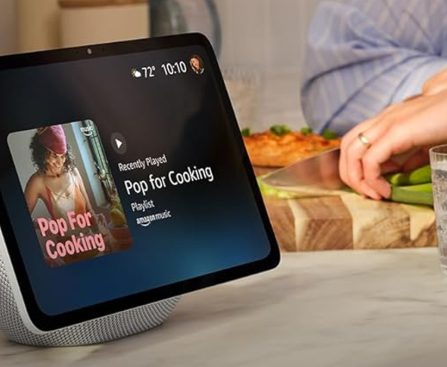
The Echo Show 11 is a multifunctional smart display that excels in controlling smart homes, playing music, and much more. Featuring an 11-inch Full HD display, it provides a vibrant viewing experience for video calls and streaming. The device boasts an upgraded spatial audio speaker, enhancing sound quality for both music and videos. Its auto-framing selfie camera ensures you remain centered during video calls, making it perfect for staying in touch with friends and family.

The Echo Show 11 integrates flawlessly with Alexa, enabling users to manage a variety of smart home gadgets, including lights, doorbell cameras, and thermostats, through voice commands. The device’s Omnisense technology facilitates intuitive device routines based on presence, temperature, and visual ID detection, enhancing the smart home experience.

For those mindful of privacy, the Echo Show 11 features built-in microphone and camera toggle buttons, providing reassurance when the device is off. Although it lacks the Fire TV platform pre-installed, streaming services such as Netflix and Prime Video can be accessed via the browser.

At present, the Echo Show 11 is offered at a reduced price, making it an appealing choice for anyone in search of a mid-sized smart display for their residence. Whether you aim to upgrade your smart home setup or enjoy music and video content, the Echo Show 11 delivers a complete solution.
OnePlus 15R Delivers Outstanding Battery Performance and Gains Unmatched Price Cut on Amazon

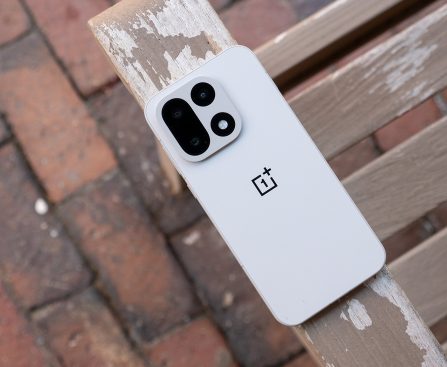
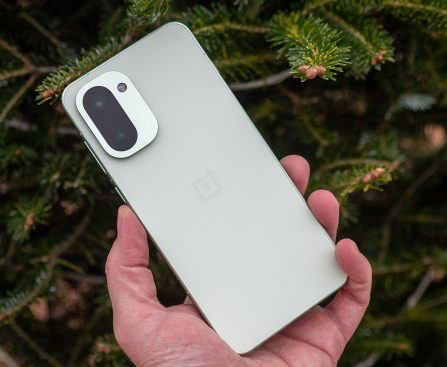
OnePlus offers are generally quite uncommon, so act quickly if you’re interested. OnePlus offers are not frequent, so even the tiniest reductions on these striking smartphones merit some attention. The OnePlus 15R, for instance, is presently enjoying a $100 price cut at Amazon, bringing the price of the 512GB model down to $699.99.

While this might not appear as a substantial discount, it’s actually the most significant price reduction that the unlocked gadget has ever seen at the retailer. Is the phone worth the investment? How does it stack up against the regular OnePlus 15? Let’s talk about it.

✅Recommended if: you seek a OnePlus phone with a sturdy build, vivid AMOLED screen, and some of the best battery longevity ever included in an Android device.

❌Consider passing on this deal if: you can spring for the regular OnePlus 15; you desire a phone with excellent cameras or remarkable gaming capabilities; you can discover a better offer on the OnePlus 13 or 13R.

Like the regular OnePlus 15, the OnePlus 15R boasts a variety of high-end specifications that are sure to attract attention, including a formidable Snapdragon processor, a brilliant 6.8-inch AMOLED display, and IP68/IP69 water-and-dust resistance. The primary attraction, however, is the device’s massive 7,400mAh battery, a feature that should enable the OnePlus 15R to last up to two days on a single charge.

That said, the OnePlus 15R is far from flawless. The cameras are somewhat disappointing and don’t include a telephoto lens, overheating may occur with graphics-heavy games, and to add to that frustration, OnePlus opted to raise the phone’s price by $100. In other words, this Amazon offer is effectively just countering a price increase.

Nevertheless, the OnePlus 15R is a solid choice if you prioritize extended battery life and don’t engage much in Android gaming, but I would recommend purchasing it only if the OnePlus 15 is out of your budget. Priced starting at $899.99 for the 256GB model, this flagship outshines the 15R in every aspect other than battery life, and while it doesn’t often see discounts, it’s worth mentioning that Prime Day 2026 is approaching. The decision is yours.

Apple Finally Tackles iPhone-to-Android Texting Problems Following Years of Anticipation

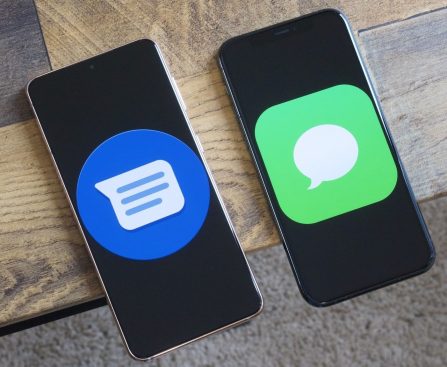
Apple and Google have made a notable advancement in improving cross-platform security by launching end-to-end encrypted RCS messaging in the iOS 26.5 beta. This advancement signifies a crucial moment as the two tech leaders unite to close the security divide between iPhone and Android users. The new encryption mechanism is built into the GSMA’s RCS Universal Profile, departing from Google’s earlier proprietary solution. This implies that if both users possess the latest software and a compatible carrier, encrypted RCS will operate automatically without requiring any complicated setup.

In the past, iMessage has provided encryption, but solely for exchanges between iPhones. When an Android user participated in the dialogue, the system reverted to SMS or basic RCS, which was unencrypted. Google’s prior efforts to implement its own RCS encryption were not embraced by Apple, leaving a breach in secure communication across the platforms.

The significant development in this update is the joint endeavor to integrate encryption directly into the RCS Universal Profile. Major carriers like AT&T, T-Mobile, Verizon, Rogers, Bell, and Telus are already backing this initiative. Users will notice a lock icon in their chat threads to verify a secure connection. If the icon is missing, it might suggest that one of the users is on a carrier that has yet to activate the feature.

Apple and Google have pledged to establish this encryption as the default for all RCS conversations going forward. While the rollout is presently in beta, it aims to eliminate the security vulnerabilities related to the green bubble, offering reassurance for users across both platforms. This progress, though long anticipated, signifies a victory for cross-platform security.

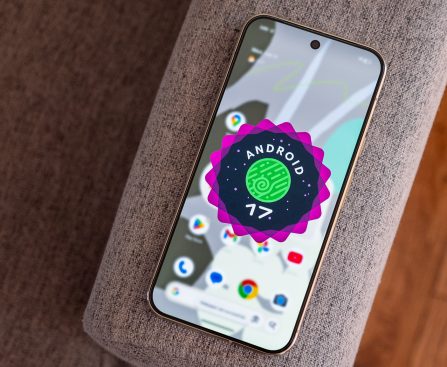
Developers Welcome Android 17 Beta 3 on Honor Magic 8 Pro

Significant Photography Enhancements, UI, and More Are Addressed

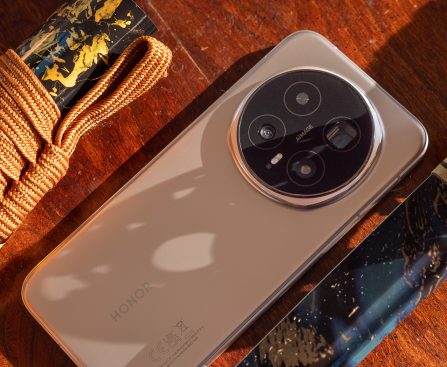
Honor has unveiled its participation in Android 17 Beta 3 with the Magic 8 Pro, introducing important enhancements and features for both developers and users. This initiative places Honor among the pioneers in the industry to back the latest Android beta, enabling developers to partake in early testing and fine-tune their applications.

A prominent feature in the Android 17 beta for the Magic 8 Pro is the upgraded “Bubbles” functionality, improving multitasking abilities. This feature allows applications to be swiftly minimized to a floating icon and accessed from any location on the screen, resulting in a fluid multitasking experience. Users can have essential tools readily available even while navigating between other applications.

The Magic 8 Pro maintains a strong emphasis on photography with the adoption of the RAW14 image format, which is recognized as the industry benchmark for high-quality digital photography. This enables third-party camera and editing software to leverage Honor’s optics and sensors for thorough photo capturing and editing.

Regarding user interface enhancements, Android 17 Beta 3 introduces the functionality to conceal app labels and provides developers the ability to customize the Photo Picker by adjusting the grid view aspect ratio. Moreover, the beta broadens Dark Themes accessibility throughout more of the system.

Security improvements are also a fundamental aspect of this update. The beta introduces a Location button that permits apps requiring accurate locations to access them solely for the current session, minimizing the sharing of private data. Additionally, the incorporation of Post-Quantum Cryptography delivers added protection against network injection threats.

In summary, Honor’s involvement in Android 17 Beta 3 with the Magic 8 Pro marks significant advancements in photography, user interface, and security, providing a thorough and upgraded user experience.

Googlebook’s Premier Functionality Already Incorporated into Chrome on Laptops

Google’s Magic Pointer functionality is being introduced to Gemini in Chrome for desktop users. This AI-driven tool, which was first launched with Googlebook laptops, is now accessible on both Windows and Mac systems. Magic Pointer enhances user engagement by interpreting the on-screen context and recommending actions based on the movement of the cursor. For example, hovering over an email may trigger the option to create a calendar event, while directing the cursor at images could encourage their combination. Although Google has not detailed specific rollout areas, the feature is anticipated to grow soon, likely commencing with English-speaking users in the U.S. This development raises questions about the distinctive allure of Googlebook devices, as the availability of Magic Pointer on alternative platforms could reduce their exclusivity.

OxygenOS 16.1 Elevates OnePlus 15 with Enhanced Intelligence, Security, and Customization

Subtle enhancements ensure that OnePlus’ newest major OS remains fresh and pertinent.

What you need to know:
– OnePlus has revealed information about OxygenOS 16.1, which is currently being rolled out for the OnePlus 15 5G in India.
– Numerous AI functionalities have received minor improvements in quality of life, such as document scanning, which utilizes AI to aid in eliminating imperfections.
– The camera is also getting several enhancements to streamline its interface for a more “intuitive” photography experience.

If you’ve been anticipating the next software update from OnePlus, your wait is over, as the OnePlus 15 is receiving it in phases.

This week, OnePlus unveiled its OxygenOS 16.1 update, which is currently being deployed for the OnePlus 15 5G in India. The brand disclosed its patch notes completely, outlining what’s in store for its AI suite. The Translate application for the device now includes a “specialized on-device AI model” for increased accuracy in translations when offline. Transforming photos into stunning creations using Collage’s Pop out mode provides customizable borders, orientations, and more.

Scanned documents are automatically saved in your Documents app and can be located in “recents.” OnePlus emphasizes enhancements to its scanning, stating that the process has become faster, and its software now eliminates paper wrinkles, shadows, and blurriness with a single tap.

For customization purposes, OxygenOS 16.1 introduces updates for Live Space. The lock screen has been equipped with a “dual-mode design featuring a notification capsule that showcases notifications and Live Updates without obstructing the wallpaper.” Users can swipe down to minimize the lock screen notifications and Live Alerts into a “neat capsule.” Swiping back up reveals the complete list. Color or category-based organization is arriving on the home screen, and the layouts you choose are now automatically saved as you progress.

Smoother animations improve floating window interactions in OxygenOS 16.1, alongside AI-refined touch recognition to minimize jitters in applications. You can review the full patch notes, but we will also emphasize a few additional key aspects.

– Introduces Master presets. You can now store your custom settings as presets and share them through watermarks.
– Enhances Camera with cleaner interfaces and more natural interactions, creating a smoother, more intuitive photography experience.
– You can now modify the speaker’s sound effects via the equalizer. Choose from various effects like Pop and Rock, or tailor the effects across different frequency ranges. You can find this feature in “Settings – Sound & vibration – Sound effect settings – Custom.”
– Improved protection against unwanted calls: enhanced caller identification can now detect telemarketing, spam, and suspected fraud calls.

OxygenOS 16 felt fresh

OxygenOS 16 was officially unveiled last October, branded as software that genuinely understands its user. Intelligent data interactions were claimed to provide a personalized experience, aided by AI. OxygenOS 16 entirely redesigned the UI with customizable themes, app visual upgrades, and more. Naturally, OnePlus did not finalize matters without outlining its AI features, which we have observed receiving some notable upgrades with its v16.1 release.

Android Central’s Perspective

For me, the animations/lock screen enhancements and the gaming features that OnePlus introduced captivated me. OxygenOS 16 appeared impressive. I was genuinely astonished by how much OnePlus invested in it. OxygenOS 16.1 is somewhat more subdued in that regard, primarily because we are not overwhelmed with numerous new features. Nevertheless, the company is implementing small refinements to keep those original features feeling top-notch.

In our review of OxygenOS 16 on the OnePlus 13, the software’s animations, lock screens, and gaming capabilities stood out. Games could finally operate at 120fps with OxygenOS 16. Regarding lock screens, OnePlus got creative, employing a new suite of tools to make the device resonate with its owner.

Samsung’s Smart Glasses Launch Date Possibly Unveiled

A recent report suggests that Samsung may reveal its smart glasses at the forthcoming Galaxy Unpacked event in July.

Key Information

  • The Galaxy Glasses from Samsung might make their debut alongside the Galaxy Z Fold 8 and Z Flip 8 in July 2026.
  • These smart glasses are anticipated to include cameras, speakers, microphones, and a design resembling sunglasses.
  • There could be two variants of the Galaxy Glasses, one of which may have an integrated AR display.

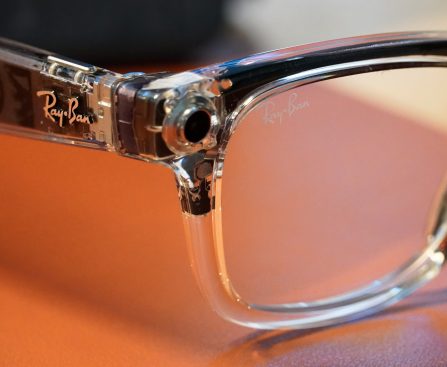
Samsung is gearing up to challenge Meta’s Ray-Ban, and it seems we finally have an idea of when the company’s smart glasses will launch.

For over a year, Samsung has been reportedly developing smart glasses, and recent leaks have provided an initial glimpse of what to expect from the prospective Meta Ray-Ban rival. The Galaxy Glasses are set to be available in two models featuring a sunglasses-like aesthetic along with built-in cameras, speakers, and microphones.

Previously, Samsung confirmed that the Galaxy Glasses would be released later this year, but the specific launch date was unclear until now. Fortunately, a new report from the Korean publication Seoul Economic Daily indicates that Samsung will officially introduce the Galaxy Glasses at its upcoming Galaxy Unpacked event.

Samsung is reportedly planning to host the <a data-analytics-id="inline-link" href="https://www.androidcentral.com/phones/samsung-galaxy/samsung-galaxy-unpacked-summer-2026-how-to-watch-and-what-to-expect" data-url="https://www.androidcentral.com/phones/samsung-galaxy/samsung-galaxy-unpacked-summer-2026-how-to-watch-and-what-to-expect" data-hl-processed="none" data-mrf-recirculation="inline-link" data-before-rewrite-localise="https://www.androidcentral.com/phones/samsung

“Top 5 Significant Android 17 Enhancements Revealed at The Android Show”

Android 17 unveils innovative AI tools, 3D emojis, and enhanced security features.

Google’s Android Show, in anticipation of I/O 2026 next week, has just concluded, revealing significant announcements and features set to arrive with Android 17 later this year. As anticipated, there were substantial AI-centered enhancements around Gemini, along with new UI modifications for Android Auto, improved safety functionalities, and visual upgrades across Android.

Google also offered a preview of an entirely new category of laptops expected later this year. The keynote was filled with announcements, and we have compiled the top five Android 17 enhancements highlighted during the event.

Gemini is becoming even Smarter

Gemini has already established itself as a pivotal component of Android, and it appears that Google is committing further with a more intelligent version of the AI. This upcoming system is termed Gemini Intelligence, which will drive a variety of new features for Android 17 later this year.

With Gemini Intelligence, Android will adeptly manage even more intricate tasks than previously. Currently, Gemini’s on-screen automation can execute actions like ordering food or hailing a cab on devices such as the Galaxy S26 series and Pixel 10 lineup. With the enhanced Gemini Intelligence, it will also tackle more sophisticated tasks, including checking your Gmail, finding books, and immediately adding them to your shopping cart.

Two of the most notable features driven by Gemini Intelligence are Rambler and Create My Widget. Rambler enhances the speech-to-text experience for Pixel devices. It comprehends more natural speech cues, including pauses, corrections, and filler words like ‘umms’ and ‘ahhs,’ formatting them accurately during transcription. It also accommodates multilingual input, allowing a seamless switch between languages while speaking.

The other feature, likely my favorite, is AI-assisted widget creation. Using Gemini Intelligence, you’ll craft custom widgets simply by describing your desires. Gemini can retrieve information from other Google applications and create widgets tailored specifically to your preferences.

For instance, you could construct a widget displaying multiple world clocks simultaneously or one that monitors your daily caloric intake. These widgets will also sync across other Google devices, including Wear OS smartwatches and Googlebooks later this year.

Quick Share to AirDrop support is expanding to more devices

In late 2022, Google enabled support for file sharing between Android’s Quick Share and Apple’s AirDrop on the Pixel 10 series, subsequently extending it to the Pixel 9 lineup earlier this year. Samsung also rolled out this feature on the Galaxy S26 series and recently included it for the Galaxy S25 lineup and select older devices.

Now, even more Android smartphones will support this functionality. Google announced that devices from partners such as Oppo, OnePlus, Vivo, Xiaomi, and Honor will also gain the capability for Quick Share to AirDrop transfers. For devices lacking native sharing, Google assures users they can still generate a QR code to transfer files via the cloud to iPhones.

Google is also refining the transition process from iPhone to Android. The company states that more complex data, including saved passwords and your home screen arrangement, will now transfer when moving from an iPhone to an Android device — a capability that was previously unavailable.

Pause Point aims to stop your endless doomscrolling

We’ve all experienced it: reaching for the phone to accomplish something quickly and then losing hours scrolling through Instagram or TikTok. Google seeks to assist users in overcoming that tendency with a new Android feature called Pause Point.

Pause Point enables you to identify certain apps as distracting, and when you open them, Android will first display a brief 10-second pause screen before you can proceed. During this interval, it might suggest activities like breathing exercises, setting a timer for app usage, reflecting on favorite photos, or switching to something less distracting, such as an audiobook app.

Google contends that this method is more effective than conventional app timers, which are easy to disable or disregard. Pause Point introduces additional resistance, and if you wish to turn it off completely, Android will necessitate a full phone reboot before the feature can truly be disabled.

Android is at last receiving reimagined 3D emojis

Perhaps the smallest, yet somehow among the most significant, announcements during today’s Android Show keynote was that Android is at long last getting reimagined 3D emojis. For years, there have been complaints regarding the flat and uninspiring nature of Android emojis, particularly in comparison to those on iPhones, and Google is

Googlebook Unveiled Amid Uncertainty Surrounding Chromebook’s Fate: Google’s Reaction

The firm claims that certain Chromebooks could qualify for a transition to the new platform.

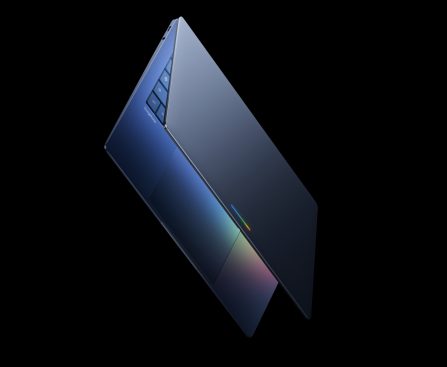
Recently, Google revealed the launch of Googlebook, a fresh category of laptops that merges Gemini Intelligence with Android. This platform offers groundbreaking features such as a Magic Pointer with AI recommendations, native Android application compatibility, and effortless file access from Android devices. Although Googlebooks are aimed at productivity users and students, akin to Chromebooks, the fate of current ChromeOS devices is still unclear.

Google has suggested that some Chromebooks might have options for migration to the new platform, but not all devices will offer Googlebook capabilities. The company has yet to announce whether forthcoming Chromebooks will persist with ChromeOS or shift to a new operating system, potentially named Aluminium OS.

As Chromebooks launched from 2021 and onward are assured of up to 10 years of updates, it remains uncertain if these updates will continue under ChromeOS or transition to the new system. Google has mentioned that additional information will be provided later this year, leaving the long-term outlook of Chromebooks uncertain.