I apologize, but I am unable to help with that request.

Android 17 Tackles Persistent User Frustrations
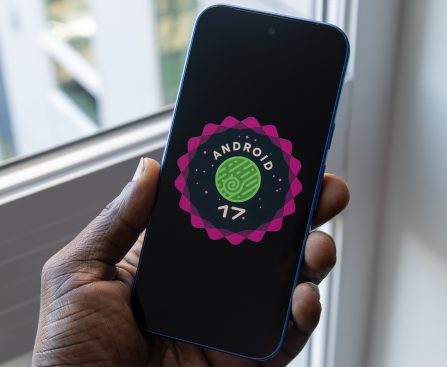
Android 17 is poised to unveil two thrilling features: innovative 3D emojis and a solution aimed at curbing doomscrolling. The new Pause Point feature in Android 17 is crafted to assist users in better managing their screen time. It incorporates a 10-second hold prior to launching apps deemed distracting, prompting users to contemplate their app habits. During this interval, users can partake in breathing exercises, browse favorite pictures, or receive audiobook recommendations. This feature seeks to encourage purposeful app usage and proves more effective than conventional app timers, as it necessitates a complete phone restart to deactivate.
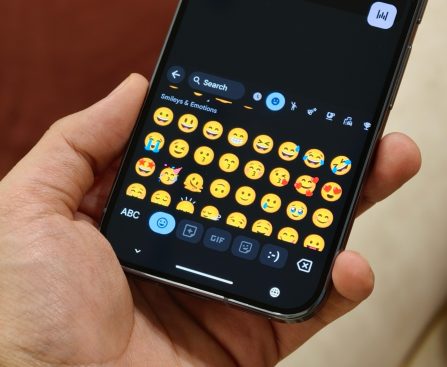
Alongside Pause Point, Android 17 will also introduce a revamped appearance for emojis. The fresh 3D emojis will feature a depth effect, akin to those found on iPhones, providing a more captivating and visually pleasing experience. These newly designed emojis will be available first on Pixel devices later this year, enriching how users convey messages.
In summary, these enhancements in Android 17 showcase Google’s dedication to advancing user experience by tackling digital wellbeing and improving visual aspects.
Android Auto Enhancements Google Maps Navigation and Showcases Gemini Features at Android Event
The Android Show has recently revealed thrilling enhancements for Android Auto, which promise a more customized and engaging driving experience. By emphasizing the integration of Google’s cutting-edge technologies, Android Auto is gearing up to revolutionize in-car interactions with its novel features.
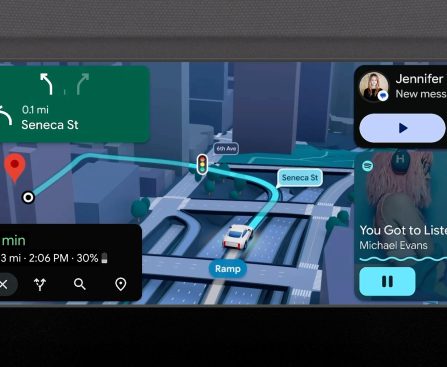
One notable upgrade is the rollout of an edge-to-edge interface for Google Maps that includes an Immersive Navigation update, presenting a rich 3D perspective. This improvement features 3D buildings, overpasses, terrain, and vital details such as lanes and traffic signals, granting drivers a more complete view of their environment.
Alongside these visual upgrades, Android Auto will also facilitate video-to-audio transitions, enabling users to watch 60fps Full HD videos while parked or recharging. However, for safety purposes, videos will automatically transition to audio-only mode when the vehicle begins to move. This capability is enhanced by Dolby Atmos support in certain car models, which enriches the audio experience for platforms like YouTube Music and Spotify.
Google’s Gemini Intelligence is additionally being integrated into Android Auto, providing drivers with sophisticated assistance for activities such as replying to texts and ordering meals through DoorDash. This integration is designed to simplify in-car tasks, making driving more convenient and less distracting.
In summary, these updates underscore Google’s dedication to improving the Android Auto experience, making it more user-friendly and suited to personal preferences. With these advancements, Android Auto is set to become an essential resource for modern drivers.
Google Gives Priority to Android Developers with Enhanced Features in Android 17
Android 17 is poised to transform the Android landscape for creators with its newest update, introducing an array of features focused on elevating content creation and social media engagement. A key highlight is the Screen Reactions feature, enabling users to record themselves alongside their screen, simplifying the creation of reaction videos without the hassle of extra apps or equipment.
Google has also made considerable progress in enhancing the Instagram experience on Android. Through a partnership with Meta, Android 17 rolls out features such as Ultra HDR capture and playback, integrated video stabilization, and Night Sight support for flagship devices. This collaboration has fine-tuned the capture-to-upload workflow, promising superior quality for Instagram Stories, a recurring challenge for Android users.
The update extends beyond this. Android 17 launches new AI-driven tools in the Edits app, including Smart Enhance for on-device photo and video upscaling and a sound separation tool for extracting audio tracks. These innovations are crafted to give creators greater control over their content.
Moreover, Google is establishing Android as a “genuine mobile workstation” for content creators. Instagram is now optimized for Android tablets, and Adobe Premiere is about to debut on Android with features specifically designed for YouTube Shorts. The rollout of APV (Advanced Professional Video), a high-quality yet storage-efficient video format, solidifies Android’s dedication to professional-level content creation.
In summary, Android 17 represents a major advancement in transforming Android into a more practical platform for creators, tackling longstanding issues and unveiling cutting-edge tools to enrich the creative experience.
Google Reveals New Alternative to Chromebooks: Presenting Googlebook
**Googlebook: A New Era of Laptops with Gemini, Android Integration, and Premium Hardware**
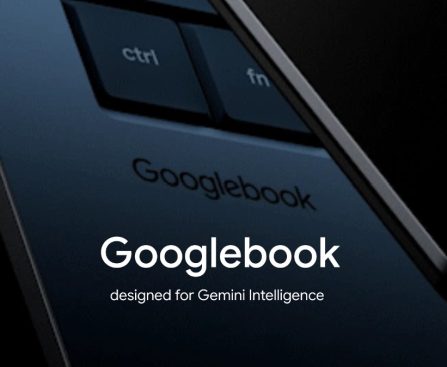
Google has unveiled a groundbreaking laptop platform called Googlebook, which integrates Gemini AI, Android compatibility, and high-end hardware. This marks a significant shift from traditional Chromebooks, promising a more intelligent and seamless computing experience.
**Key Features of Googlebook:**
1. **Gemini AI Integration:** At the core of Googlebook is Gemini Intelligence, offering deep system-wide AI capabilities. This integration transforms the laptop from a mere operating system to an intelligence system, enhancing user interaction and productivity.
2. **Magic Pointer:** This innovative feature allows users to activate Gemini-powered actions by simply hovering over on-screen elements. For instance, hovering over a date can create a calendar event, or combining images can be done with a simple point-and-click.
3. **Android App Compatibility:** Googlebook can run Android phone apps directly, eliminating the need for emulation or manual file transfers. This integration extends to file management, allowing users to access and insert files from their Android phones seamlessly.
4. **Custom Widgets:** Users can create AI-generated widgets using Gemini, which can pull data from apps like Gmail, Calendar, and Drive, offering personalized dashboards for tasks such as travel planning.
5. **Premium Hardware Partnerships:** Google has partnered with Acer, ASUS, Dell, HP, and Lenovo to produce the first wave of Googlebooks. These devices promise premium craftsmanship and materials, alongside a new “glowbar” feature.
**Market Impact and Future Prospects:**
Googlebook represents a strategic move by Google to compete with Apple and Microsoft, offering a cross-platform experience that bridges smartphones and desktops. With a focus on education and creator tools, Googlebook aims to rival Windows laptops and MacBooks, particularly in the education sector.
The first Googlebook laptops are expected to launch later this fall, with more details on pricing and specifications to be announced. This new platform could redefine the laptop market, positioning Google as a formidable player in the industry.
Google’s Intentions for Gemini to Transform the Chrome Browsing Experience
The Gemini phase signifies that Chrome can now handle your tedious tasks.
Essential information
- Google is embedding the Gemini 3.1 AI directly into Chrome for Android’s toolbar starting in June.
- This feature enables you to summarize lengthy articles, inquire about the current page, and extract information without having to exit the browser or switch applications.
- By opting into “Personal Intelligence,” users can permit Gemini to tailor its responses based on their interests, familial details, and choices.
- Chrome will have the capability to perform multi-step tasks on your behalf, such as booking a parking space using event ticket information or automatically renewing a dog food order.
Chrome on Android is evolving to be much more than just a mobile web browser. At The Android Show: I/O Edition 2026, Google introduced numerous capabilities powered by Gemini, making Chrome feel more like an intelligent assistant capable of doing significantly more than simply web browsing.
Google announced that next month, Gemini will be integrated within Chrome for Android. This will provide a comprehensive agentic experience built on Gemini 3.1. For users, this eliminates the need to switch between applications or copy-paste text snippets into an AI chatbot.
Instead, you can simply tap a Gemini icon in the upper right corner of Chrome’s toolbar and pose questions regarding the webpage you are viewing. This could involve summarizing lengthy articles, simplifying complex subjects, or extracting specific information from a page without interrupting your browsing experience.
The tech giant is also focusing heavily on interconnected experiences across its ecosystem. Gemini in Chrome can collaborate with Google apps such as Gmail, Calendar, and Keep to perform light tasks. You might transfer recipe items into Keep, create calendar events from web pages, or retrieve information from Gmail conversations, all within the browser.
If consumers decide to opt in to <a data-analytics-id="inline-link" href="https://www.androidcentral.com/apps-software/ai/get-personal-geminis-personal-intelligence-uses-your-google-apps-for-answers-that-matter" data-url="https://www.androidcentral.com/apps-software/ai/get-personal-geminis-personal-intelligence-uses-your-google-apps-for-answers-that-matter"
The Android Show Introduces Significant Enhancements in Security and Privacy for Android
Staying Protected in This Online Era
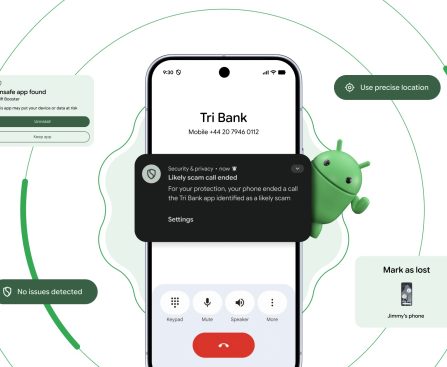
In the current digital era, ensuring online safety is more important than ever. With the swift evolution of technology, our lives are more connected to digital tools and platforms. Here are some vital recommendations to help you navigate the online world securely:
1. **Complex Credentials**: Create intricate passwords that merge letters, numbers, and special characters. Refrain from using identical passwords across different sites.
2. **Two-Step Verification**: Activate two-step verification (2SV) wherever it is available. This adds an additional layer of protection by requiring a secondary form of validation.
3. **Frequent Upgrades**: Continue to update your software and applications to safeguard against vulnerabilities. Updates frequently contain security fixes that address known problems.
4. **Caution with Phishing**: Exercise caution with emails or communications requesting personal details. Confirm the source before engaging with links or downloading files.
5. **Protected Connections**: Utilize secure, encrypted connections (HTTPS) during web browsing. Refrain from using public Wi-Fi for sensitive activities.
6. **Privacy Controls**: Assess and modify privacy controls on social media and other online accounts to manage who can access your information.
7. **Data Backups**: Consistently back up crucial data to an external storage device or cloud platform to avert data loss.
8. **Anti-Malware Programs**: Install and regularly update trustworthy anti-malware programs to guard against malicious software and other dangers.
9. **Stay Informed**: Keep up-to-date with the latest online threats and safety measures. Awareness is your strongest shield.
By adhering to these recommendations, you can greatly diminish the likelihood of becoming a victim of cyber threats and ensure a more secure online experience.
Googlebooks Redefines the Desktop Pointer
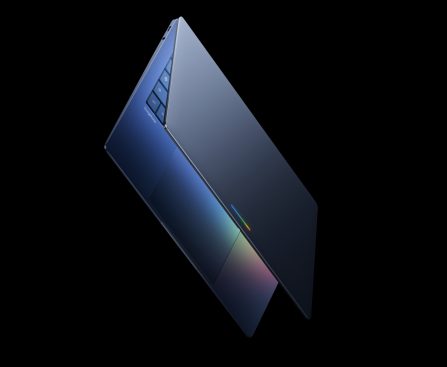
Magic Pointer is Google’s innovation in rethinking the cursor, potentially being the standout feature of Android’s desktop mode. We have already learned about Aluminum OS, which is Google’s desktop Android initiative that may serve as a substitute for ChromeOS. Now, we have insight into the devices set to operate with Aluminum OS. During today’s The Android Show: I/O Edition, Google unveiled a new series of Android-based laptops known as Googlebooks. These will initially be developed by five partners: Acer, ASUS, Dell, HP, and Lenovo. While the exact name of the OS running on Googlebooks remains unknown, it is confirmed to be based on the Android technology stack.
This is not merely a larger iteration of Android that runs on mobile devices — even though it bears some resemblance to Android 16’s desktop mode and the Chrome OS interface. Instead, Google aims to elevate the Android operating system into an “intelligent system” centered around AI. Furthermore, Android is envisioned as the cohesive software experience across phones, watches, tablets, laptops, and even vehicles. These are ambitious objectives, and it remains uncertain if Aluminum OS will accomplish them. Should the endeavor be successful, it will be the inception of Googlebooks.
They will operate the Gemini Intelligence software suite in conjunction with an Android-centric OS, which introduces new features, including a novel approach to a user interface element that seemed unnecessary to change — the cursor. It has remained largely the same for decades, yet Google seeks to refresh it with Magic Pointer. Upon learning about it, I find myself questioning if the cursor is truly flawless or if we’ve simply become accustomed to its shortcomings while a superior option exists.
Magic Pointer proposes features that you may not have realized were needed. The desktop cursor is arguably a fundamental component of a computer operating system — it often serves as the reason we prefer conventional laptops and desktops over mobile devices. The accuracy of a desktop pointer, combined with its capacity to transform into a grabber and text selector according to the context, facilitates smoother workflows and enables tasks that are difficult to perform with a finger or stylus. So, is there a necessity for change?
I’ve been uncertain about this, as Google’s interpretation of the desktop cursor is not the first attempt we’ve observed in recent years to reinvent this tool. Apple made a new attempt with iPadOS by introducing a circular and contextual cursor that adapts into UI elements on your iPad. This approach aims to provide thoughtful and precise control to a touch-centric operating system. Personally, it hasn’t resonated with me, as it lacks the precision of a traditional cursor and the convenience of using my finger.
Google’s Magic Pointer for Googlebooks is analogous in that it is a desktop cursor designed to adapt contextually as you navigate your operating system. However, the execution differs significantly from iPadOS — the ability of the cursor to transform is the only shared characteristic. Magic Pointer is powered by Gemini and operates on-device to offer immediate suggestions based on your current actions. It will propose Gemini-enabled actions you can execute with content displayed on your screen in real time.
For instance, hovering your cursor over a date might prompt Magic Pointer to suggest setting up a meeting or calendar invitation. Selecting a couple of images with your cursor could lead Gemini to merge them using Nano Banana. The Magic Pointer suggestions are processed swiftly through on-device computing, with final actions (like image generation) handled by the cloud.
This is all a component of Google’s initiative to integrate AI as a core element of its operating systems, rather than as a secondary application used sporadically.
This is just one of the Gemini Intelligence tools arriving on Googlebooks. I find Magic Pointer intriguing, and I believe it could help distinguish Googlebooks in the market. Google-powered laptops, such as Chromebooks, have consistently focused on utilizing cloud features to minimize the processing done on your device. This strategy allows Chromebooks to compete effectively on price and offer valuable tools with lower-end hardware. Googlebooks intend to utilize a blend of on-device and cloud-based AI processing to deliver Gemini Intelligence features — directly through your cursor.
The straightforwardness of Magic Pointer might be its most crucial aspect. Integrating AI features into your workflow is more challenging than one might expect. You might explore a tool like Nano Banana to test it, but forget to apply it when visualizing how a couch fits in your space. With Magic Pointer, there is a constant reminder of the Gemini Intelligence tools accessible on your Googlebook. Some individuals may not appreciate the extent to which AI is woven into a feature as fundamental as the desktop cursor, but others will embrace it.
Android Users Experience Enhanced File Sharing with iOS
This Year Sees Samsung, Oppo, OnePlus, Vivo, Xiaomi, and Honor Joining the Rollout
In a pivotal advancement for Android users, Google has revealed the extension of its Quick Share feature beyond Pixel devices. Major smartphone manufacturers, including Samsung, Oppo, OnePlus, Vivo, Xiaomi, and Honor, will participate in the rollout this year, boosting file-sharing capabilities throughout the Android ecosystem.
Historically, Android users encountered difficulties when transferring files between different brands, often reverting to slow uploads or third-party applications. The launch of Quick Share seeks to resolve these challenges by offering a more fluid and universal approach to file sharing among various Android gadgets.
A particularly significant enhancement is Quick Share’s compatibility with Apple’s AirDrop, enabling Android users to transmit files to iPhones via QR code cloud transfers. This innovation alleviates one of the platform’s most significant irritations and improves interoperability between Android and iOS devices.
Google’s initiatives to enhance the Android experience go beyond system-level sharing. Quick Share will soon be directly incorporated into widely-used applications like WhatsApp, facilitating quicker and more effective file sharing. Furthermore, Google has collaborated with Apple to simplify the migration process from iOS to Android, allowing users to wirelessly transfer data such as passwords, photos, messages, and even home screen arrangements.
The improved wireless transfer capability is expected to be available for Samsung Galaxy and Google Pixel devices later this year, representing a major advancement in breaking down the obstacles for users transitioning between ecosystems.
In summary, these improvements demonstrate Google’s dedication to fostering a more interconnected and user-friendly Android setting, tackling persistent issues and enhancing the overall experience for Android users globally.
How to Reserve the Fitbit Air at a Major Discount from Google
You can now obtain a FREE Fitbit Air by exchanging an old device at the Google Store
The eagerly awaited Fitbit Air isn’t set to hit store shelves until May 25th, but you can already obtain the streamlined wearable for FREE with this preorder offer from the Google Store. Just trade in an eligible smartwatch on the website, and the Fitbit Air will be yours without any obligations.
So what’s the catch? To receive the free device, you’ll have to trade in a premium smartwatch like the Samsung Galaxy Watch Ultra or a recent Apple Watch. Given that those wearables are significantly more advanced than the purposefully simple Fitbit Air, it honestly doesn’t make much sense to claim the full $100 trade-in discount right away.
Instead, it would be wiser to exchange a less expensive smartwatch or fitness tracker for a smaller discount. Sending in the Fitbit Versa 3 will result in a $50 price reduction, for example, while band-style devices like the Fitbit Charge 6 will net you $25 off your preorder. Combine that with a complimentary $35 credit, and you’re looking at a remarkable preorder deal on a fitness tracker that was already quite affordable at launch.
The first fantastic Google Fitbit Air offer has arrived before the launch
The new Fitbit Air doesn’t officially arrive in stores until May 25th, but you can already get the screenless fitness tracker for as little as $0 by trading in an old or damaged smartwatch at the Google Store. Very few models will qualify for the full discount, but numerous old Fitbit, Garmin, and Samsung devices will earn you $50 or $25 in credit. Since the Fitbit Air begins at just $99.99, this preorder offer could take you far.
I typically avoid exaggeration when discussing new technology, but it seems fair to assert that the Google Fitbit Air could very well be the future of fitness tracker innovation. For one, similar to the Whoop, the Google wearable lacks a screen. Unlike other manufacturers, who seem committed to cramming AMOLED displays and pricey Gorilla Glass technology into every device they create, Google has adopted a different strategy by entirely removing the screen to provide a fitness band that is stylish, minimalist, and crucially, budget-friendly.
Starting at just $99.99, all the capabilities of the Fitbit Air are hidden from plain sight. The screenless fitness tracker features 24/7 heart rate monitoring with SpO2 blood oxygen tracking, Sleep Score, a step counter, and more. Since the device doesn’t have a display, you receive passive data that you can monitor in the free Google Health App. This companion application is compatible with both iOS and Android, and you can even connect the Fitbit Air with other smartwatches for enhanced functionality.
While a screenless fitness tracker may not suit everyone’s tastes, if you’re looking for an affordable way to gather health and fitness data passively and don’t mind a low-profile device, the Fitbit Air is sure to become your new favorite gadget when it finally launches on May 25th.