China Unveils ‘Pre-6G’ Network Featuring Speeds Up to 10 Times Greater Than 5G

5G represents the fastest type of network currently accessible, yet China is delving into the forthcoming version. It already marks a substantial advancement over 5G.

Not long ago, China initiated trials for what officials aspire to establish as its inaugural 6G network. This “pre-6G” experimental network utilizes the foundation of an existing 5G infrastructure but is purportedly tenfold quicker than its forerunner. The experiment occurred in Nanjing, a key city in Jiangsu Province, showcasing not only the emerging technology’s speed but also features like exceptionally high bandwidth, reduced latency, and the integration of AI. Nevertheless, the specifics of AI’s role within the cellular network remain unclear.

Though the trial results were encouraging, 6G networks are far from being ready for public consumption. Engineers do not anticipate finalizing system specifications and functionalities until at least 2028. However, China is making a $485 million investment in 6G technologies and their related applications and talent, so it wouldn’t be surprising if the final version of 6G outpaces the recent pre-6G trial network’s speeds.

6G technology might finally enable holographic communication

To be straightforward, we are eager for 6G. This innovation could transform the communication sector if the speeds observed during the pre-6G network trials serve as any indication. However, connecting to websites and downloading applications at a quicker pace merely touches on the potential of 6G.

Throughout the network trials, engineers examined the various applications of 6G across multiple fields. These assessments included low-altitude inspections, industrial production, and even holographic communications. This last aspect is particularly noteworthy, as in 2024, <a href="https://www.bgr.com/tech/6g-m

Five Sci-Fi Series That Extended Their Narratives Via Comics Following Cancellation

Fans of the Sci-Fi genre are enjoying their time, thanks to series like “Severance,” “Resident Alien,” and “Pluribus.” This genre has provided them with seasons of television that have captivated many by stretching the limits of human creativity. Some of these shows concluded their narratives, but not without leaving fans wanting for proper closure. Others ended suddenly due to circumstances outside the control of the creators, including dwindling viewership, financial limitations, and studio interference. While numerous shows have faded into oblivion, some have persisted in a format liberated from the limitations of television: comics.

Comic books provide an opportunity for creators of canceled series to unleash their creativity further. They need not concern themselves with high production costs, special effects that might not age gracefully, or securing actors for extended commitments. These comics serve as presents to fans, but they can also deliver the unfiltered vision of the showrunners. The narratives encompass the formative years of a young Man of Steel, a cherished cheerleading vampire killer, and a cult-favorite space western.

All these stories have found a place within the comic book community and have crafted tales that often broaden the universe, rather than merely serving as distant tie-ins. With the current trend of reboots in television, one can only wish they might be revived. However, even if they aren’t, at least there’s a means to reconnect with them and discover how certain cliffhangers or unresolved queries were addressed.

Invader Zim

“Invader Zim” was a NickToon that premiered on Nickelodeon in 2001. It focuses on the main character, Zim, who is part of the Irken Empire, a race of invading insect-like aliens from the planet Irk. His superiors find Zim bothersome due to his constant failures, and they dispatch him to Earth merely to remove him from their path. They expect him to fail and never return, but Zim is resolute in his quest for success. On Earth, he masquerades as a human child and even goes to school. However, only one person in his class, Dib, is able to see past his disguise. The issue is that everyone else considers Dib to be delusional.

Anticipated Modifications to Google TV: A Detailed Review

Google TV Streamer, your journey is about to involve even more doomscrolling. With Google now placing increased emphasis on its AI assistant Gemini, the organization is providing further tools to users, with the most significant enhancement being the addition of a new “Short videos for you” segment directly on the Google TV main screen. Users will now have the convenience of easily browsing through compilations of YouTube Shorts, though Google is also implementing a few other modifications.

As stated in a Google blog entry, in conjunction with the new feed, the company is also introducing generative AI photo and video capabilities to the platform. Users will now have the ability to create images and video clips straight from their TV. Additionally, there will be a feature to navigate through a Google Photos library and incorporate extra elements into found images. While some of these functionalities are already starting to be deployed, those anticipating the new Shorts feature should look for it later this year.

This announcement follows Google’s rollout of AI functionalities to its TV platform in January, which included Google Photos integration and new Gemini enhancements for Google TV. While the newly introduced generative AI features for Google TV will offer some novelty value, it will be intriguing to observe user reactions to the newly added tray of short-form videos on their home screen.

Google adds more Gemini features to Google TV

As users will now be able to browse through a selection of “snackable videos” predominantly sourced from YouTube Shorts on their Google TV home screen, the phrasing in the

Why Netflix’s Interface Is Now Similar to TikTok

the announcement press release regarding the new feature: “Regardless of whether you’re on your lunch break, commuting, or awaiting your next flight, Netflix on your mobile device accompanies you everywhere.” The new Clips feature is described as an “exciting initial step toward enhancing mobile for members,” as stated by Netflix.

Netflix also equated the mobile app redesign with the previous year’s overhaul of the Netflix TV app, an experience that received some user criticism upon its release. Nevertheless, Netflix believes that “the same emphasis on simplicity and enjoyment” will translate well to the mobile experience, particularly in terms of content discovery. The goal of the vertical video feed in the new Clips section is to assist users in discovering new content to view, and it may prove valuable. Instead of the infinite scrolling available in the standard Netflix app, whether on mobile, PC, or desktop, a highly tailored feed of clips might be more beneficial.

Significantly, the Clips section will not provide users with endless scrolling akin to TikTok and Instagram. This is something Netflix highlighted in the press release, indicating that a finite number of videos will be displayed at any time in the Clips section.

When will Clips become available?

The new mobile experience will launch on April 30, 2026, across multiple markets, including the U.S., U.K., Australia, Canada, India, Malaysia, Pakistan, the Philippines, and South Africa. Users in those regions may need to update the Netflix mobile app to begin viewing the vertical video feed. The remaining parts of the world will gain access to Clips in

Apple TV’s Latest Comedy Horror Series Launches with Flawless Rotten Tomatoes Rating

Apple TV has a reputation for delivering high-quality content. With acclaimed series like “Severance” and “Ted Lasso” already in its portfolio, the platform is also home to the Academy Award-winning film “Coda,” among various other critically recognized successes. Nevertheless, enthusiasts of the horror-comedy genre may have been yearning for fresh material to dive into — particularly after the premature cancellation of Drew Barrymore’s “Santa Clarita Diet” — and a new series on Apple TV is gaining both critics’ and viewers’ applause.

For those seeking a frightfully delightful experience, the recently launched series “Widow’s Bay” shows great potential. Thus far, the 10-episode series is making a notable impression, holding a 100% Tomatometer score and a 93% Popcornmeter score on Rotten Tomatoes. With only a few episodes of Season 1 currently available, you might want to explore our suggestions if you’re after an Apple TV miniseries that can be completed in a single day.

In a review for Tech Advisor, critic David Opie remarks, “Assuming that an old-school curse doesn’t arrive to ruin the fun, we might just be looking at the next big hit from Apple TV. It’s a classic in the making.” Clearly, if the encouragement from critics and online chatter isn’t sufficient to motivate you to watch, consider that series creator Katie Dippold boasts a notable background in Hollywood, having penned works like “Parks and Recreation” and “The Heat,” giving you an idea of what to anticipate.

Widow’s Bay is a wickedly entertaining experience on Apple TV.

Though not extremely prevalent on the platform, there is horror-themed content available on Apple TV. In fact, the service’s inaugural scary offering was M. Night Shyamalan’s 4-season series “Servant,” which did incorporate elements of dark comedy at times. Naturally, there’s also a fair share of corporate-horror and thrills in the previously highlighted “Severance” as well. However, the company’s newest series intends to elicit laughter just as frequently as it induces screams.

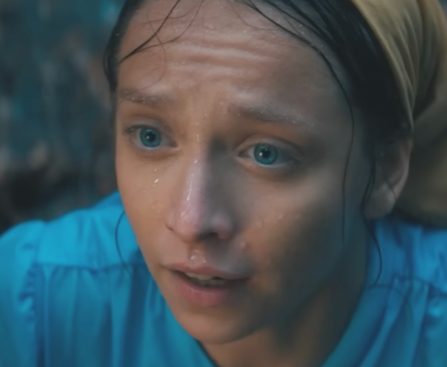
Set in a small island community off the New England coast sharing the same name, “Widow’s Bay” focuses on Mayor Tom Loftis (Matthew Rhys). Eager to revitalize the community’s grim living conditions (no Wi-Fi!), Mayor Loftis strives to satisfy his constituents despite believing the island is cursed. As the mayor gradually attracts tourists to the island, it becomes evident that the residents of Widow’s Bay had good reason to be concerned, as the superstitions haunting the island start to manifest.

Alongside Rhys, “Widow’s Bay” features Stephen Root, Kate O’Flynn, Kingston Rumi Southwick, Dale Dickey, and Kevin Carroll. The series has its first three episodes currently streaming on Apple TV, with new installments arriving each Wednesday until June 17. While the outlook for the series appears quite bright so far, we hope “Widow’s Bay” evolves into an Apple TV show worthy of repeated binge-watching — but for now, we will need to remain patient and observe.

Microsoft’s Legendary Software Now Available as Open Source for Public Access

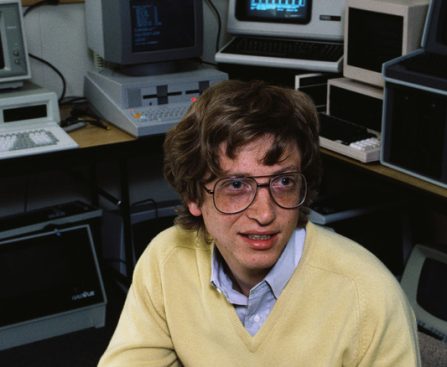
Microsoft has made available the earliest-known version of the DOS operating system via an open-source GitHub repository. This follows the open-sourcing of MS-DOS 1.25 and 2.x in 2018, as well as the release of the MS-DOS 4.0 source in 2024. The version being issued in 2026 actually predates the MS-DOS label — it is 86-DOS 1.00, and its release has been coordinated with the software’s 45th anniversary. This difference in naming suggests that Microsoft did not create MS-DOS entirely independently — instead, it acquired the rights to 86-DOS (initially known as “QD-DOS,” which stands for “Quick and Dirty”) and brought on board its developer, Tim Paterson, during this acquisition.

Upon acquiring the rights to 86-DOS, Microsoft rebranded the software, leading to the establishment of MS-DOS in July 1981. This became the foundation for PC DOS 1.0, which Microsoft modified for the IBM Personal Computer 5150 that launched in August 1981. Subsequently, Microsoft began licensing MS-DOS to other manufacturers of IBM-compatible PCs such as Compaq and Zenith. These iterations of DOS (disk operating system) preceded Windows and functioned as the core operating system until Windows XP, effectively running atop MS-DOS or PC DOS and providing a graphical user interface for system functions instead of relying solely on the command line.

As noted by Scott Hanselman, who facilitated the release of these vintage operating systems for public experimentation, the “earliest DOS source code” was discovered in Paterson’s garage. These printouts featured handwritten annotations, offering a glimpse into the development processes of the 1980s, prior to Microsoft features becoming prevalent. In theory, one could rewrite all of this in assembly language and create a personal version of DOS.