Samsung’s Future Laptop Line Possibly Excluding Windows 11

Samsung users are familiar with switching between operating systems. Currently, the company’s devices, which encompass laptops, smartphones, televisions, and smartwatches, operate on various platforms, including ChromeOS, Tizen, Windows, and Android. Nevertheless, its laptops have traditionally presented a narrower selection of OS choices. The well-known Galaxy Book series, for example, operates solely on Windows, while the company’s Chromebooks rely on Google’s ChromeOS. Still, enthusiasts of the brand’s laptops may be in for a treat, as the South Korean tech titan could be revamping its product range.

A report from SamMobile reveals that Samsung is poised to revamp its popular Galaxy Book laptop series. This transformation would involve Samsung replacing Windows 11 with Google’s upcoming Android-based operating system on select models. The report notes that these laptops “will run on Android 17-based One UI 9 software.” This news may come as a mild surprise to some Android enthusiasts, as Android 17 is presently only accessible in beta on certain devices. However, it remains unclear if Samsung intends to sever its ties with Windows, or if it is simply broadening its operating system choices. Thus far, no official statement has verified the transition.

The leak arrives as Google moves towards the long-anticipated launch of Aluminum OS, which aims to unify both Android and ChromeOS for phones, laptops, and tablets alike. Nonetheless, Android’s next significant evolution keeps facing postponements. Whether Samsung’s schedule aligns with Google’s eagerly awaited Aluminum release, or if the new Galaxy Book models will arrive before the operating system’s introduction, is yet to be determined.

How Android modifies the Galaxy Book

Currently, Samsung provides two main lines of laptops, each utilizing a different operating system. The company’s Windows laptops, part of the Galaxy Book lineup, deliver high performance at a premium cost. Despite new models exceeding $1,000, the Galaxy Book is among the top premium laptops available in 2026. Conversely, its Galaxy Chromebook series serves as a robust budget alternative. A lightweight laptop that offers a solid cloud-first experience through ChromeOS, its speed and battery life are perfect for online browsing and essential tasks.

Limited information exists regarding Samsung’s forthcoming Galaxy Book series. Based on SamMobile’s insights, the firm is crafting low, mid, and high-end variants of its forthcoming Galaxy Books. As suggested by SamMobile, these models will operate on One UI 9 built upon Google’s Android 17. Notably, Samsung’s phones, watches, televisions, and tablets already utilize the One UI software, prompting speculation that the new Galaxy Book will enhance integration across Samsung’s devices. Unsurprisingly, these laptops are also said to feature numerous Galaxy AI functionalities, akin to those seen in Samsung’s other devices. Additionally, SamMobile mentions that Android-based Galaxy Book models may include an upgraded version of Samsung DeX to strengthen connectivity with Galaxy phones and tablets that feature it.

A significant unknown

At this point, Samsung’s upcoming laptop range is characterized more by uncertainties than by definitive features. Regarding hardware, SamMobile’s report simply states that the flagship model “is rumored to showcase an elegantly sleek design.” Crucially, even this minor detail is accompanied by ambiguity, as the outlet cautions that the “popularity” of Apple’s MacBook Neo, a cost-effective laptop aiming to broaden the Mac’s appeal beyond the premium segment, “could shift [Samsung’s] design focus.”

So far, no information is available about the potential launch of the laptop. While the report speculates that Samsung might align its next laptop release with Google’s imminent Android 17 unveiling, which is anticipated to take place at the company’s May 2026 Google I/O developer conference, there has been no confirmation from the company that Samsung’s Android 17 laptop will debut this year. Furthermore, it remains plausible that Samsung could continue issuing Windows laptops, possibly utilizing the powerful Windows-on-ARM system in conjunction with its Android offerings. The impact of Google’s Aluminum OS development on these strategies is still uncertain.

The implications of Samsung potentially broadening its long-standing collaboration with Google could spark intensive discussions in the forthcoming months. Naturally, introducing a unified interface, shared app ecosystem, and consistent AI functionalities might enable deeper integration across the collaborative products of the two technology giants. Nevertheless, at this moment, any projections regarding the potential new laptop remain speculative until additional details emerge. Whether those details will surface in May is uncertain.
NASA’s 2030 Strategy: Launching a Nuclear Power Plant on the Moon and Its Objectives

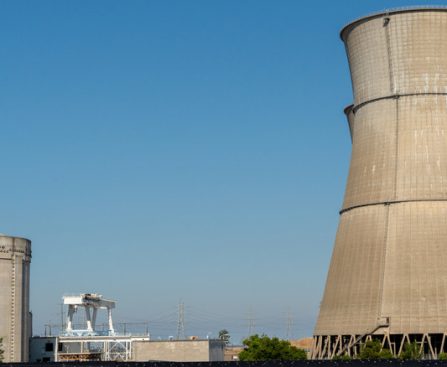
Artemis II mission has sparked public interest and reenergized enthusiasm for space exploration, yet it represents merely the initial phase. The overarching aim of the Artemis program is to create a lasting presence on the moon via a base located at the lunar South Pole. Nevertheless, any potential settlement will necessitate ongoing nuclear energy to power essential systems such as life support. In spite of significant budget cuts, the White House has assigned NASA the responsibility of advancing lunar nuclear technology.

Nuclear energy stands as the only practical solution for powering a lunar base due to the issues posed by alternative fuel sources. Continuously shipping conventional fossil fuels from Earth is impractical because of the logistics and costs involved, and given that the moon experiences two weeks of daylight followed by two weeks of darkness, solar power is also not viable. Additionally, the absence of wind or flowing water on the lunar surface means that nuclear remains the sole feasible option.

The White House has directed agencies to initiate the development of nuclear reactors that can be sent to lunar orbit as early as 2028, with reactors for the surface anticipated to follow by 2030. This timeline proposed by Washington offers insights into NASA’s prospects for space exploration, including a future mission to Mars.

The strategy for lunar nuclear power by 2030

To fulfill its objective of sending nuclear power to the moon for a future lunar base, the White House has launched a program named the National Initiative for American Space Nuclear Power. Through this initiative, the White House has mandated NASA to start prototyping nuclear reactors aiming to create a mid-power reactor fit for the moon’s surface by 2030. In the <a href="https://www.whitehouse.gov/wp-content/uploads/2026/04/NSTM-3-2026_04_

“Overlooked Sci-Fi Series Starring Jerry O’Connell Merit More Recognition”

the various versions of “Star Trek” to the fan-favorite “Firefly.” Among these treasured series, a title that often arises from the mid-90s is “Sliders,” a science fiction show that aired from 1995 to 2000, chronicling the adventures of a young prodigy, portrayed by Jerry O’Connell, who “slides” among alternative Earths while trying to find his way back home. Alongside his childhood role in Rob Reiner’s “Stand By Me,” it stands out as one of O’Connell’s most significant performances.

“Sliders” lasted for a total of five seasons: the first three aired on Fox and the final two on the Sci-Fi Channel. The series was a fan favorite in its era due to its unique concept and insightful social commentary, although behind the scenes, there were frequent conflicts among the cast, the writers, and the network that resulted in a tumultuous production overall. There are numerous elements one could credit for the show’s eventual cancellation, but at the very least, it continues to hold cult-classic status within the sci-fi community.

Sliders showcased a team traversing through different parallel dimensions

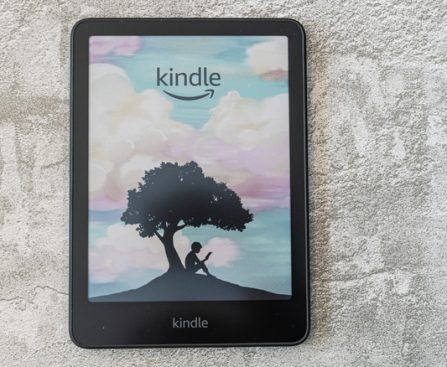
The Kindle Colorsoft Gets a Delayed Update

first Kindle they wish to acquire, but the device ultimately simplifies the enjoyment of vibrant illustrations of books and covers that one previously needed to view on a tablet or a physical copy to fully appreciate. Nevertheless, there is one significant feature that has been absent from the Colorsoft since its introduction a few years back: dark mode. Fortunately, Colorsoft users will soon be able to fully utilize the more night-friendly reading theme, with some already experiencing it on their devices.

The new functionality is presently being rolled out to both Kindle Colorsoft and Kindle Scribe Colorsoft, according to reports, and once it arrives on your Kindle, you should have the option to enable it via the quick settings panel (which can be accessed by swiping down from the top of the screen). After activation, it will impact your home screen, reading screen, and even your library, although you’ll have the ability to adjust it so that it does not influence your notebooks on the Scribe Colorsoft.

A significant update

Steps and Justifications for Emptying Your Google Chrome Cache

slow Wi-Fi connection). Repeatedly downloading the same data whenever you revisit a website isn’t the most efficient approach, and waiting for the same pictures to load while your browser fetches them again isn’t optimal either. Thankfully, your browser is quite intelligent and utilizes cached data to handle this.

Although it is definitely a handy feature, there are several reasons you may wish to clear your browser cache. For instance, if Chrome is unexpectedly sluggish or a website isn’t loading properly, one of the most prevalent troubleshooting steps is to clear the browser’s cache. Luckily, Google makes this process very easy. On a PC or laptop, click on the three vertical dots in the upper right corner of your browser window, then navigate to Settings and access the Privacy and security submenu on the left before selecting Delete browsing data.

This will display a prompt where you can select what to remove (cached images, browser history, or cookies) and also decide what time frame you want to clear the chosen options for (the last hour, the last month, or all time). You can use the same procedure to clear Google Chrome cache on a Mac, but you will also find a Delete browsing data shortcut right when you click the three dots in the upper right corner.

How to clear Google Chrome cache on your phone

Crucial Element to Enhance When Your Computer Seems Obsolete

like DDR4 RAM, there are alternatives to ensure your PC performs at its optimal level without investing a fortune on components. One crucial technology you might want to consider first when planning an upgrade is a solid-state drive (SSD) or hard disk drive (HDD).

Solid-state drives are standard in more recent PCs manufactured in the last few years, whereas older models tend to utilize traditional spinning hard disk drives. Upgrading either the SSD or HDD in your PC is an excellent initial choice if you’re seeking to enhance the performance, speed, and responsiveness of your system. Both types of drives fulfill a comparable role in storing data, games, and files, yet they function quite differently regarding load times and system and application booting.

The distinctions and commonalities between SSD and HDD

New Research Suggests Concept for DNA Design

Nature Communications. For many years, researchers have depended on enzymes known as polymerases to construct DNA incrementally, adhering to a pre-existing template. Nevertheless, the research indicates that a template might not be necessary, as freeform drawing can yield DNA sequences reaching lengths of 85,364 nucleotides. In contrast, chemically manufactured sequences usually peak at 200 nucleotides, although a recent study recorded an impressive length of over 1,700 nucleotides.

Researchers have solely examined this procedure in laboratory settings, utilizing particular enzymes and precisely adjusted environments to facilitate the drawing process. Implementing these findings into living cells presents a different set of challenges. Polymerases will encounter a biological system that aims to discard these drawings. Throughout the DNA duplication process, polymerases review their own output continuously. Any mismatched or drawn DNA will be eliminated almost right away. Certain proteins also restrict DNA synthesis to a template, complicating the drawing process. Additionally, there are cell-cycle checkpoints that allow a cell to halt the replication if it appears irregular. Despite the obstacles ahead, the consequences of this research could significantly influence our everyday lives.

How doodled DNA could revolutionize medicine

Grasping the Mechanism of Satellite Connectivity on Mobile Devices

Among the top-tier smartphones on the market today, satellite connectivity is featured in devices like the iPhone 17, Galaxy S26, and Pixel 10 series. This technology can mitigate the dead zones that may be experienced in remote locations, deserts, or oceans, and it serves as a vital link for travelers and individuals in rural settings. If your smartphone boasts satellite connectivity, it can establish communication with a satellite in Low Earth Orbit (LEO), functioning similarly to a cell tower in space, enabling messaging, emergency service contact, or, more recently, limited app access.

Apple pioneered the introduction of satellite connectivity in smartphones with the emergency SOS feature in the iPhone 14 series, resulting in multiple iPhones supporting this functionality. Other significant brands like Samsung and Google have managed to catch up with Apple to an extent, yet the specific technologies and partnerships differ among providers. For instance, Apple collaborated with Globalstar, while Google partnered with Skylo to deliver emergency SOS capabilities that closely resemble those of Apple. In contrast, Samsung’s approach is more conditional and reliant on the carrier.

From an end-user perspective, it’s important to recognize two distinct types of satellite connectivity. The first is the emergency SOS feature initiated by Apple, usually provided at no additional cost with the device purchase and designed for limited connectivity during emergencies. The second type, referred to as direct-to-cell (D2C) service, is being launched by carriers such as T-Mobile and Verizon. In D2C service, the connection operates like a 5G cell tower, offering more functionalities than merely emergency calls and texts.

Here’s how emergency SOS satellite connectivity works on a phone

The Effect of a Shared Vehicle Ornament on Electric Vehicle Battery Range

Market Research Future suggests that the roof rack market is set to expand from $1.747 billion to $2.909 billion by 2035. However, if you have a roof rack attached to your electric vehicle, it is undoubtedly impacting your battery range. This occurs because a roof rack enlarges the frontal surface area of your vehicle, thereby increasing the amount of wind resistance your car must overcome while driving.

Studies indicate that an unladen roof rack can decrease the fuel efficiency of a gasoline vehicle by up to 12%. Naturally, roof racks are frequently utilized for transporting large items such as bicycles, storage containers, and outdoor activity equipment, and securing these types of items atop your vehicle may decrease efficiency by 30% or more.

Electric vehicles are significantly more efficient than gasoline-fueled cars. The most efficient electric vehicles can convert as much as 95% of their stored energy into mechanical power, whereas a gasoline vehicle typically only converts about 30% of its chemical energy into movement. The aerodynamic effects of wind resistance are identical for both vehicle types, but you will perceive their impact much more noticeably when driving an EV. The average battery range for 2026 model-year EVs is 325 miles. Therefore, if an unoccupied roof rack leads to a 12% loss in your 95% efficient EV battery, your car’s range could diminish by over 35 miles per charge. Likewise, a fully loaded roof rack might result in a reduction of more than 90 miles in range.

Ways to enhance EV battery range with a roof rack