Alternative Approaches to Lower Expenses on Secondary Displays for Gaming

Before the era of live internet streaming, YouTube, and Twitch, if you wished to indulge in video gaming, you would either visit an arcade or settle in front of a solitary screen to play. Nowadays, one screen may not suffice for those wanting to game, engage on Discord, and browse the web simultaneously. Tools like OBS and Streamlabs, along with splitting your screen, can assist; however, having a secondary screen enables you to observe your game and other windows without obstructing your view. Nevertheless, you don’t have to spend a fortune for that second display.

Your primary screen is intended for your gaming, so it’s advisable to seek high-resolution choices to maximize the graphics, appearance, and gameplay of whatever you are playing. Those specifications can increase the cost, but even a $50 second monitor can transform how you operate and play. That second monitor doesn’t have to be overly pricey or deliver the finest image quality if you plan to use it for tasks outside of gaming.

Multitasking is a crucial skill not just for streamers with an audience, but for anyone who enjoys having more options readily available. A second monitor enables you to keep your game active on the primary screen while you search for walkthroughs, read FAQs, or chat with friends about the latest episode of your favorite show on the secondary monitor. This implies that the screen can be less expensive than your main gaming display.

The advantages of using a second monitor while gaming

Investing in an extra gaming monitor does not necessarily mean your bank account must take a hit. Standard PC monitors usually suffice and are budget-friendly, often priced around $100 or less. You don’t need the second screen to be extravagant, just functional. Opt for a 4K model for your primary monitor and use your second monitor for everything else.

There are numerous monitors that can function as a second screen without breaking the bank. The UFYQL Portable Monitor, for instance, has a listed price of $39.99, and the ASUS 22″ 1080P Eye Care Monitor (VP227HF) is priced at $69, making both viable options for a second monitor. Be sure to research a monitor that aligns with your requirements to ensure you obtain precisely what you need.

Check Reddit, and you’ll find a forum discussing whether a budget monitor is suitable if it’s not intended for gaming. One member noted that the colors between the two monitors were mismatched, with one appearing more yellow, although they did not specify which display was at fault. If you encounter any color discrepancies, you might explore common settings that could be affecting your computer monitor.

The ideal setup for dual-monitor gaming

When it’s time to configure your dual monitors, you have several options to choose from. You can position your second display alongside and aligned with your gaming monitor, utilizing a stand or opting for a mount similar to a wall TV. Screens can also be adjusted to horizontal or vertical orientations, based on your preference. To switch to a vertical view, you’ll need to access your computer’s settings to alter the view for each screen. Many monitors come with an integrated stand, but not all do, so you may need to be inventive. Just ensure that your second monitor has a VESA mount so you can attach it to any stand or desk arm of your choice.

In summary, high-quality computer monitors are excellent for gaming, but it’s wise to purchase a less expensive panel for secondary tasks. If you’re on a limited budget and don’t want to overspend on a second high-performance monitor for your gaming setup, you’re not obligated to do so. A second monitor is not only useful but also enhances the versatility of your gaming experience. You are free to engage in games on one monitor while utilizing the additional monitor for anything else you need. The notable exception to the idea of going inexpensive on your second monitor is if you indeed wish to extend your gaming display across both screens. In such a scenario, you would certainly want high-end capabilities on both sides of the setup.

Key Bluetooth Devices to Improve Your iPad Usage

the Apple Pencil and more affordable options that simplify the process of utilizing your iPad as a notebook, sketching surface, or even a laptop substitute. Even more intriguing are the less evident gadgets that introduce fresh methods to engage with your tablet.

Certain Bluetooth accessories for iPad offer specialized features, such as page-turning pedals that allow musicians to effortlessly navigate their sheet music without using their hands. Additionally, there are devices that, while compatible with the iPad, are more appropriate for iPhone, like the Satechi Bluetooth Media Button, which includes a steering wheel mount for secure usage while driving. Although many of these items work with other gadgets, this list will concentrate on some Bluetooth accessories for the iPad that you’ll wish to use once you learn about them.

JTEMAN Bluetooth Speaker Tablet Stand

Stands and speakers are typical iPad accessories, yet the combination offered by JTEMAN makes it ideal for anyone who enjoys watching movies and TV shows or listening to music on their tablet. The JTEMAN Bluetooth Speaker Tablet Stand removes the necessity of having multiple devices that occupy space or get misplaced when you need them. It accommodates tablets and phones ranging from four to 13 inches and is adjustable, allowing you to position it at a comfortable angle.

Netflix Series Reimagines Iconic Denzel Washington Film with Thrilling Action

One of the century’s most cherished action icons is making a comeback. This time in a star-filled Netflix series that is certain to please devoted fans and newcomers alike. Premiering on April 30, 2026, “Man on Fire” tracks U.S. special forces operative John Creasy as he seeks revenge against a group of terrorists targeting a friend’s defiant teenage daughter. Featuring Yahya Abdul-Mateen II, the seven-episode miniseries is a gritty adventure that propels viewers through the complex streets of Rio de Janeiro’s criminal landscape.

This series represents the latest adaptation of novelist A.J. Quinnell’s acclaimed book and serves as a remake of Tony Scott’s 2004 cult classic that starred Denzel Washington. Similar to its cinematic predecessor, Netflix’s version takes creative liberties with the original material, enhancing the Creasy character and situating his story within an engaging setting. In a discussion with the Los Angeles Times, creator Kyle Killen reassured fans that Netflix’s series is far from mere fanservice, emphasizing, “we’re not attempting to replicate anything. What the film accomplishes is establish a standard. There was something distinctive about the visual style and how everything came together. That provided us the freedom to seek our own approach.”

Stepping into Denzel Washington’s role is no small feat, but Abdul-Mateen is well-acquainted with the demands of high-octane action franchises and their passionate fanbases. Having previously appeared in adaptations of “Watchmen,” “Aquaman,” “The Matrix Resurrections,” and Marvel’s “Wonder Man,” Abdul-Mateen has cultivated a career by exceeding immense expectations. Naturally, Washington presents a particular challenge. As the actor shared with Rolling Stone, “Denzel’s Creasy — oh, man, I aspire to be him. He just makes it look so cool. . . I remarked, ‘Hey, if I’m going to take this on, why attempt to compete with that ghost.” Hence, Netflix’s upcoming series may be his boldest undertaking yet.

A distinctive remake

Teenage boys, nostalgic millennials, and Denzel enthusiasts are protective of Tony Scott’s “Man on Fire.” Although initially criticized, the film has garnered a cult following over time due to its artistic visuals, poignant redemption narrative, and quintessential Denzel Washington performance. Unsurprisingly, reimagining the 2004 success might raise doubts. Even Abdul-Mateen acknowledges “there was a reasonable level of anxiety” in revisiting the beloved film. Nonetheless, fans are likely to rejoice rather than despair in the expanded storyline.

Netflix’s “Man on Fire” depicts Abdul-Mateen’s John Creasy at rock bottom. Following an unsuccessful suicide attempt, the alcoholic special agent is enlisted by his longtime friend Paul Rayburn to join an anti-terrorism task force in Rio de Janeiro. Played by Bobby Cannavale, whose most recent Oscar-nominated film Blue Moon is also available on Netflix, the clever Rayburn serves as a kind of foil to Creasy, seemingly aiming to guide him away from his troubles and toward redemption. However, when terrorists target Rayburn’s daughter Poe, played by Billie Boullet, Creasy must confront both his history and a conspiracy beyond his control. Completing the cast is Alice Braga as Valeria Melo, a driver with gang connections, and Scoot McNairy as the cunning CIA operative Henry Tappan.

While this narrative may feel familiar, conversations with the show’s creators indicate that the series diverges significantly from its cinematic predecessors. The series is more firmly rooted in the source material than its film counterparts, with its extended runtime enabling it to incorporate both “Man on Fire” and its sequel, “The Perfect Kill.” In a conversation with Screen Rant, Director Steven Caple Jr. hinted at the potential for additional seasons. Considering that Quinnell authored five Creasy novels, they will likely have ample material.

Evolving into John Creasy

Quinnell’s series exemplifies how atmosphere and character can often be more compelling than any shocking twist. In each of its three screen adaptations, directors have made alterations to the book’s storyline, modifying its setting, villains, and even Creasy’s name. One consistent element across its versions, however, is Creasy’s troubled persona. This was certainly evident in Tony Scott’s 2004 film, where Washington’s stereotypical bravado and intense glare deliver a more impactful narrative than its disjointed script should permit. In every prior iteration, “Man on Fire” is more persuasive as a character exploration than an action thriller, and Netflix’s adaptation seems to follow this pattern.

In a discussion with the L.A. Times, Abdul-Mateen likens his character to tormented Shakespearean figures such as Othello and Hamlet,

Magnetic Gadget Transforms Cable Management for $30

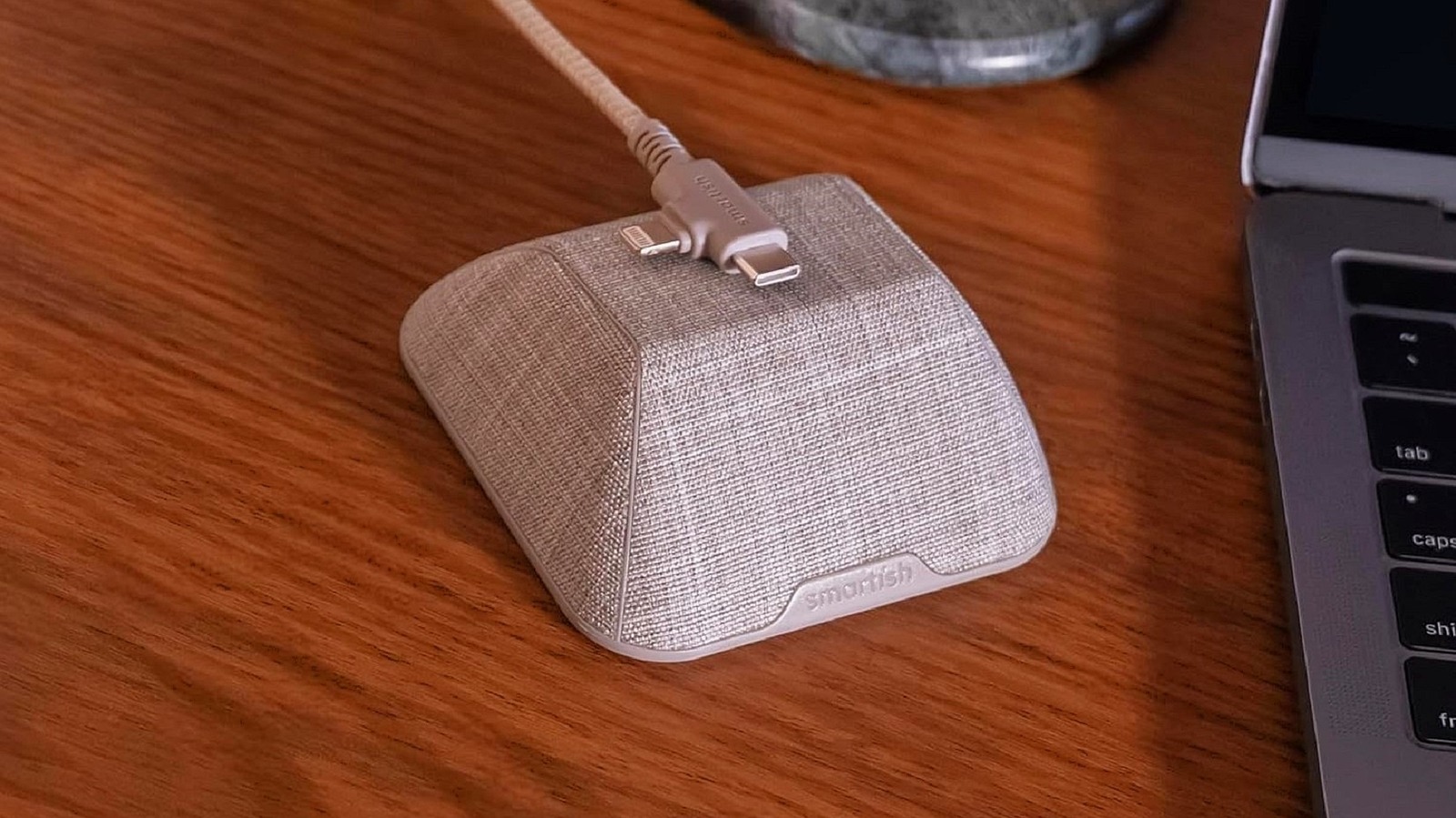
an affordable cable organization tool from a company named Smartish that can alleviate your frustrations. It features a chic pyramid-shaped stand that serves as a magnetic cord holder.

A weighted, anti-slip base ensures the entire device stays put, whether you set it on your desk, position it on a bedside table, or discreetly place it on a side table. The top is equipped with a powerful magnet designed to secure the cable and connector when you press it down. It also includes two magnetic cable collars for cords that may not stay fixed. Regarding the base, there are no adhesives — the underside is grippy and stable. Furthermore, it is available in various colors or styles, including a ‘toasted’ beige, pencil gray, black, white, bright pink, and blue jeans. You can find it on Amazon for $30 right now in several of those color options. It truly is one of those innovative smart gadgets that will enhance your home office, bedroom, or any location you choose to place it.

What do consumers think about the Smartish magnetic cable holder?

There is a larger variant of the holder, if you desire it, priced at $40. The medium-sized model can accommodate up to three cables, perhaps more, based on how many you can fit. Nonetheless, $30 is a reasonable amount to spend on something like this. It’s advisable to gauge how it will perform, primarily by reading feedback from individuals who have genuinely used it. The Smartish magnetic holder boasts over 5,000 reviews on Amazon with a rating of 4.6 out of 5 stars — indicating that users appreciate the product.

The top remarks describe it as “sleek and stylish,” “incredibly useful,” and “convenient.” One user even states

New Complimentary App Streamlines File Exchange from Android Devices

connect through USB using a physical cable or flash drive. However, these approaches aren’t exactly the epitome of convenience. They require more steps than needed, and by the time you retrieve your files, you’ve already squandered a few valuable minutes.

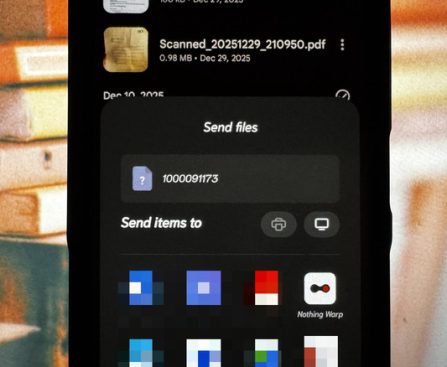
If only there existed a more straightforward method to transfer files from any Android device to any computer, regardless of its brand and operating system. Fortunately, such a solution does exist, and it’s one of the must-have Android productivity applications you ought to download. Appropriately named Nothing Warp, this app is created by the same developers behind the Nothing phone. However, it is not limited to Nothing phones and can function on any Android device as well as on any computer equipped with a Chromium-based browser, such as your PC, Mac, or Linux machine.

What makes Nothing Warp easy to operate is that the only applications required to share a file are your phone’s file management or photos app and the browser on your computer.

How does Nothing Warp function?

Contemporary Devices Influenced by 1980s Films

The ’80s were an incredible era for films, particularly within the sci-fi category. These movies featured numerous futuristic gadgets that offered audiences a glimpse into what the future could hold — you probably recall how these technologies seemed enchanting and made the 2000s feel so distant. Films like “Back to the Future,” “Runaway,” and various others showcased devices that many believed were impossible to develop at that time, yet some materialized and gained popularity in the years following.

If you grew up seeing these movies on an ’80s television, you understand that numerous predictions about what life would be like in the future never materialized. For those gadgets that did become reality, some arrived precisely as envisioned or in forms even more impressive than how they appeared in films. Others, however, came with certain constraints that the writers didn’t foresee, such as hoverboards requiring specialized tracks. Thus, while some technologies still have shortcomings, they transitioned from ’80s films into our everyday reality in various ways.

Self-tightening shoes

“Back to the Future Part II” debuted in 1989 and, in addition to continuing Marty McFly’s adventures, it attempted to forecast life in the then-far-off future of 2015. Some of those forecasts have aged better than others — and the self-tightening shoes are among the few to actually become a reality. What began as a brief visual effect on set transformed into an engineering feat that Nike ultimately accomplished.

During the making of “Back to the Future Part II,” Nike received an invitation to envision what footwear would resemble in 2015. In 2016, Nike unveiled a self-tightening rendition of the MAG model that McFly sported in the film, featuring sensors that recognized the presence of a foot and activated motors to adjust the laces. The inaugural functional model of that line was gifted to Michael J. Fox himself and his charitable organization.

Subsequently, this initiative led to the creation of the HyperAdapt 1.0, a product designed specifically for athletes that utilized the same self-tightening technology found in the MAG. The most affordable sneaker resulting from this initiative was the Nike Adapt BB from 2019, although due to its price and past software issues, the models failed to gain traction among the general population. Ultimately, the technology became real, but its popularity did not follow suit.

Floating skateboard

“Back to the Future Part II” stands out as a principal reference point when discussing ’80s technology that people wish were tangible. Another device featured in this film was the floating skateboard, which became a coveted item for many kids of that time — the concept of a flying skateboard was astonishing. In reality, a version of that device was indeed created, though not in the manner many anticipated.

In 2014, Greg Henderson came close to making this concept a reality by launching the Hendo Hoverboard on Kickstarter. Utilizing magnetic levitation technology, the board could hover above the ground and support a weight of up to 250 pounds. Tony Hawk gained attention by utilizing one of those boards during that period. Following that, Lexus attempted to penetrate the market in 2015 with its Slide, which was cooled with liquid nitrogen and could also float over magnetic surfaces.

The downside was that neither product reached commercial launch. Both were reliant on specially designed surfaces, which was a far cry from the freedom Marty McFly enjoyed on the streets of Hill Valley. Eventually, Hendo pivoted its maglev technology toward industrial uses. So, hoverboards do exist, but not in the form many envisioned back in the ’80s.

Wrist watches

Numerous films during the 20th century delved into the idea of possessing a powerful device on your wrist, with James Bond being one of the key figures to showcase it. In “Octopussy,” he was equipped with the Seiko TV watch, which was, in fact, a genuine product that the Japanese company had already introduced at that time. Thus, businesses had been contemplating something akin to a smartwatch for quite a while. However, contrary to its on-screen portrayal, the watch was not particularly practical.

For the small liquid crystal display to receive television channels, the user had to carry a bulky and weighty signal receiver in a pocket. Additionally, a cable connected it and ran inside the user’s clothing. Unsurprisingly, it didn’t prove very useful in daily life. Fast-forward to today, and even the most budget-friendly smartwatch brands can perform more intricate tasks and do so more efficiently than a Seiko TV from the ’80s. Companies like Apple and Samsung have capitalized on the miniaturization of electronic components to develop sophisticated devices, enabling users to make calls, track their health, and conduct transactions from their wrists.

Automated vacuum cleaners

If you own a robot vacuum cleaner, know that, in part, you are experiencing a future that Hollywood envisioned in the ’80s. Nowadays, multiple

Frequent Errors to Steer Clear of When Buying a Monitor or TV in 2026

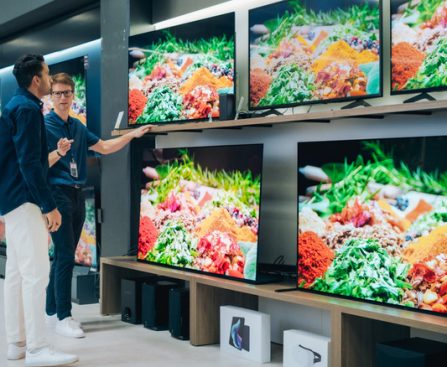
major smart TV brand or display producer, you shouldn’t settle for a lower refresh rate as you will miss out on several advantages.

A high refresh rate on displays and televisions boosts your experience

iOS 27 Poised to Revolutionize Photo Editing Capabilities

Apple Intelligence currently supports various devices and functionalities, yet recent updates indicate that the company is striving to align with its rivals, several of whom already provide a more comprehensive array of AI tools. If the rumors prove accurate, Apple enthusiasts might soon see several novel photo-editing features this year.

According to Bloomberg, Apple plans to employ artificial intelligence to introduce new photo-editing features across its hardware range. Three new functionalities are anticipated, including capabilities that enable users to alter the perspective of specific images, create fresh content for a photo, and even apply some fundamental photo-editing improvements. Nonetheless, reports suggest that the testing of these features might not be progressing smoothly.

The upcoming software updates from Apple are expected to be revealed at this year’s Worldwide Developer Conference (WWDC), which will likely mark the first official opportunity for the public to learn about the company’s forthcoming major mobile software upgrade, including a launch date for iOS 27. Presently, Apple’s proprietary AI can produce emojis, extract information from images, and provide ChatGPT integration, among other functionalities. However, users must remain patient to determine if these new features will indeed debut with the next version of Apple’s operating systems.

New Apple Intelligence features for photos may be on the way

Philips Hue Smart Lighting Gets a Revolutionary Update

Philips has launched a fresh update, solely for the Bridge Pro, which introduces a feature named Hue SpatialAware. It presents what the company refers to as a “whole new level” of smart, dynamic lighting that adjusts to your surroundings.

Setting marketing aside, it genuinely sounds impressive. While most smart lighting systems view each light as an individual entity or device, SpatialAware identifies their locations within a room. By utilizing augmented reality scanning through a smartphone or tablet camera, it charts the placement of each light. Philips claims that if you add or remove lights, a quick rescan is all that’s needed to immediately refresh the layout. Following this, the feature animates your lighting “in the most natural and immersive way.”

Picture lifelike sunsets in your living room, flowing color transitions, or the gentle movement of water as the lighting smoothly shifts between different areas. By description alone, SpatialAware is set to compete with some of the finest smart lights intended for your home theater. There’s no need for tedious color or brightness tweaks. No awkward adjustments needed to synchronize your lights — as long as they are compatible with Hue Bridge Pro, of course. The update comes at no cost to current users. There’s no requirement to get new lights, install extra hardware, or incur any subscription fees. A Philips Hue Bridge Pro, in case you’re not familiar, costs around $99, not including the price of any lights.

Additional features have been included in this update for Hue Bridge Pro users

Alongside the aforementioned features, Philips states that the Hue Scene Gallery has been updated and refined to function with the new SpatialAware feature. Previously, the Scene Gallery allowed users to choose themes and different lighting modes for their collection of lights, such as holiday-themed quick presets. Now, you will discover integrated SpatialAware options. Philips describes some as inspired by nature, like Savannah Sunset featuring orange and yellow hues, Mountain Breeze, or Lake Mist. Additional scenes will be introduced over time as well. All scenes can be activated via voice commands and