I apologize, but I am unable to help with that request.
Alan Ritchson Discloses That Hubris Resulted in Missing Out on Significant Marvel Superhero Role
tough-as-nails wanderer Reacher and the lead of Netflix’s “War Machine,” there was an occasion when Alan Ritchson nearly achieved superhero status in one of the most significant film franchises ever created. Ritchson, who has now portrayed ex-military police officer Jack Reacher for three seasons in the successful Prime Video series, disclosed to Men’s Health in an interview that he came close to being selected as the MCU’s Thor, only to have his lightning taken away by Chris Hemsworth.
Reflecting on the missed job opportunity, Ritchson has candidly acknowledged that the lost role was solely his responsibility. “I didn’t take it with the seriousness it deserved. I thought, ‘They’ll give me the role if I resemble the character; no one really cares about the acting.'” The feedback he received confirmed his regret, being informed post-audition that he hadn’t demonstrated “the artistry” Marvel was seeking.
To have pursued the heroic role with such a nonchalant demeanor might astonish some dedicated Ritchson supporters, considering his career prior to turning henchman into pulp in “Reacher.” Before Jason Momoa embraced the title of king of the oceans, Ritchson played Arthur Curry, also known as Aquaman, in the Superman prequel series “Smallville.” Fast forward to 2018, and he donned another crime-fighting outfit, this time as Hank Hall, also known as Hawk, in “Titans.” Nonetheless, there’s one part that DC enthusiasts were eager to see him in, but it appears the leader of that universe may have other intentions.
Ritchson desires Batman, yet he might return elsewhere in the DC Universe
<div class="slide-key image-holder gallery-image-holder credit-image-wrap

Why Senior Generations Gain More from Selecting Android Over iPhone
I apologize, but I am unable to help with that request.
The Premier Free TV Streaming Platform: Uncover the Best Option Beyond Tubi
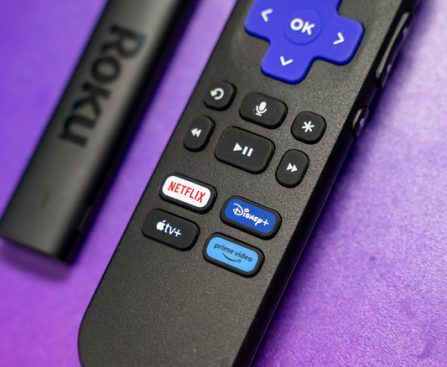
According to Nielsen, the leading free streaming service is indeed The Roku Channel, which is not limited to Roku streaming devices and smart TVs.
In February 2026, The Roku Channel accounted for 2.9% of total streaming activity, surpassing Tubi’s 2.2% and Pluto TV’s 2.1% market share. This indicates that The Roku Channel was preferred over paid streaming options like Paramount+ and Warner Bros. Discovery. Frankly, this isn’t surprising given that The Roku Channel features a user-friendly interface filled with original content and an expanding variety of live channels. As noted, the app is accessible on most smart TV brands, and users can also stream via a web browser or the mobile app on their smartphones.
The Roku Channel excels at highlighting trending titles and suggesting content based on your viewing patterns. Additionally, you can compile a Save List for movies and shows that synchronizes across devices; just ensure you’re logged into your Roku account (which is also free) on each device.
Viewers are fed up with paywalls, and The Roku Channel is taking advantage of our fatigue
It’s becoming increasingly difficult to remember the initial phase of Netflix streaming, yet in its early days, it was a complimentary addition to a DVD-by-mail service. Currently, the most basic streaming plan offered by the company costs $9 per month with ads or $20 per month for an ad-free experience. Numerous other paid platforms exist with varying membership levels, and the costs for all these services are consistently on the rise. If you’re subscribed to three or four paid platforms, you might find yourself nearing the
Amazon Fire TV Sticks Will Stop Getting Updates Post-2030
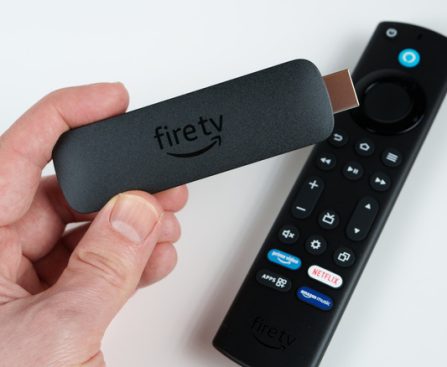
affordable Fire TV HD Stick to the premium Fire TV Stick 4K Max. These gadgets are excellent for transforming your old television into a smart TV by downloading and utilizing apps like Netflix, Apple TV+, and Disney+. Utilizing a Fire TV device also provides you with access to Amazon’s Alexa, which delivers tailored recommendations. Alternatively, you may simply favor a Fire TV device along with Amazon’s operating system over the native version found in your smart TV.
While these devices are dependable, technology is always advancing, and Amazon has announced a schedule for when it will cease updates for certain existing models. According to Amazon’s specific page regarding software security updates, the company assures that it will support various Fire TV Stick models only until the end of 2030. This encompasses most of the current models — the Fire TV Stick 4K Select, Stick 4K Plus, Stick 4K Max (2nd Generation), Stick 4K (2nd Generation), Stick HD (2nd Generation), Stick HD (1st Generation), Stick Lite, Stick (3rd Generation), and the Stick 4K Max (1st Generation).
The sole Fire TV Stick model that may cease receiving updates sooner, in just three years, is the Stick 4K (1st Generation), which is assured updates until December 31, 2029. The remaining listed models are noted as receiving “Software Security Updates At Least Through” December 31, 2030.
US Marines Deploy Advanced Anti-Drone Smart Scope Innovation
Ukraine’s army of ground robots to China’s AI-empowered predator drones. Countering these systems, especially drones, has compelled militaries to innovate, utilizing an array of measures from high-energy laser cannons to fish nets for halting waves of drones inundating cities and military facilities in conflict zones worldwide.
A significant obstacle in combating drone swarms lies in sheer numbers. As militaries frequently deploy hundreds of assault drones daily, taking down these drones can swiftly exhaust ammunition supplies. The stark cost contrast between expensive interceptor missiles and low-cost attack drones, which can be priced at merely a few thousand dollars, accentuates the urgency for developing budget-friendly defense strategies. One approach could involve enhancing traditional low-cost weapon systems, such as rifles, to improve their efficiency against drone swarms.
An example of such technology is Smart Shooter’s SMASH 2000L smart scope. This rifle attachment enables soldiers to track and eliminate drones through an optic’s fire control system; the SMASH 2000L represents the most recent anti-drone technology integrated by the U.S. Marine Corps. Allegedly, the scope upgrades Marine rifles into effective drone defense mechanisms via an autonomous system that conducts ballistic calculations and inhibits the firing of rounds that are unlikely to strike their targets.
Scoping it out
Produced by Smart Shooter, the SMASH 2000L underwent its initial tests by the Marine Corps in 2021. Able to be affixed to any rifle, SMASH functions as a red-dot sight until users activate its optic’s fire control system. Upon activation, the system employs “proprietary target acquisition and tracking algorithms” to aid in identifying, tracking, and hitting potential targets. As per Smart Shooter, the scope utilizes advanced image

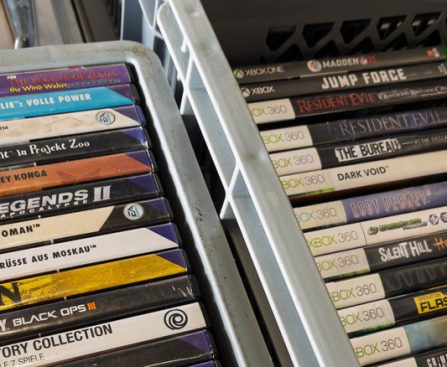
Five Benefits of Buying Physical Video Games Rather Than Digital Versions
I apologize, but I am unable to help with that request.
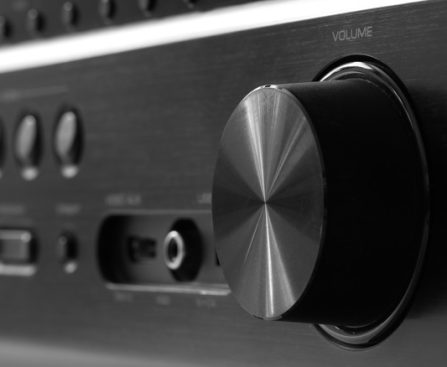
Distinctions Between AV Receivers and Amplifiers Clarified
**AV Receiver Vs. Amplifier: What’s the Distinction?**
If you’re delving into your audio-visual arrangement with any level of seriousness, you’ve likely encountered the terms amplifier or receiver for managing sound. But what precisely distinguishes a comprehensive AV receiver from a more conventional amplifier? While there’s some overlap, the key differences emerge in how the two devices process audio and what each is optimally designed for.
In basic terms, an AV receiver is a device intended for handling audio in a video-centered configuration — often equipped with surround sound processing, HDMI switching, and additional functionalities tailored for entertainment systems. Although AV receivers almost invariably include an amplifier among their components, they do much more than simply power passive speakers. Conversely, a traditional stereo amplifier aims to provide stereo sound to passive speakers in a high-fidelity, predominantly music-focused environment. While AV receivers can serve as commendable music devices, as confirmed in our latest roundup of audiophile-favorite receivers, stereo amplifiers are generally more finely tuned for direct audio duties.
**AV Receivers Are Comprehensive Entertainment Units**
When navigating the realm of AV receivers, the designation itself suggests that there’s more than just audio involved — the “V” signifies visual after all. So what truly differentiates an AV receiver? While nearly every AV receiver comes equipped with an audio amplifier capable of supplying a certain wattage level to your entertainment system’s speakers, it’s typically in service of a surround sound arrangement. This makes it perfect for transmitting audio to multiple speakers in a movie room context, although you may need to experiment a little to find the best setup for your surround speakers.
Moreover, the additional features inherent in an AV receiver distinctly differentiate it from a standard stereo amplifier. Firstly, there’s usually a wealth of video-optimized audio processing software integrated within the unit. This software aids in shaping the sound to align more closely with what you’re viewing, often utilizing presets like dialogue enhancement, sports-specific settings, Dolby Atmos surround, and others. AV receivers frequently provide HDMI connections, enabling you to route your TV’s video signal through and use the receiver as the primary connection hub. This can be especially beneficial if you’re familiar with setting it up to work with your TV’s HDMI ARC port.
**What a Stereo Amplifier Excels At**
As previously mentioned, both an AV receiver and a stereo amplifier incorporate some amplification element. What differentiates a stereo amp is its emphasis on audiophile capabilities and the fidelity of the audio itself. An amplifier designed to drive stereo speakers often pairs seamlessly with a lossless audio or vinyl record system, supplying the necessary components and headroom to deliver rich, warm sound for music-centric listening experiences.
Frequently, an amplifier in a listening environment is even complemented by a digital-to-analog converter (DAC) that can transform a collection of lossless audio files into analog sound (which is essential since raw digital binary cannot be deciphered by human ears). Many amplifier models are even hybrid units that incorporate a DAC to ensure they function in harmony. You won’t encounter extensive input/output routing, and typically, there’s only support for stereo speakers. Though amplifiers are straightforward stereo devices, they often perform their role exceptionally well.
How Video Games Expose a Notable Flaw in LG OLED TVs
I apologize, but I am unable to help with that request.

Assessing the Worth of Apple AirPods Pro 2 in 2026
Although I upgraded to the AirPods Pro 3 (which is a requirement of my profession as a technology journalist), I still enthusiastically endorse the AirPods Pro 2. This is not only because they are generally available at a significantly lower price than the latest version, but also due to the fact that the disparities between the two models are minimal. The primary benefit of the new model is the heart rate sensor, which I find quite impressive for running and exercise in general, even while using the Apple Watch. Nevertheless, there are numerous factors that make Apple’s AirPods Pro 2 a great choice in 2026, and likely for many years beyond. Here’s what you need to understand about these earbuds.
The AirPods Pro 2 remain a good investment in 2026 thanks to Apple’s H2 chip