
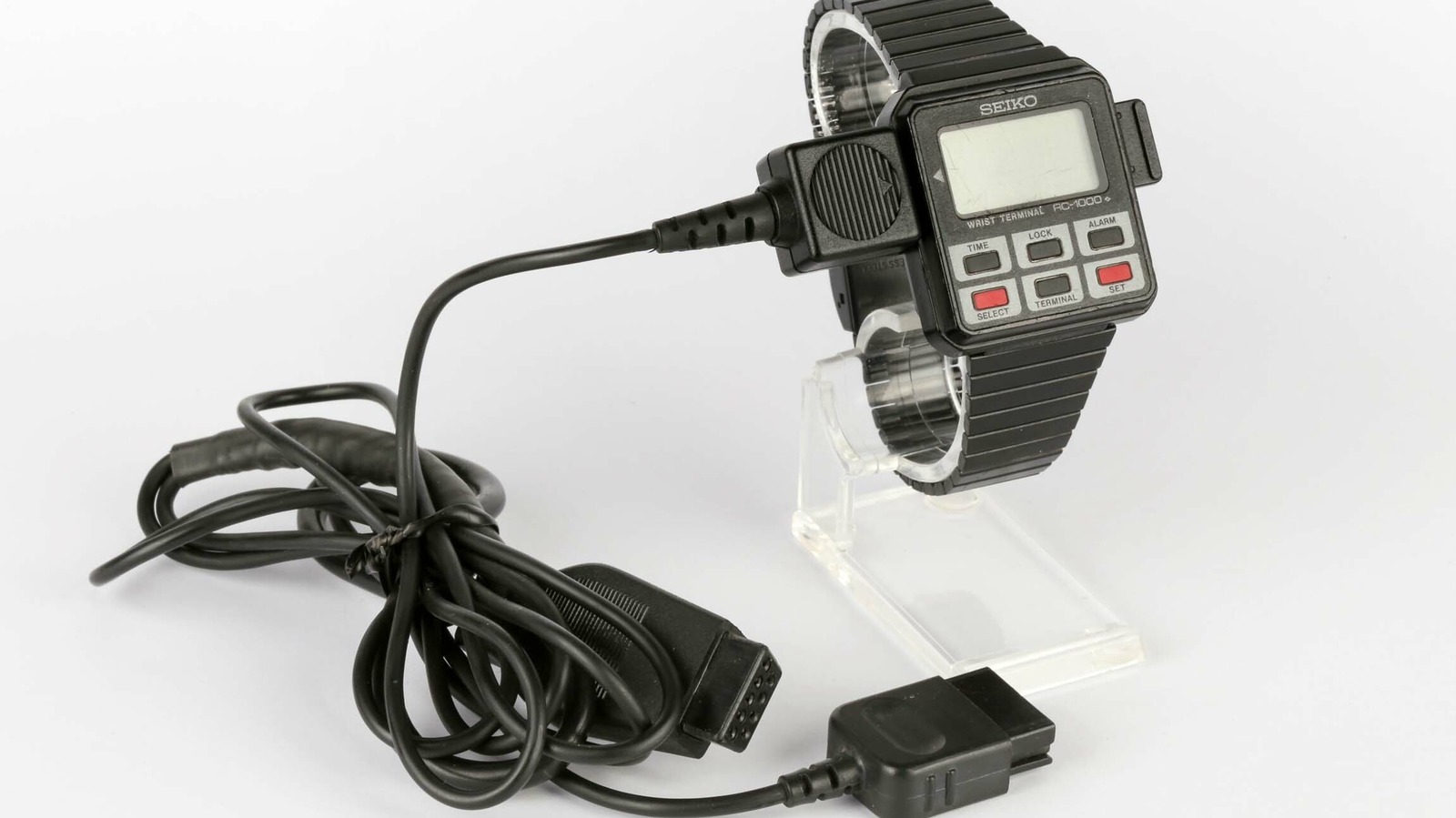

The creation of the microchip in 1959 widened the scope of watches far beyond what was previously imagined in science fiction. By the 1980s, technology aligned with the futuristic aspirations that depicted characters such as Dick Tracy and James Bond, who utilized their watches for purposes beyond merely telling time. Initially, these functions were perceived as novelties — you could watch television or engage in simple video games on your wrist. Soon after, Japanese technology brands Seiko and Casio unveiled two leading wrist-top computing devices.
In 1983, Casio introduced the Databank CD-40, heralded as one of the first smartwatches globally due to its capability of storing information. It could retain up to 10 phone numbers and included an alarm and stopwatch feature. Notably, it offered an on-wrist calculator that allowed users to perform calculations swiftly. Marty McFly, however, switched to the CA-53, which gained traction after the release of “Back to the Future.” Casio’s Databank watches are still in demand today, with a recent vintage line being launched by Casio.
A year after the CD-40’s debut, Seiko unveiled the RC-1000, also referred to as the Wrist Terminal. It boasted 2KB of memory and included a cord and software enabling connection to popular ’80s computers like the IBM PC, Apple II, and Commodore 64. It could transfer, edit, and store data from your computer in merely 10 seconds, accommodating 80 screens of information, each containing up to 24 characters. Essentially, it served as a personal organizer on your wrist, capable of maintaining your calendar, contacts, reminders, and notes.
Reasons why some smartwatches from the ’80s didn’t gain the traction that modern smartwatches enjoy
Owning an ’80s smartwatch meant you were effectively a beta tester. The challenges encountered led to design improvements in today’s leading smartwatches. For example, to utilize the organization features of the RC-1000, one needed to load software from a floppy disk to a computer, connect the watch to the computer, and establish a menu structure for notes and schedules. Accessing that information on the watch required scrolling through entries on a compact dot matrix LCD display. This is in contrast to the sleek interface of the first Apple Watch, launched in 2015, which has become the most popular smartwatch.
In mere seconds, one could find weather updates, messages, health data, Maps, and Apple Pay – which should be utilized by everyone. All applications are stored on the watch and accessed through easily recognizable icons. The CD-40 faced its own difficulties, particularly regarding its key feature: the keypad. Entering each name was a laborious process, requiring multiple key presses to input a single letter. The small size of the keyboard made it slow and prone to errors. Once a name was saved on the watch, only nine spaces were available. Good luck managing if you had eleven friends.
The Google Pixel Watch, flawed upon its 2022 release, featured 32GB of memory. That’s 16 million times the storage capacity of the robust (for ’80s smartwatches) RC-1000. The key advantage? Software updates. Google consistently enhanced the Pixel months post-release. In the ’80s, if you desired an update, you had to purchase an entirely new smartwatch.