
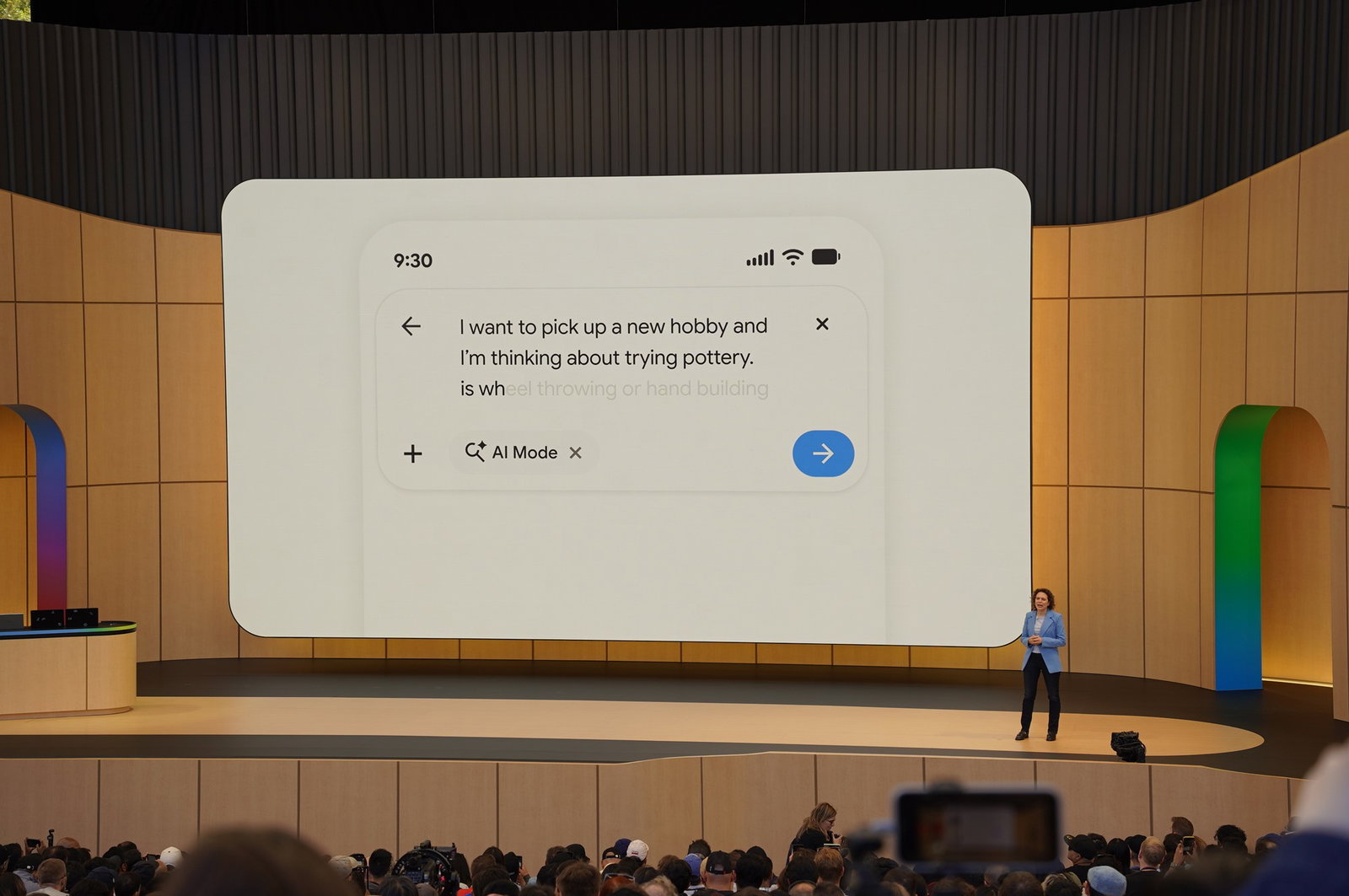

Google, Gemini, Gmail — it seems they could eventually merge into a single search box.
After last year’s I/O keynote, I speculated that Google’s future was all about googling. This year, it appears Google aims to do everything for you, straight from a search box.
The Google search bar, which rarely changes, is set to receive updates. It will expand as you type longer queries and offer AI-powered suggestions beyond autocomplete, potentially guiding your search in unexpected directions.
In Search results, AI Overviews will allow further questions, generating a custom page with an AI-generated summary instead of a list of links. Search will become more personalized with custom UI features, including interactive visuals and graphs. You’ll also be able to use search to create “information agents” tracking things like sneaker releases or apartment listings.
Gemini will receive upgrades like a “Daily Brief” summarizing your day using data from Google apps. You can create custom Google-powered agents through Gemini Spark, offering advantages over other agents due to its first-party nature. Google is also promoting Personal Intelligence, which uses context from other Google apps to enhance Gemini responses.
In Workspace, Google aims to streamline tools like Gmail, Docs, and Keep, assisting with tasks such as inbox management and document drafting. The new Universal Cart will keep track of shopping interests across apps like Search and Gmail, allowing checkout via Google payments. YouTube will also experiment with an AI Mode-like experience to curate search results.
With Gemini Omni models, you’ll be able to create videos using other media as prompts. Ultimately, the goal is to generate diverse media content.
At I/O, Google revealed plans to provide answers through its search boxes. If executed well, this could be incredibly useful, but it requires high accuracy, especially for complex or sensitive searches.
Envisioning a future where Google offers a universal search box, it seems everything could be accessed in one place. Although convenient, this approach could undermine the exploration and personal management that make the internet engaging. Additionally, if Google stops directing traffic to websites, it could disrupt creators’ revenue streams and the broader web ecosystem.
Overall, Google’s ambition is a search bar that does it all, despite potential costs.