
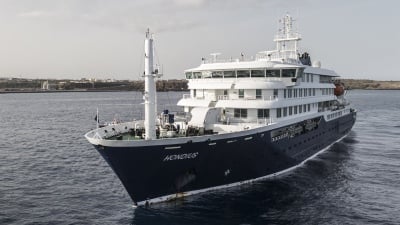

Jake Rosmarin is among the many stranded on the m/v Hondius following a viral outbreak that claimed several lives. The Boston-based travel blogger is one of about 100 people on the cruise ship in the Atlantic Ocean grappling with a deadly hantavirus epidemic. In an emotional TikTok video, Rosmarin urged viewers to empathize with the passengers’ “uncertainty,” stating, “This situation is very real for us. We’re not just a story or headlines; we’re people with families and lives, awaiting our return home.”
Before the cruise embarked from Argentina on a 35-day voyage, Rosmarin documented the ship’s dining hall, bridge, outer decks, and his room in a video. As of now, the Hondius, which began its journey on April 11 toward Cape Verde, has seen three passengers succumb to hantavirus, usually spread by rodent excrement. According to NBC News, the virus likely propagated during a birdwatching trip. The World Health Organization reports five confirmed cases, noting the Andes strain’s potential for person-to-person transmission.
After the virus’s symptoms emerged on the ship, 30 individuals, including the wife of a deceased passenger, disembarked on April 24 at St. Helena. Her husband’s body was also removed. Reports indicate that no contact tracing occurred on the island. The widow later flew to Johannesburg and attempted a flight to Amsterdam but was offloaded before departure; she has since died.
Several passengers who left at St. Helena now reside in various U.S. states, including California, Arizona, Texas, Georgia, and Virginia. WHO representatives assert that the outbreak is not a precursor to a new pandemic, as reported by NBC News.
The Hondius is now heading to the Canary Islands, expecting arrival in a few days, though the Spanish-controlled islands’ president is resistant to the ship’s docking, according to reports. Presently, no one on the ship exhibits symptoms, as stated by operator Oceanwide Expeditions.
WHO has highlighted critical points regarding hantavirus: these rodent-borne viruses can cause severe human illness. Infection often arises from exposure to infected rodents or their waste. The virus can lead to various severe diseases and fatalities. In the Americas, hantaviruses are linked to hantavirus cardiopulmonary syndrome (HCPS), a deadly respiratory condition with up to 50% mortality. Notably, the Andes virus in South America is associated with limited human-to-human transmission. In Europe and Asia, hantaviruses result in hemorrhagic fever with renal syndrome (HFRS).
Hantavirus symptoms can appear within one to eight weeks of exposure, including fatigue, fever, headaches, muscle aches, and nausea. Early diagnosis is challenging due to similarities with flu, pneumonia, and COVID symptoms. Although the Andes strain is less easily spread than flu or COVID, hantavirus can cause pulmonary syndrome (HPS) or hemorrhagic fever with renal syndrome (HFRS). HPS has a 38% fatality rate, per USA Today, while HFRS ranges from 1% to 15%. No specific treatments or vaccines exist for hantavirus; the CDC advises supportive care, including rest, hydration, and symptom management.
If exposed, individuals should wear a mask and visit the nearest medical facility promptly.